


Monitor-based exoscopic 3D4k neurosurgical interventions: a two-phase prospective-randomized clinical evaluation of a novel hybrid device
- PMID: 32424568
- PMCID: PMC7593287
- DOI: 10.1007/s00701-020-04361-2
Monitor-based exoscopic 3D4k neurosurgical interventions: a two-phase prospective-randomized clinical evaluation of a novel hybrid device
Abstract
Background: Promoting a disruptive innovation in microsurgery, exoscopes promise alleviation of physical strain and improved image quality through digital visualization during microneurosurgical interventions. This study investigates the impact of a novel 3D4k hybrid exoscope (i.e., combining digital and optical visualization) on surgical performance and team workflow in preclinical and clinical neurosurgical settings.
Methods: A pre-clinical workshop setting has been developed to assess usability and implementability through skill-based scenarios (neurosurgical participants n = 12). An intraoperative exploration in head and spine surgery (n = 9) and a randomized clinical study comparing ocular and monitor mode in supratentorial brain tumor cases (n = 20) followed within 12 months. Setup, procedure, case characteristics, surgical performance, and user experience have been analyzed for both ocular group (OG) and monitor group (MG).
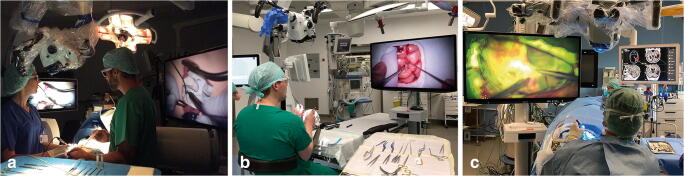
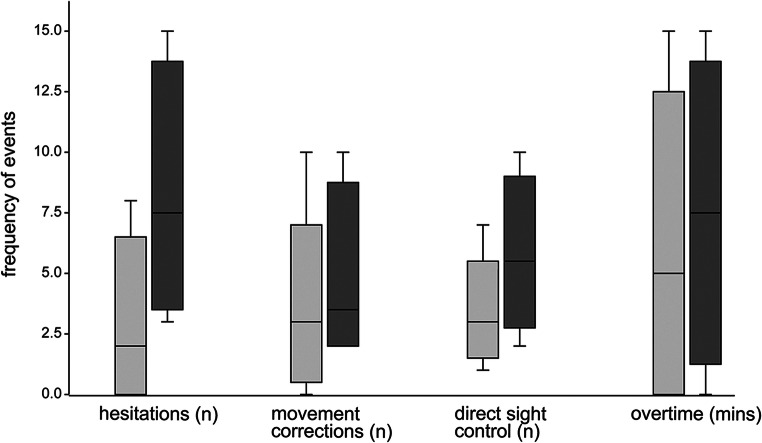
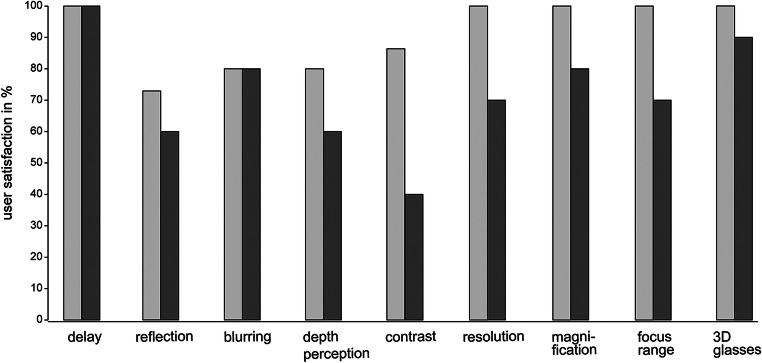
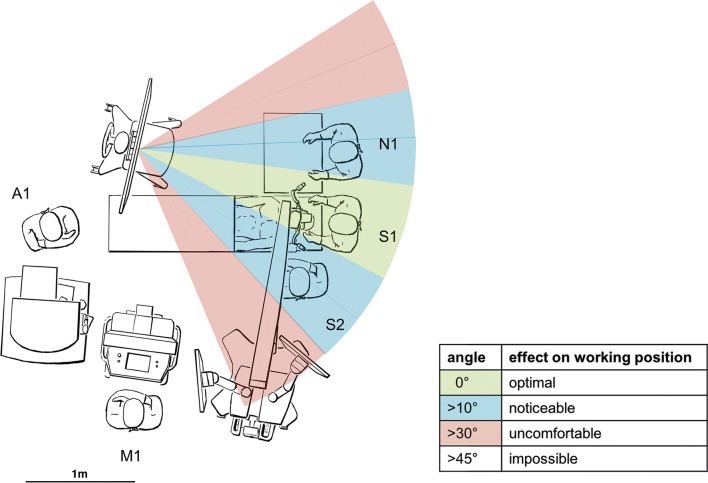
Results: Brain tumor cases using frontal, frontoparietal, or temporal approaches have been identified as favorable use cases for introducing exoscopic neurosurgery. Mean monitor distance and angle were 180 cm and 10°. Surgical ergonomics when sitting improved significantly in MG compared with OG (P = .03). Hand-eye coordination required familiarization in MG. Preclinical data showed a positive correlation between lateral camera inclination and impact on hand-eye coordination (rs = 0.756, P = .01). There was no significant added surgical time in MG. Image quality in current generation 3D4k monitors has been rated inferior to optic visualization yet awaits updates.
Conclusions: The hybrid exoscopic device can be integrated into established neurosurgical workflows. Currently, exoscopic interventions seem most suited for cranial tumor surgery in lesions that are not deep-seated. Ergonomics improve in monitor mode compared to conventional microsurgery.
Keywords: Brain tumor; Digital innovation; Exoscope; Intraoperative visualization; Technology evaluation.
Conflict of interest statement
All authors certify that they have no affiliations with or involvement in any organization or entity with any financial interest (such as honoraria; educational grants; participation in speakers’ bureaus; membership, employment, consultancies, stock ownership, or other equity interest; and expert testimony or patent-licensing arrangements), or non-financial interest (such as personal or professional relationships, affiliations, knowledge or beliefs) in the subject matter or materials discussed in this manuscript.
Figures
Comment in
-
Introductions of technological innovations in neurosurgery.Acta Neurochir (Wien). 2020 Dec;162(12):2963. doi: 10.1007/s00701-020-04363-0. Epub 2020 May 1. Acta Neurochir (Wien). 2020. PMID: 32356205 No abstract available.
References
-
- Bakhsheshian J, Strickland BA, Jackson C, Chaichana KL, Young R, Pradilla G, Chen JW, Bailes J, Zada G (2018) Multicenter investigation of channel-based subcortical trans-sulcal exoscopic resection of metastatic brain tumors: a retrospective case series. Oper Neurosurg (Hagerstown). 10.1093/ons/opy079 - PubMed
-
- Biddle M, Hamid S, Ali N. An evaluation of stereoacuity (3D vision) in practising surgeons across a range of surgical specialities. Surgeon. 2014;12(1):7–10. - PubMed
Publication types
MeSH terms
LinkOut - more resources
Full Text Sources
Medical
Miscellaneous
