


Telemedicine During COVID-19 for Outpatient Sports and Musculoskeletal Medicine Physicians
- PMID: 32424977
- PMCID: PMC7276758
- DOI: 10.1002/pmrj.12422
Telemedicine During COVID-19 for Outpatient Sports and Musculoskeletal Medicine Physicians
Abstract
Introduction: The global pandemic due to SARS-CoV-2 has resulted in an expansion of telemedicine. Measures of quality and barriers for rapid use by patients and physicians are not well described.
Objective: To describe results from a quality improvement initiative during a rapid adoptive phase of telemedicine during the pandemic.
Design: Patient and physician satisfaction with synchronous audiovisual telemedicine visits was measured during the early adoptive phase (6 April 2020-17 April 2020) within the division of sports medicine in an academic Physical Medicine and Rehabilitation (PM&R) department. Patients were invited to participate in a quality improvement initiative by completing an online survey at the end of a telemedicine visit. Physicians completed a separate survey.
Primary outcome measures: Patient measures included visit type, duration of encounter, quality, and satisfaction. Physicians reported on experiences performed telemedicine.
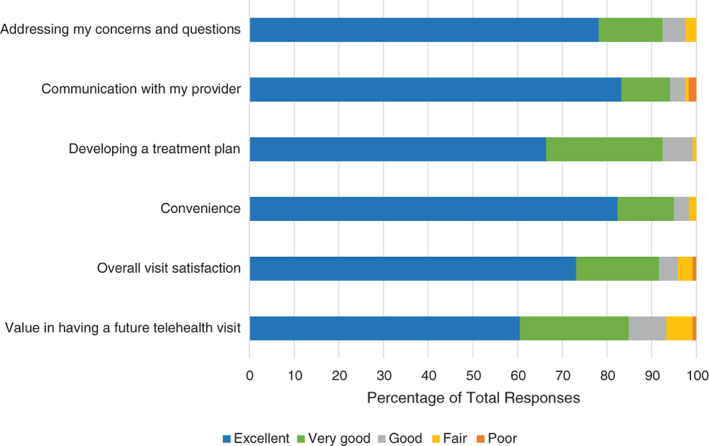
Results: Surveys were completed by 119 patients (293 telemedicine encounters, response rate 40.6%) and 14 physiatrists. Telemedicine was utilized primarily for follow-up visits (n = 74, 70.6%), and the most common duration was 15 to 29 minutes. Patients rated their telemedicine visit as "excellent" or "very good" across measures (91.6%-95.0%) including addressing concerns, communication, developing a treatment plan, convenience, and satisfaction. Value of completing a future telemedicine visit was measured at 84.9%. Most reported estimated travel time saved was in excess of 30 minutes. Rate of no-show was 2.7%. Most physicians (57.1%) had no prior experience with telemedicine visits, and most were comfortable performing these visits after completing 1 to 4 sessions (71%). Nearly all physicians (92.9%) rated their telemedicine experience as very good or excellent. The key barrier identified for telemedicine was technical issues. All physicians reported plans to perform telemedicine visits if reimbursement continues.
Conclusions: In summary, rapid expansion of telemedicine during the COVID-19 pandemic was well-received by a majority of patients and physicians. This suggests feasibility in rapid expansion of telemedicine for other outpatient sports medicine practices.
© 2020 American Academy of Physical Medicine and Rehabilitation.
Figures
References
-
- Tenforde AS, Hefner JE, Kodish‐Wachs JE, Iaccarino MA, Paganoni S. Telehealth in physical medicine and rehabilitation: a narrative review. PM R. 2017;9(5S):S51‐S58. - PubMed
-
- Adler‐Milstein J, Kvedar J, Bates DW. Telehealth among US hospitals: several factors, including state reimbursement and licensure policies, influence adoption. Health Aff (Millwood). 2014;33(2):207‐215. - PubMed
Publication types
MeSH terms
LinkOut - more resources
Full Text Sources
Medical
Miscellaneous
