


Nonclassical Islet Peptides: Pancreatic and Extrapancreatic Actions
- PMID: 32425629
- PMCID: PMC7216561
- DOI: 10.1177/1179551419888871
Nonclassical Islet Peptides: Pancreatic and Extrapancreatic Actions
Abstract
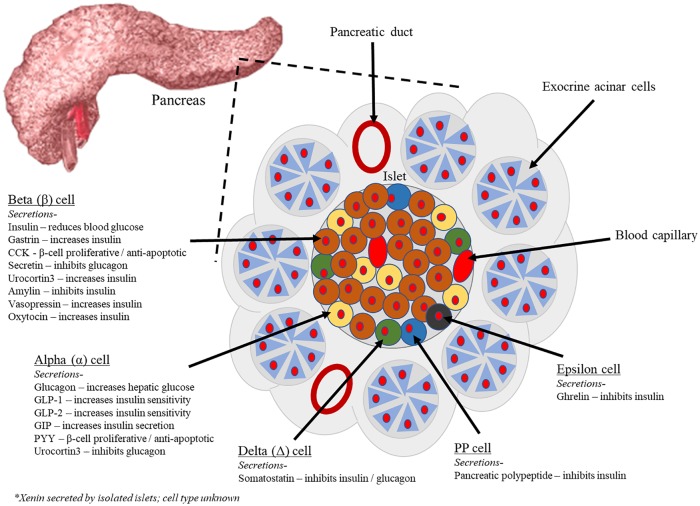
The pancreas has physiologically important endocrine and exocrine functions; secreting enzymes into the small intestine to aid digestion and releasing multiple peptide hormones via the islets of Langerhans to regulate glucose metabolism, respectively. Insulin and glucagon, in combination with ghrelin, pancreatic polypeptide and somatostatin, are the main classical islet peptides critical for the maintenance of blood glucose. However, pancreatic islets also synthesis numerous 'nonclassical' peptides that have recently been demonstrated to exert fundamental effects on overall islet function and metabolism. As such, insights into the physiological relevance of these nonclassical peptides have shown impact on glucose metabolism, insulin action, cell survival, weight loss, and energy expenditure. This review will focus on the role of individual nonclassical islet peptides to stimulate pancreatic islet secretions as well as regulate metabolism. In addition, the more recognised actions of these peptides on satiety and energy regulation will also be considered. Furthermore, recent advances in the field of peptide therapeutics and obesity-diabetes have focused on the benefits of simultaneously targeting several hormone receptor signalling cascades. The potential for nonclassical islet hormones within such combinational approaches will also be discussed.
Keywords: dual agonist; insulin secretion; nonclassical islet peptides; triagonist; β-cell.
© The Author(s) 2019.
Conflict of interest statement
Declaration of Conflicting Interest:The author(s) declared no potential conflicts of interest with respect to the research, authorship, and/or publication of this article.
Figures
References
-
- Lopes LL, Bressan J, Peluzio MDCG, Hermsdorff HHM. LINE-1in obesity and cardiometabolic diseases: a systematic review. J Am Coll Nutr. 2019;38:478-484. - PubMed
-
- World Health Organisation. Global report on diabetes, 2016. http://www.who.int/diabetes/global-report/en/. Accessed 12 July, 2017.
-
- Baynes H. Classification, pathophysiology, diagnosis and management of diabetes mellitus. J Diabetes Metab. 2015;6:541.
-
- Longnecker DS. Anatomy and Histology of the Pancreas. Pancreapedia: The Exocrine Pancreas Knowledge Base. 2014;4:1-26.
Publication types
LinkOut - more resources
Full Text Sources
Research Materials
