


A dynamic modeling tool for estimating healthcare demand from the COVID19 epidemic and evaluating population-wide interventions
- PMID: 32425631
- PMCID: PMC7229979
- DOI: 10.1016/j.ijid.2020.05.043
A dynamic modeling tool for estimating healthcare demand from the COVID19 epidemic and evaluating population-wide interventions
Abstract
Objectives: Public health officials need tools to assist in anticipating the healthcare resources required to confront the SARS-COV-2 pandemic. We constructed a modeling tool to aid active public health officials to estimate healthcare demand from the pandemic in their jurisdictions and to evaluate the potential impact of population-wide social-distancing interventions.
Methods: The tool uses an SEIR compartmental model to project the pandemic's local spread. Users input case counts, healthcare resources, and select intervention strategies to evaluate. Outputs include the number of infections and deaths with and without intervention, and the demand for hospital and critical care beds and ventilators relative to existing capacity. We illustrate the tool using data from three regions of Chile.
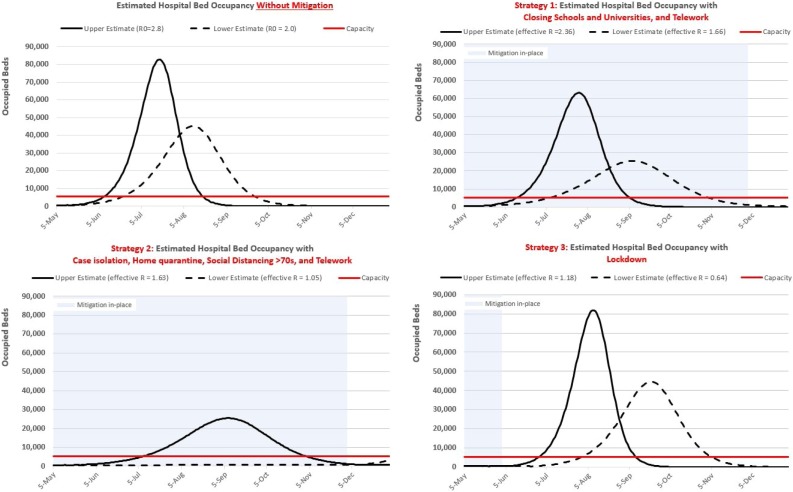
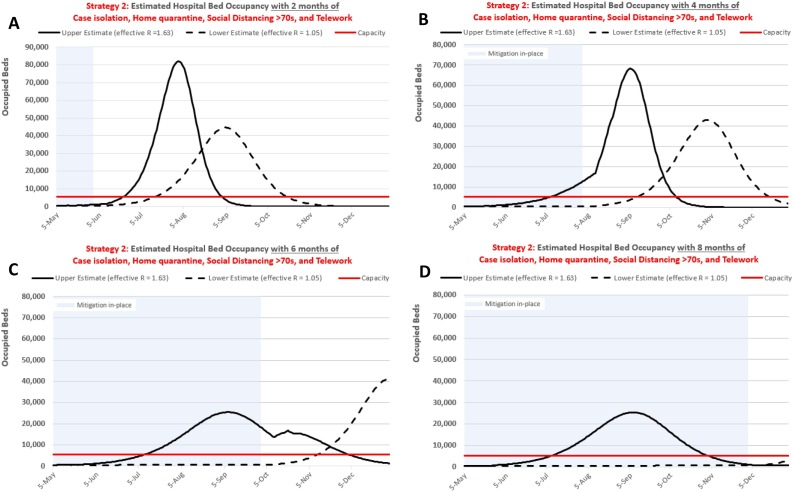
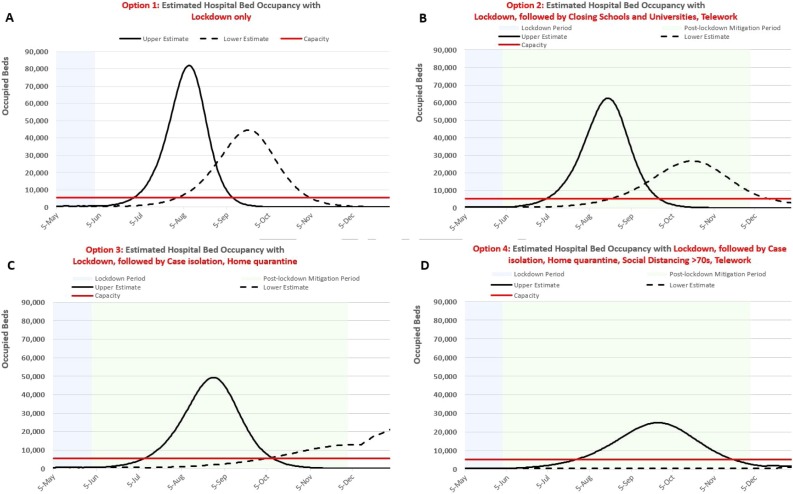
Results: Our scenarios indicate a surge in COVID-19 patients could overwhelm Chilean hospitals by June, peaking in July or August at six to 50 times the current supply of beds and ventilators. A lockdown strategy or combination of case isolation, home quarantine, social distancing of individuals >70 years, and telework interventions may keep treatment demand below capacity.
Conclusions: Aggressive interventions can avert substantial morbidity and mortality from COVID-19. Our tool permits rapid evaluation of locally-applicable policy scenarios and updating of results as new data become available.
Keywords: COVID; Capacity; Hospital; Intervention; Model; Social distancing.
Published by Elsevier Ltd.
Conflict of interest statement
All authors report no conflicts of interest.
Figures
References
-
- Deng X., Yang J., Wang W., Wang X., Zhou J., Chen Z. Case fatality risk of novel coronavirus diseases 2019 in China. medRxiv. 2020
-
- Ferguson N., Laydon D., Nedjati Gilani G., Imai N., Ainslie K., Baguelin M. 2020. Report 9: impact of non-pharmaceutical interventions (NPIs) to reduce COVID19 mortality and healthcare demand.
-
- Flaxman S., Mishra S., Gandy A. Imperial College COVID-19 Response Team; 2020. Estimating the number of infections and the impact of non-pharmaceutical interventions on COVID-19 in 11 European countries; p. 30.
MeSH terms
LinkOut - more resources
Full Text Sources
Miscellaneous
