. 2020 May 6;6(19):eaav9778.
doi: 10.1126/sciadv.aav9778. eCollection 2020 May.

Defined lifestyle and germline factors predispose Asian populations to gastric cancer

Affiliations

Defined lifestyle and germline factors predispose Asian populations to gastric cancer

Akihiro Suzuki et al. Sci Adv. .

Abstract

Germline and environmental effects on the development of gastric cancers (GC) and their ethnic differences have been poorly understood. Here, we performed genomic-scale trans-ethnic analysis of 531 GCs (319 Asian and 212 non-Asians). There was one distinct GC subclass with clear alcohol-associated mutation signature and strong Asian specificity, almost all of which were attributable to alcohol intake behavior, smoking habit, and Asian-specific defective ALDH2 allele. Alcohol-related GCs have low mutation burden and characteristic immunological profiles. In addition, we found frequent (7.4%) germline CDH1 variants among Japanese GCs, most of which were attributed to a few recurrent single-nucleotide variants shared by Japanese and Koreans, suggesting the existence of common ancestral events among East Asians. Specifically, approximately one-fifth of diffuse-type GCs were attributable to the combination of alcohol intake and defective ALDH2 allele or to CDH1 variants. These results revealed uncharacterized impacts of germline variants and lifestyles in the high incidence areas.


Figures

Fig. 1
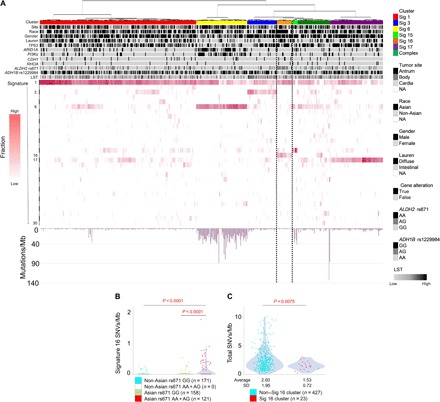
Fig. 1. Trans-ethnic mutational signature analysis of GC.
(A) The overall genetic profiles of 531 GCs, including Japanese GC cohort and TCGA GC datasets, are shown, on the basis of the hierarchical clustering of mutational signatures. GCs were genetically subdivided into six subgroups, each of which is characterized by Signatures 1 (red), 6 (yellow), 3 (blue), 16 (orange, surrounded by the dotted line), 15 (green), and 17 (purple). Clinicopathological information, representative somatic driver gene alterations, and germline variations of ALDH2 rs671/ADH1B rs1229984 are indicated as black/white columns at the top. White-to-red colored columns in the hierarchical clustering map represent the contribution rates (red bar on the left side) of the mutational signatures in each case. Mutation frequencies per megabase (Mb) are indicated at the bottom as bar graphs. PI3Ks: PIK3CA and PTEN mutations. (B) The numbers of the Signature 16 SNVs/Mb in GC cases are shown in relation to the races and ALDH2 genotypes of the patients. P values were calculated using unpaired Wilcoxon rank sum test. (C) The numbers of total SNVs/Mb in cases of Signature 16 cluster and those of other clusters are shown. Cases with hypermutator signature (yellow and green bars) were excluded. P values were calculated using the unpaired Wilcoxon rank sum test. NA, not applicable.
Fig. 2
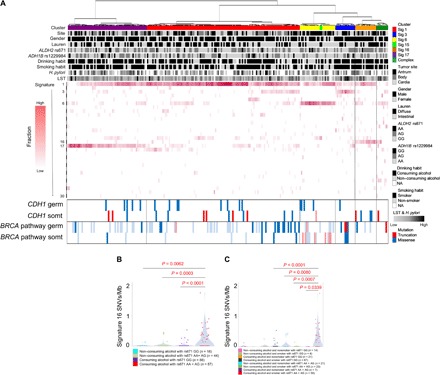
Fig. 2. Mutational signature analysis of Japanese GCs with lifestyle and germline information.
(A) The overall genetic profiles of 243 Japanese GCs are shown as a hierarchical clustering heat map as in Fig. 1A. Clinicopathological information, germline variations of ALDH2 rs671 and ADH1B rs1229984, and alcohol and smoking habits are indicated as black/white columns at the top. The contribution rate of the mutational signatures in each case is shown as in Fig. 1A. The germline and somatic variations of the CDH1 and BRCA pathway genes are indicated at the bottom of the figure. Red and blue columns indicate truncation and missense variants, respectively, with the proviso that somatic mutations in hypermutators (GCs with Signature 6 contribution, yellow column) and BRCA pathway variations without BRCA signatures (both somatic and germline) are shown as transparent columns. (B) The numbers of Signature 16 SNVs are plotted according to the patient subgroups defined by ALDH2 genotype and alcohol consumption habit. P values were calculated using unpaired Wilcoxon rank sum test. (C) The numbers of Signature 16 SNVs are plotted according to the patient subgroups defined by the combinations of ALDH2 genotype, alcohol consumption, and smoking habit. P values were calculated using the unpaired Wilcoxon rank sum test.
Fig. 3
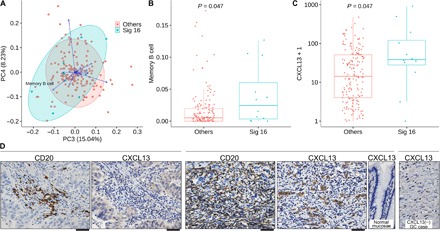
Fig. 3. Cancer-recruited B cell infiltration in alcohol-related GCs.
(A) Principal components analysis of 184 Japanese GC cases based on their profiles of the proportions of tumor-infiltrating immune cells defined by CIBERSORT algorism (see Materials and Methods). PC3 and PC4 components are shown. Green and red circles indicate Signature 16 GC and other GCs, respectively. Green and red circular areas indicate 95% confidence intervals of Signature 16 GC and other GCs, respectively. Arrows represent the correlations between the principal components (PC) and the variables (compositions of immune cells). (B) The proportion of B cells infiltrating in the GC tissues determined by the CIBERSORT algorism (see Materials and Methods) is shown. Green and red dots indicate Signature 16 GCs and other GCs, respectively. P value was calculated by unpaired Wilcoxon rank sum test. (C) Gene expression levels of B cell–attracting chemokine CXCL13 determined by RNA sequencing of bulk GC tissues (see Materials and Methods) are shown. Y axes are shown as log scale. Green and red dots indicate Signature 16 GCs and other GCs, respectively. P value was calculated by unpaired Wilcoxon rank sum test. (D) Representative cases of Signature 16 GCs with immunohistochemical staining of CD20 and CXCL13 are shown. In a GC case on the left side, as in other Signature 16 GCs, cancer cell–intrinsic CXCL13 expression and B cell infiltration around the tumor nest are observed. The GC case shown in the middle panels represents the prominent expression of tumor cell–intrinsic CXCL13 expression and massive infiltrations of B cells, followed by a picture at the right side, indicating negative CXCL13 staining in the normal gastric mucosae of the same specimen, as a control. A GC case at the rightest side indicates negative staining of CXCL13. Black bars under pictures, 50 μm.
Fig. 4
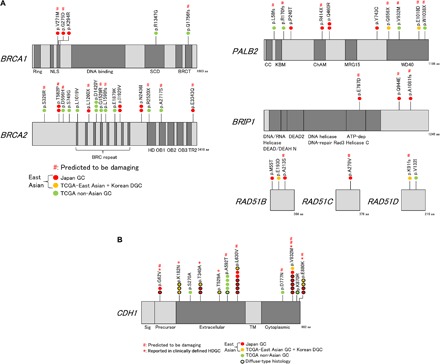
Fig. 4. The landscape of germline variations in East Asian and non-Asian GCs.
(A) Distributions of germline variations of BRCA pathway genes found in combined datasets [Japanese GCs, TCGA GCs (9), and Korean DGCs (6)]. Only variants found in cases linked to the BRCA signature are shown. Red, Japanese; green, TCGA non-Asian. None of the patients were TCGA East Asians/Koreans (orange) who met this criterion. #, predicted to be damaging in silico; NLS, nuclear localization signal; SCD, serine cluster domain; HD, helical domain; OB, oligonucleotide binding; TR2, second RAD51-binding domain; aa, amino acid; ATP, adenosine triphosphate. (B) Distributions of germline variations of CDH1 in the same datasets as in (A). *, reported in clinically defined HDGC (strong familial aggregation or extremely early-onset case). Bold circle, diffuse-type histology. SIG, signal; TM, transmembrane domain.

References

    1. Ferlay J., Soerjomataram I., Dikshit R., Eser S., Mathers C., Rebelo M., Parkin D. M., Forman D., Bray F., Cancer incidence and mortality worldwide: Sources, methods and major patterns in GLOBOCAN 2012. Int. J. Cancer 136, E359–E386 (2015). - PubMed
    1. Torre L. A., Bray F., Siegel R. L., Ferlay J., Lortet-Tieulent J., Jemal A., Global cancer statistics, 2012. CA Cancer J. Clin. 65, 87–108 (2015). - PubMed
    1. Tsugane S., Sasazuki S., Diet and the risk of gastric cancer: Review of epidemiological evidence. Gastric Cancer 10, 75–83 (2007). - PubMed
    1. van der Post R. S., Vogelaar I. P., Carneiro F., Guilford P., Huntsman D., Hoogerbrugge N., Caldas C., Schreiber K. E. C., Hardwick R. H., Ausems M. G. E. M., Bardram L., Benusiglio P. R., Bisseling T. M., Blair V., Bleiker E., Boussioutas A., Cats A., Coit D., DeGregorio L., Figueiredo J., Ford J. M., Heijkoop E., Hermens R., Humar B., Kaurah P., Keller G., Lai J., Ligtenberg M. J. L., O’Donovan M., Oliveira C., Pinheiro H., Ragunath K., Rasenberg E., Richardson S., Roviello F., Schackert H., Seruca R., Taylor A., ter Huurne A., Tischkowitz M., Joe S. T. A., van Dijck B., van Grieken N. C. T., van Hillegersberg R., van Sandick J. W., Vehof R., van Krieken J. H., Fitzgerald R. C., Hereditary diffuse gastric cancer: Updated clinical guidelines with an emphasis on germline CDH1 mutation carriers. J. Med. Genet. 52, 361–374 (2015). - PMC - PubMed
    1. Liu Y., Sethi N. S., Hinoue T., Schneider B. G., Cherniack A. D., Sanchez-Vega F., Seoane J. A., Farshidfar F., Bowlby R., Islam M., Kim J., Chatila W., Akbani R., Kanchi R. S., Rabkin C. S., Willis J. E., Wang K. K., McCall S. J., Mishra L., Ojesina A. I., Bullman S., Pedamallu C. S., Lazar A. J., Sakai R.; Cancer Genome Atlas Research Network, Thorsson V., Bass A. J., Laird P. W., Comparative molecular analysis of gastrointestinal adenocarcinomas. Cancer Cell 33, 721–735.e8 (2018). - PMC - PubMed

Publication types

Substances