Transient inhibition of mTOR in human pluripotent stem cells enables robust formation of mouse-human chimeric embryos
- PMID: 32426495
- PMCID: PMC7220352
- DOI: 10.1126/sciadv.aaz0298
Transient inhibition of mTOR in human pluripotent stem cells enables robust formation of mouse-human chimeric embryos
Abstract
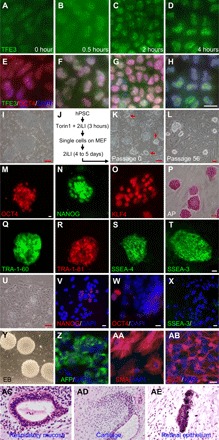
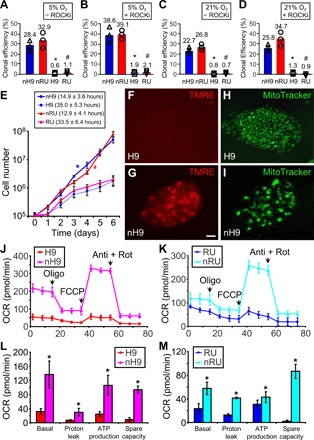
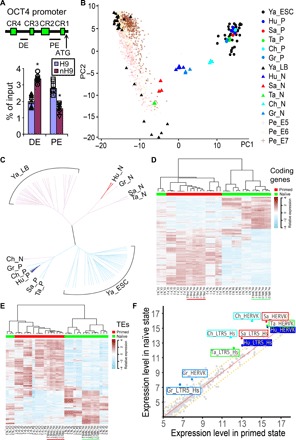
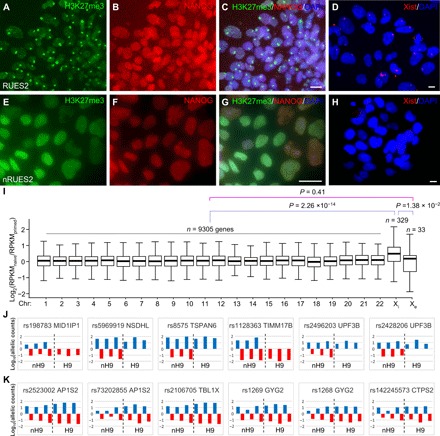
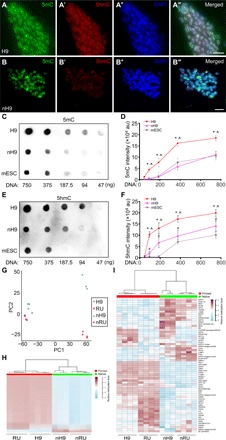
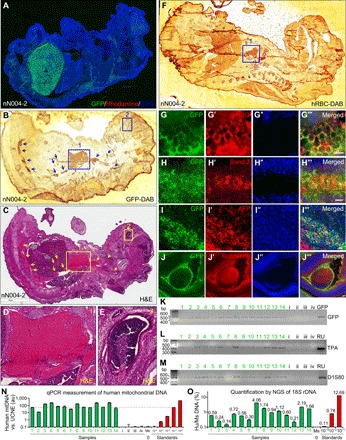
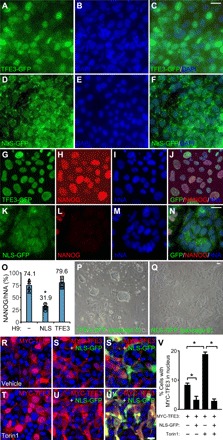
It has not been possible to generate naïve human pluripotent stem cells (hPSCs) that substantially contribute to mouse embryos. We found that a brief inhibition of mTOR with Torin1 converted hPSCs from primed to naïve pluripotency. The naïve hPSCs were maintained in the same condition as mouse embryonic stem cells and exhibited high clonogenicity, rapid proliferation, mitochondrial respiration, X chromosome reactivation, DNA hypomethylation, and transcriptomes sharing similarities to those of human blastocysts. When transferred to mouse blastocysts, naïve hPSCs generated 0.1 to 4% human cells, of all three germ layers, including large amounts of enucleated red blood cells, suggesting a marked acceleration of hPSC development in mouse embryos. Torin1 induced nuclear translocation of TFE3; TFE3 with mutated nuclear localization signal blocked the primed-to-naïve conversion. The generation of chimera-competent naïve hPSCs unifies some common features of naïve pluripotency in mammals and may enable applications such as human organ generation in animals.
Copyright © 2020 The Authors, some rights reserved; exclusive licensee American Association for the Advancement of Science. No claim to original U.S. Government Works. Distributed under a Creative Commons Attribution NonCommercial License 4.0 (CC BY-NC).
Figures
References
-
- Nichols J., Smith A., Naive and primed pluripotent states. Cell Stem Cell 4, 487–492 (2009). - PubMed
-
- Martello G., Smith A., The nature of embryonic stem cells. Annu. Rev. Cell Dev. Biol. 30, 647–675 (2014). - PubMed
-
- Thomson J. A., Itskovitz-Eldor J., Shapiro S. S., Waknitz M. A., Swiergiel J. J., Marshall V. S., Jones J. M., Embryonic stem cell lines derived from human blastocysts. Science 282, 1145–1147 (1998). - PubMed
-
- De Los Angeles A., Ferrari F., Xi R., Fujiwara Y., Benvenisty N., Deng H., Hochedlinger K., Jaenisch R., Lee S., Leitch H. G., Lensch M. W., Lujan E., Pei D., Rossant J., Wernig M., Park P. J., Daley G. Q., Hallmarks of pluripotency. Nature 525, 469–478 (2015). - PubMed
Publication types
MeSH terms
Substances
LinkOut - more resources
Full Text Sources
Molecular Biology Databases
Research Materials
Miscellaneous