


Antiviral Peptides: Identification and Validation
- PMID: 32427225
- PMCID: PMC7233194
- DOI: 10.1007/s10989-020-10072-0
Antiviral Peptides: Identification and Validation
Abstract
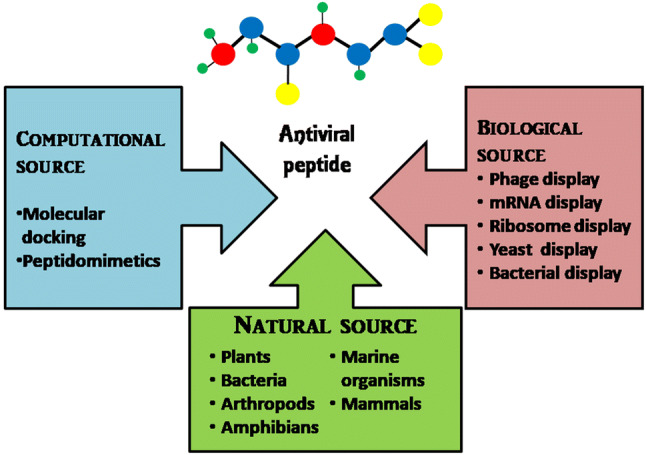
Despite rapid advances in the human healthcare, the infection caused by certain viruses results in high morbidity and mortality accentuate the importance for development of new antivirals. The existing antiviral drugs are limited, due to their inadequate response, increased rate of resistance and several adverse side effects. Therefore, one of the newly emerging field "peptide-based therapeutics" against viruses is being explored and seems promising. Over the last few years, a lot of scientific effort has been made for the identification of novel and potential peptide-based therapeutics using various advanced technologies. Consequently, there are more than 60 approved peptide drugs available for sale in the market of United States, Europe, Japan, and some Asian countries. Moreover, the number of peptide drugs undergoing the clinical trials is rising gradually year by year. The peptide-based antiviral therapeutics have been approved for the Human immunodeficiency virus (HIV), Influenza virus and Hepatitis virus (B and C). This review enlightens the various peptide sources and the different approaches that have contributed to the search of potential antiviral peptides. These include computational approaches, natural and biological sources (library based high throughput screening) for the identification of lead peptide molecules against their target. Further the applications of few advanced techniques based on combinatorial chemistry and molecular biology have been illustrated to measure the binding parameters such as affinity and kinetics of the screened interacting partners. The employment of these advanced techniques can contribute to investigate antiviral peptide therapeutics for emerging infections.
Keywords: Binding evaluation techniques; High throughput screening methods; In silico approaches; Peptide based therapeutics.
© Springer Nature B.V. 2020.
Conflict of interest statement
Conflict of interestThe authors declare that they have no conflict of interest in the publication.
Figures
References
-
- Ahmed A, Siman-Tov G, Keck F, Kortchak S, Bakovic A, Risner K, Lu TK, Bhalla N, de la Fuente-Nunez C, Narayanan A. Human cathelicidin peptide LL-37 as a therapeutic antiviral targeting Venezuelan equine encephalitis virus infections. Antiviral Res. 2019;164:61–69. doi: 10.1016/j.antiviral.2019.02.002. - DOI - PubMed
Publication types
LinkOut - more resources
Full Text Sources