


Congruence Gaps Between Adolescents With Cancer and Their Families Regarding Values, Goals, and Beliefs About End-of-Life Care
- PMID: 32427325
- PMCID: PMC7237980
- DOI: 10.1001/jamanetworkopen.2020.5424
Congruence Gaps Between Adolescents With Cancer and Their Families Regarding Values, Goals, and Beliefs About End-of-Life Care
Abstract
Importance: Lack of pediatric advance care planning has been associated with poor communication, increased hospitalization, poor quality of life, and legal actions. Clinicians presume that families understand adolescents' treatment preferences for end-of-life care.
Objective: To examine patient-reported end-of-life values and needs of adolescents with cancer and congruence with their families' understanding of these needs.
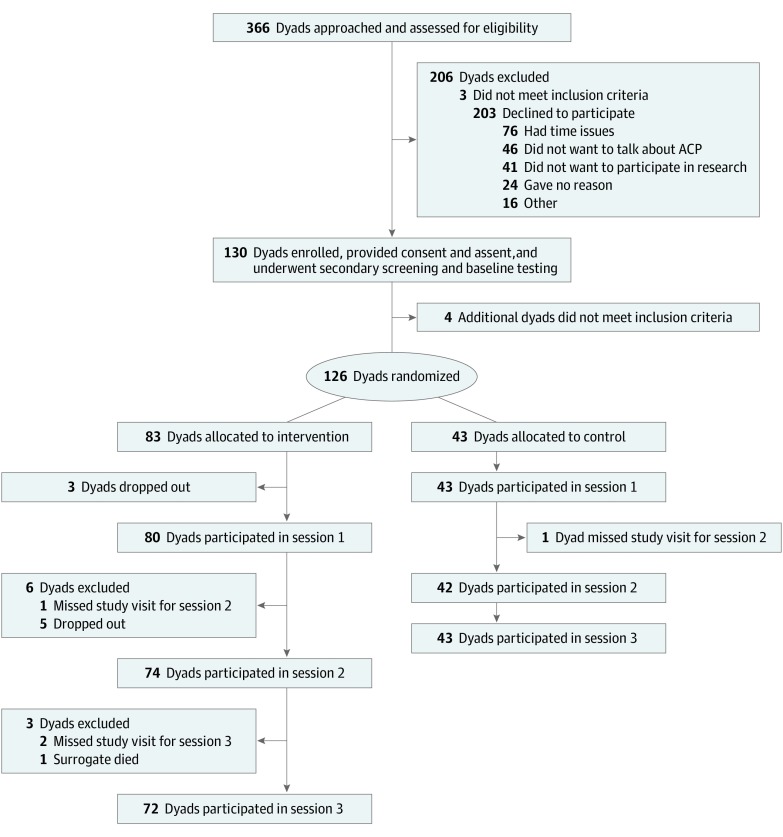
Design, setting, and participants: This cross-sectional survey was conducted among adolescent-family dyads from July 16, 2016, to April 30, 2019, at 4 tertiary care pediatric US hospitals. Participants included 80 adolescent-family dyads (160 participants) within a larger study facilitating pediatric advance care planning. Adolescent eligibility criteria included being aged 14 to 21 years, English speaking, being diagnosed with cancer at any stage, and knowing their diagnosis. Family included legal guardians for minors or chosen surrogate decision-makers for those aged 18 years or older. Data analysis was performed from April 2019 to November 2019.
Exposure: Session 1 of the 3-session Family Centered Pediatric Advance Care Planning for Teens With Cancer intervention.
Main outcomes and measures: The main outcome was congruence between adolescents with cancer and their families regarding adolescents' values, goals, and beliefs about end-of-life care. Prevalence-adjusted and bias-adjusted κ (PABAK) values were used to measure congruence on the Lyon Advance Care Planning Survey-Revised (Patient and Surrogate versions).
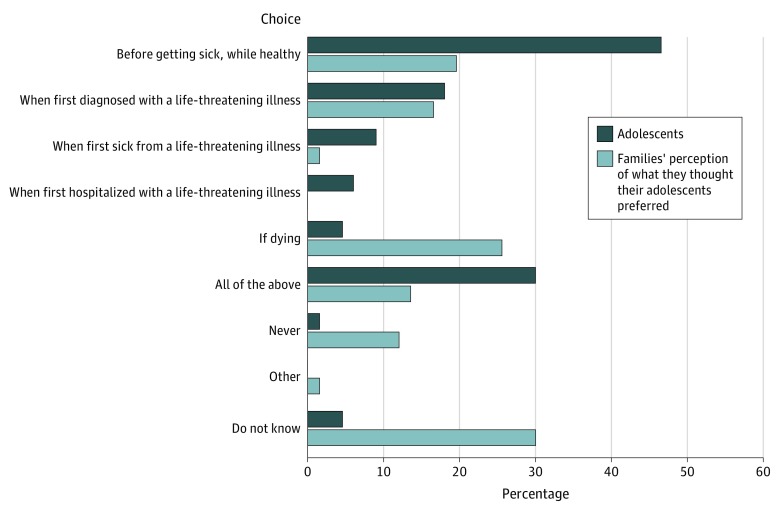
Results: A total of 80 adolescent-family dyads (160 participants) were randomized to the intervention group in the original trial. Among the adolescents, 44 (55.0%) were female and 60 (75.0%) were white, with a mean (SD) age of 16.9 (1.8) years. Among family members, 66 (82.5%) were female and 65 (81.3%) were white, with a mean (SD) age of 45.3 (8.3) years. Family members' understanding of their adolescent's beliefs about the best time bring up end-of-life decisions was poor: 86% of adolescents wanted early timing (before getting sick, while healthy, when first diagnosed, when first sick from a life-threatening illness, or all of the above), but only 39% of families knew this (PABAK, 0.18). Families' understanding of what was important to their adolescents when dealing with their own dying was excellent for wanting honest answers from their physician (PABAK, 0.95) and understanding treatment choices (PABAK, 0.95) but poor for dying a natural death (PABAK, 0.18) and being off machines that extend life, if dying (PABAK, 0).
Conclusions and relevance: Many families had a poor understanding of their adolescent's values regarding their own end-of-life care, such as when to initiate end-of-life conversations and preference for being off machines that extend life. Pediatric advance care planning could minimize these misunderstandings with the potential for a substantial impact on quality of care.
Conflict of interest statement
Figures
References
-
- Friebert S, Williams C NHPCO’s facts and figures: pediatric palliative & hospice care in America. Published 2015. Accessed October 3, 2019. http://www.nhpco.org/wp-content/uploads/2019/04/Pediatric_Facts-Figures-...
Publication types
MeSH terms
Grants and funding
LinkOut - more resources
Full Text Sources
Medical
Miscellaneous
