Scoliosis Caused by Limb-Length Discrepancy in Children
- PMID: 32429019
- PMCID: PMC7788367
- DOI: 10.31616/asj.2019.0374
Scoliosis Caused by Limb-Length Discrepancy in Children
Abstract
Study design: Single-center retrospective study in pediatric patients.
Purpose: The purpose of the study was to investigate the effects of the presence and severity of leg-length discrepancy (LLD) on scoliosis in children.
Overview of literature: LLD is a common orthopedic problem that can result in standing imbalance, low back pain, and stress fractures. It may cause structural changes in the spine over time, but the exact effect of LLD on scoliosis is unknown.
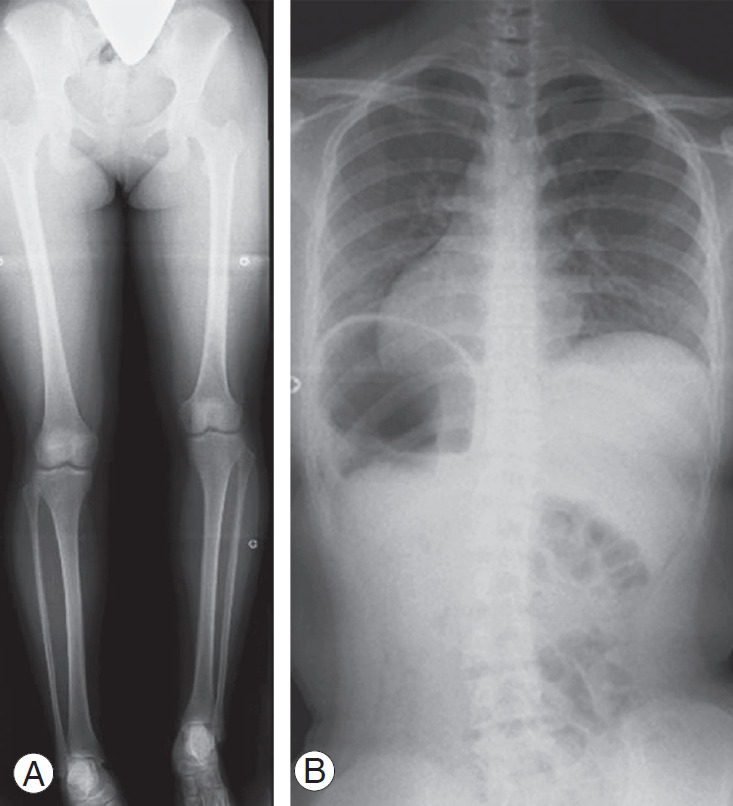
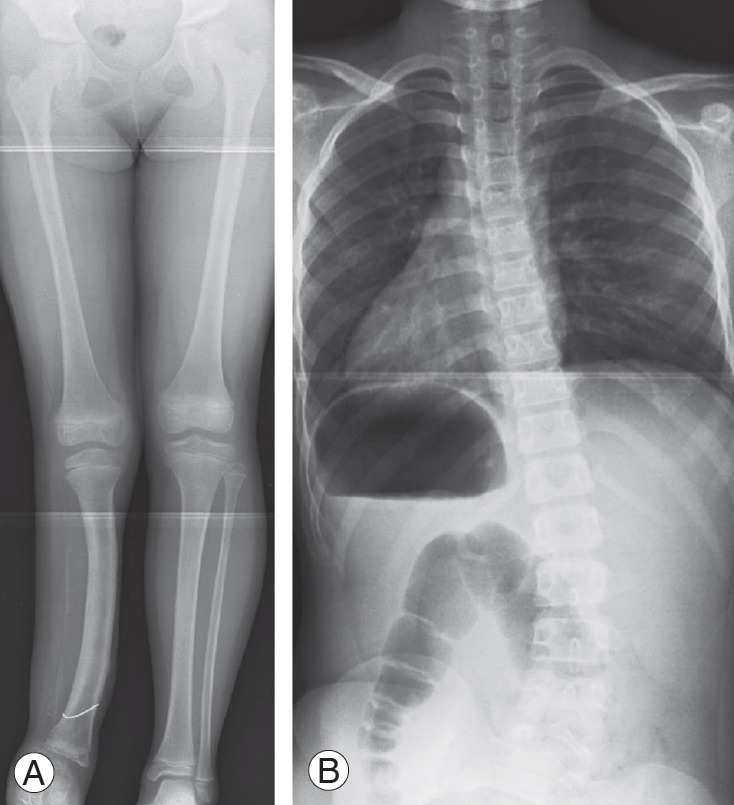
Methods: The subjects were 23 children with LLD ≥20 mm (range, 27-65 mm) treated at Nagoya University Hospital between 2007 and 2017. Whole spine posteroanterior standing radiographs and whole lower limb radiographs in a supine position were recorded. Data were collected for demographics, LLD, Cobb angle, pelvic obliquity, and Nash/Moe index. Scoliosis was defined as a Cobb angle ≥10°. Leg length was measured from the top of the femoral head to the middle of the tibial plafond, and LLD was defined as the difference between the left and right leg lengths.
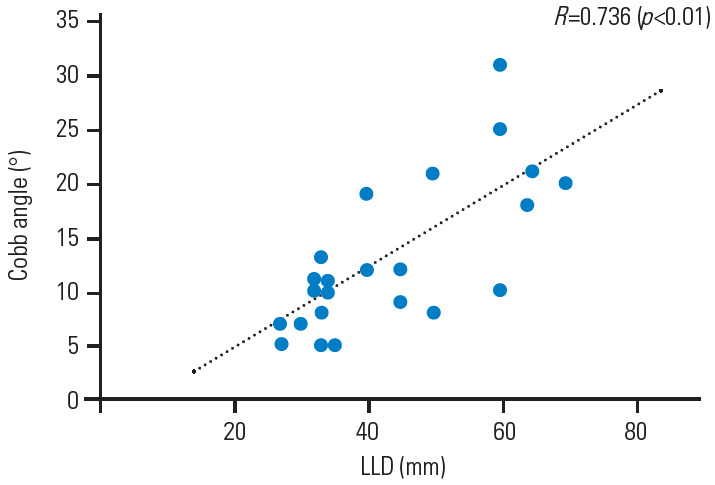
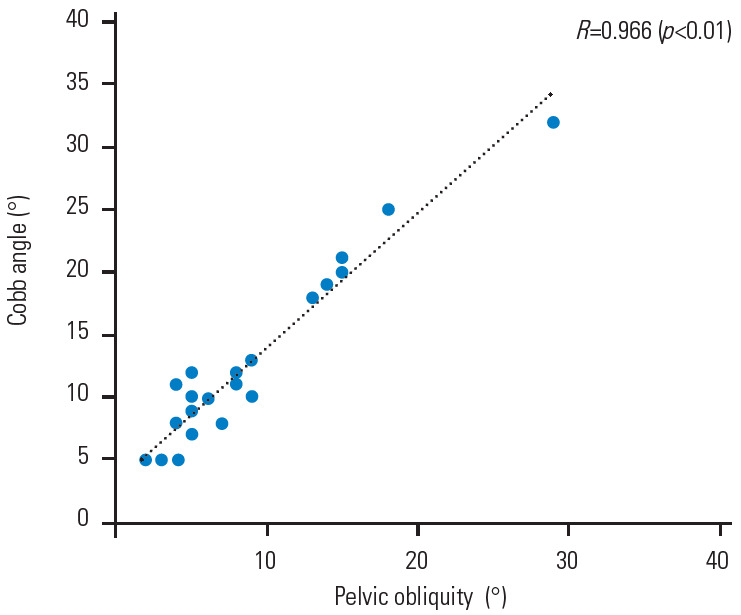
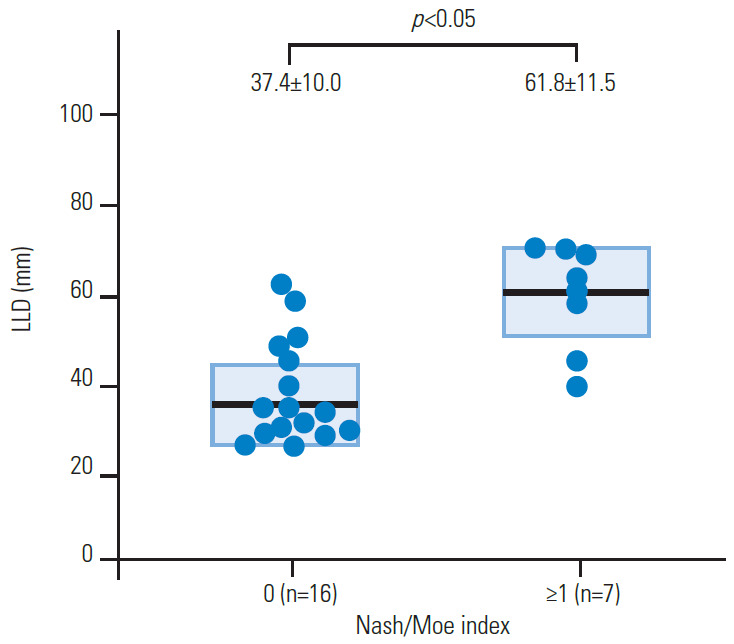
Results: The patients (nine males and 14 females) had a mean age of 14.0 years (range, 5-18 years). The average LLD was 44.3±17.2 mm, with LLDs of 20 to 39 mm, 40 to 59 mm, and ≥60 mm in 13, five, and five subjects, respectively. The average Cobb angle was 13.0°±7.0°, and 15 subjects (65%) had scoliosis. Convexity of the scoliosis was to the short leg side in all cases. The Cobb angle was significantly related to the severity of the LLD (R=0.736, p<0.01), pelvic obliquity (R=0.966, p<0.01), and Nash/Moe index (p<0.05).
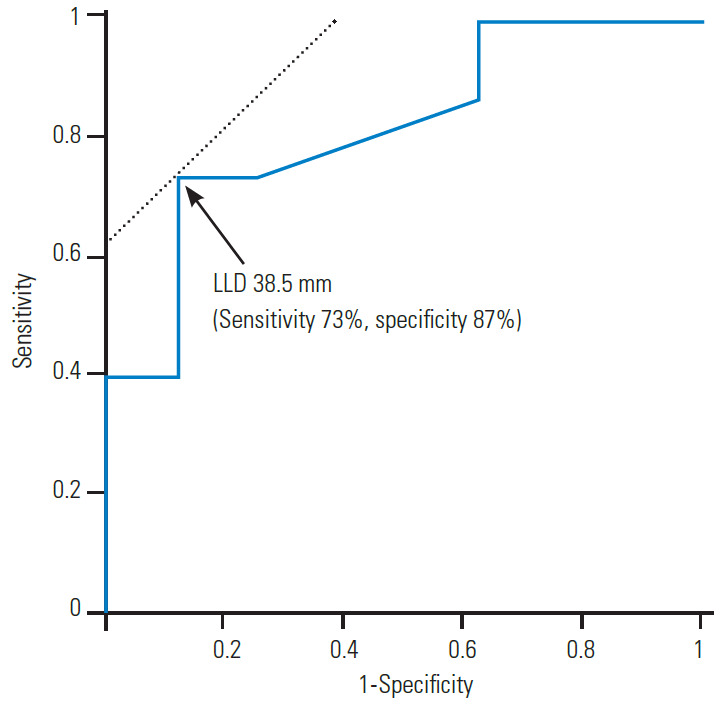
Conclusions: LLD is a common pediatric condition that can cause scoliosis of the spine. Severe scoliosis may develop if the LLD is ≥30 mm. Long-term studies are needed to examine the effect of LLD resolution on the elimination of scoliosis.
Keywords: Child; Cobb angle; Leg length inequality; Pelvic obliquity; Scoliosis.
Conflict of interest statement
No potential conflict of interest relevant to this article was reported.
Figures
References
-
- Gurney B. Leg length discrepancy. Gait Posture. 2002;15:195–206. - PubMed
-
- Aaron AD, Eilert RE. Results of the Wagner and Ilizarov methods of limb-lengthening. J Bone Joint Surg Am. 1996;78:20–9. - PubMed
-
- Rose R, Fuentes A, Hamel BJ, Dzialo CJ. Pediatric leg length discrepancy: causes and treatments. Orthop Nurs. 1999;18:21–9. - PubMed
-
- Enjolras O, Chapot R, Merland JJ. Vascular anomalies and the growth of limbs: a review. J Pediatr Orthop B. 2004;13:349–57. - PubMed
-
- Breugem CC, Maas M, Breugem SJ, Schaap GR, van der Horst CM. Vascular malformations of the lower limb with osseous involvement. J Bone Joint Surg Br. 2003;85:399–405. - PubMed
LinkOut - more resources
Full Text Sources
Research Materials