. 2020 May 15;12(5):328.
doi: 10.3390/toxins12050328.

Tetanus Toxin Synthesis is Under the Control of A Complex Network of Regulatory Genes in Clostridium tetani

Affiliations

Tetanus Toxin Synthesis is Under the Control of A Complex Network of Regulatory Genes in Clostridium tetani

Diana Chapeton-Montes et al. Toxins (Basel). .

Abstract

Clostridium tetani produces a potent neurotoxin, the tetanus toxin (TeNT), which is responsible for an often-fatal neurological disease (tetanus) characterized by spastic paralysis. Prevention is efficiently acquired by vaccination with the TeNT toxoid, which is obtained by C.tetani fermentation and subsequent purification and chemical inactivation. C.tetani synthesizes TeNT in a regulated manner. Indeed, the TeNT gene (tent) is mainly expressed in the late exponential and early stationary growth phases. The gene tetR (tetanus regulatory gene), located immediately upstream of tent, encodes an alternative sigma factor which was previously identified as a positive regulator of tent. In addition, the genome of C.tetani encodes more than 127 putative regulators, including 30 two-component systems (TCSs). Here, we investigated the impact of 12 regulators on TeNT synthesis which were selected based on their homology with related regulatory elements involved in toxin production in other clostridial species. Among nine TCSs tested, three of them impact TeNT production, including two positive regulators that indirectly stimulate tent and tetR transcription. One negative regulator was identified that interacts with both tent and tetR promoters. Two other TCSs showed a moderate effect: one binds to the tent promoter and weakly increases the extracellular TeNT level, and another one has a weak inverse effect. In addition, CodY (control of dciA (decoyinine induced operon) Y) but not Spo0A (sporulation stage 0) or the DNA repair protein Mfd (mutation frequency decline) positively controls TeNT synthesis by interacting with the tent promoter. Moreover, we found that inorganic phosphate and carbonate are among the environmental factors that control TeNT production. Our data show that TeNT synthesis is under the control of a complex network of regulators that are largely distinct from those involved in the control of toxin production in Clostridium botulinum or Clostridium difficile.

Keywords: Clostridium botulinum; Clostridium tetani; gene transcription; tetanus toxin; two-component system.


Conflict of interest statement

LP, DG, FB, VC, and SD were employed by the company Sanofi-Pasteur. The remaining authors declare that the research was conducted in the absence of any commercial or financial relationships that could be construed as a potential conflict of interest.

Figures
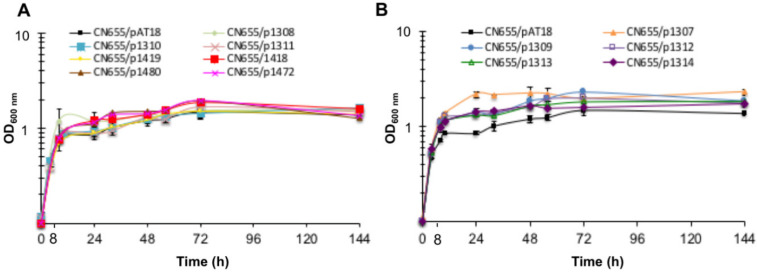
Figure 1
Figure 1
Growth kinetics of C. tetani strain CN655/pAT18 (empty vector) and CN655 antisense strains. (A) CN655/p1308, CN655/p1310, CN655/p1311, CN655/p1419, CN655/p1418, CN655/1480 and CN655/p1472 showed a similar kinetics compared to CN655/pAT18 strain. (B) CN655/p1307, CN655/p1309, CN655/p1312, CN655/p1313 and CN655/p1314 displayed a more abundant growth than CN655/pAT18 in the early stationary phase (12–48 h). Data are mean values ± SEM of at least three independent cultures.
Figure 2
Figure 2
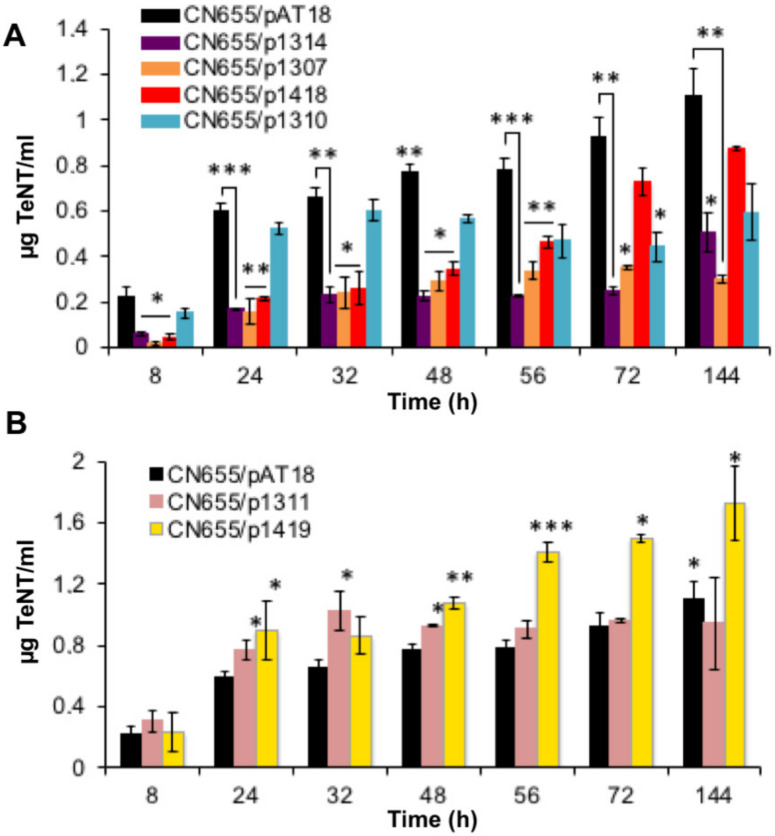
Extracellular tetanus toxin (TeNT) produced by C. tetani CN655/pAT18 (empty vector) and CN655 antisense strains. (A) Extracellular toxin was reduced in the culture supernatant of CN655/p1307, CN655/p1310, CN655/p1314 and CN655/p1418. (B) CN655/p1311 and CN655/p1419 showed elevated extracellular toxin kinetics compared to control strain CN655/pAT18. Statistical significance of differences between control and anti-sense strains is indicated with p-values (*, p < 0.05; **, p < 0.01; ***, p < 0.001). Data are mean values ± SEM of at least three independent cultures.
Figure 3
Figure 3
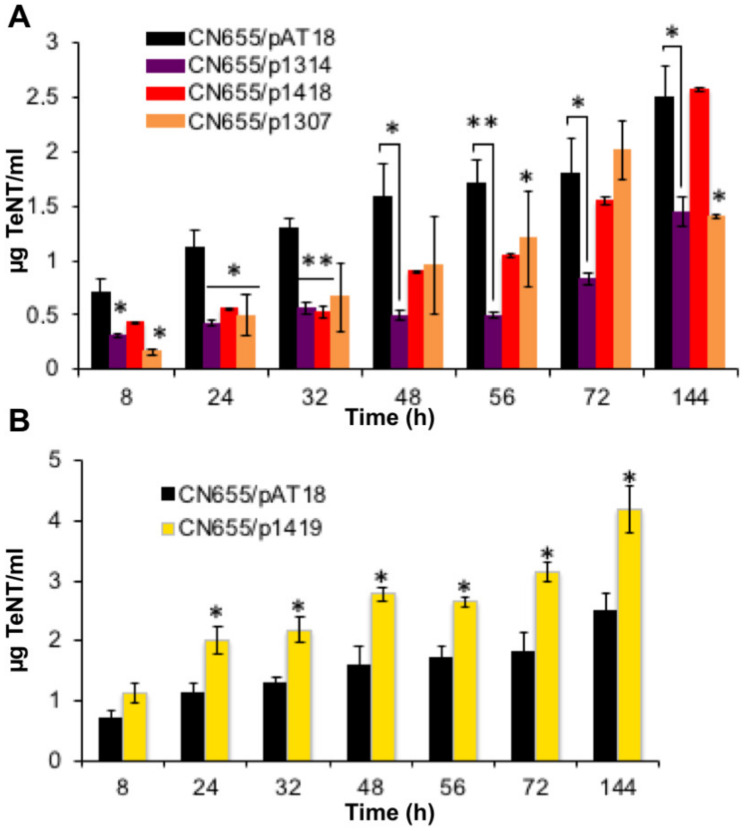
Total tetanus toxin (TeNT) produced by C. tetani CN655/pAT18 (empty vector) and CN655 antisense strains. (A) Total tetanus toxin production was reduced in CN655/p1307, CN655/p1314 and CN655/p1418. (B) CN655/p1419 showed elevated total toxin kinetics compared to control strain CN655/pAT18. Three independent experiments have been done. Statistical significance of differences between control strain and anti-sense strains is indicated with p-values (*, p < 0.05; **, p < 0.01).
Figure 4
Figure 4
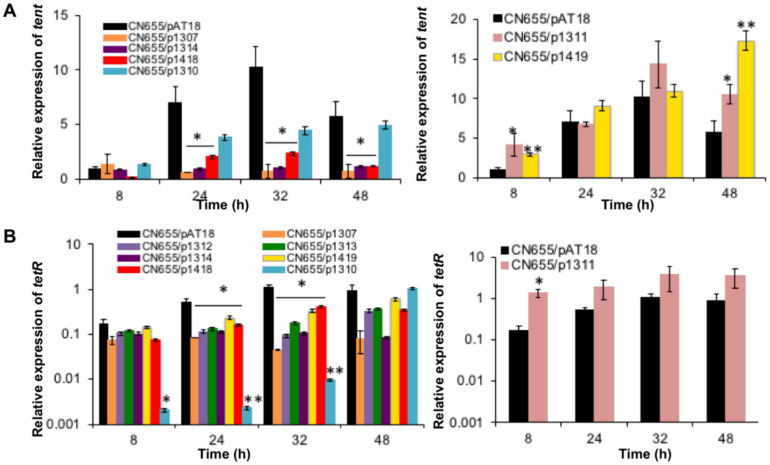
Expression of (A) tent and (B) tetR in CN655/pAT 18 and CN655 antisense strains. (A) The expression of tent was repressed in CN655/p1307, CN655/p1310, CN655/p1314 and CN655/p1418 compared to the control strain CN655/pAT18. For strains CN655/p1311 and CN655/p1419, an increased tent expression was observed. (B) The expression of tetR was repressed in CN655/p1307, CN655/p1310, CN655/p1312, CN655/p1313, CN655/p1314, CN655/p1419 and CN655/p1418. Strain CN655/p1311 showed an increase in tetR expression compared to the control strain CN655/pAT18. Target gene expression was normalized to rpoB and gyrA. Three independent experiments have been done. Statistical significance of differences between control and the anti-sense strains is indicated with p-values (*, p < 0.05; **, p < 0.01).
Figure 5
Figure 5
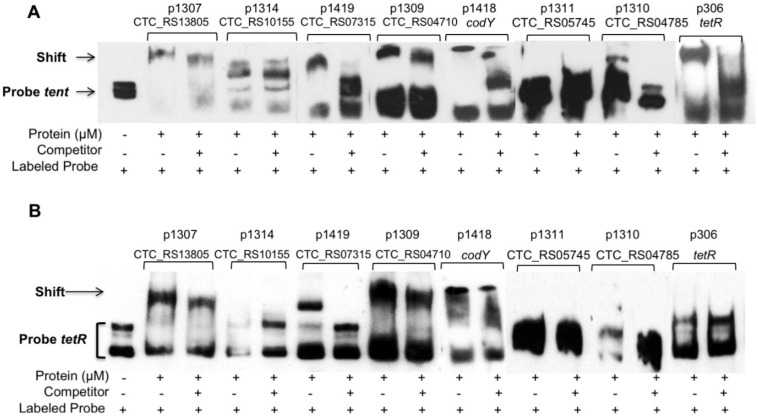
Electrophoretic mobility shift assay (EMSA) showing regulatory protein binding to tent (A) and tetR (B) promoters. Biotin-labeled DNA probes corresponding to the promoter regions of tent (Ptent) and tetR (PtetR) were incubated with 5 μM of the recombinant proteins CTC_RS13805, CTC_RS10155, CTC_RS07315, CTC_RS04710, CTC_RS05745, CTC_RS04785, CodY and TetR. The specific binding of recombinant proteins to promoter probes resulted in an observable mobility shift when compared to the Ptent and PtetR alone. Competition assays were performed with a 300-fold excess of unlabeled probe. Specificity of binding to Ptent was confirmed for CTC_RS07315, CTC_RS04785, CodY and TetR. CTC_RS07315 was the only protein showing specific binding to PtetR. Addition of recombinant proteins, unlabeled promoter probe as cold competitor and labeled promoter probes are indicated. Representative experiments out of three are shown.
Figure 6
Figure 6
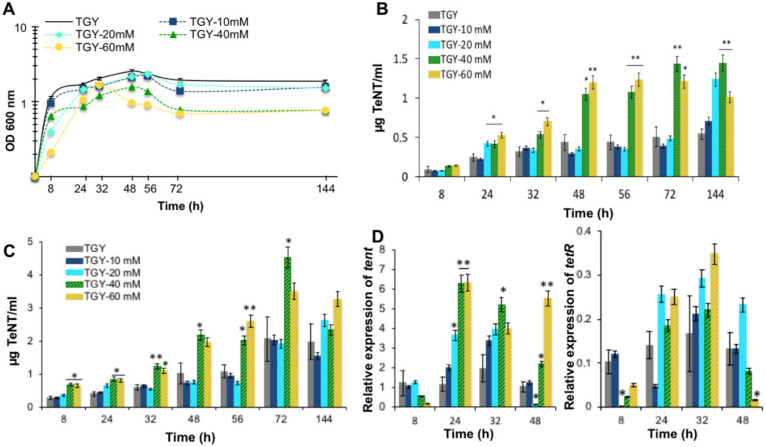
Effect of inorganic phosphate on tetanus toxin (TeNT) production, and tent/tetR expression. (A) Growth kinetics of CN655 in TGY supplemented with various concentrations of inorganic phosphate. (B) Extracellular TeNT levels. (C) Total TeNT levels. (D) Expression of tent and (E) tetR. Data are mean values ± SEM of at least three independent cultures. *, p < 0.05; **, p < 0.01.
Figure 7
Figure 7
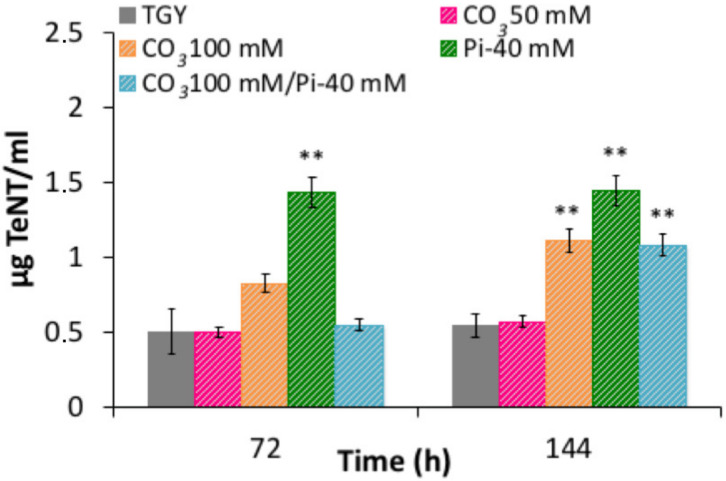
Effects of sodium carbonate and inorganic phosphate on extracellular tetanus toxin (TeNT). C. tetani CN655 was grown in TGY supplemented with either 50 or 100 mM Na2CO3, 40 mM Pi, or 100 mM Na2CO3 and 40 mM Pi. Extracellular toxin levels were increased in TGY medium supplemented with 40 mM Pi or 100 mM Na2CO3. The addition of both Pi and Na2CO3 did not result in a synergistic effect on TeNT production. Data are mean values ± SEM of at least three independent assays. **, p < 0.05.
Figure 8
Figure 8
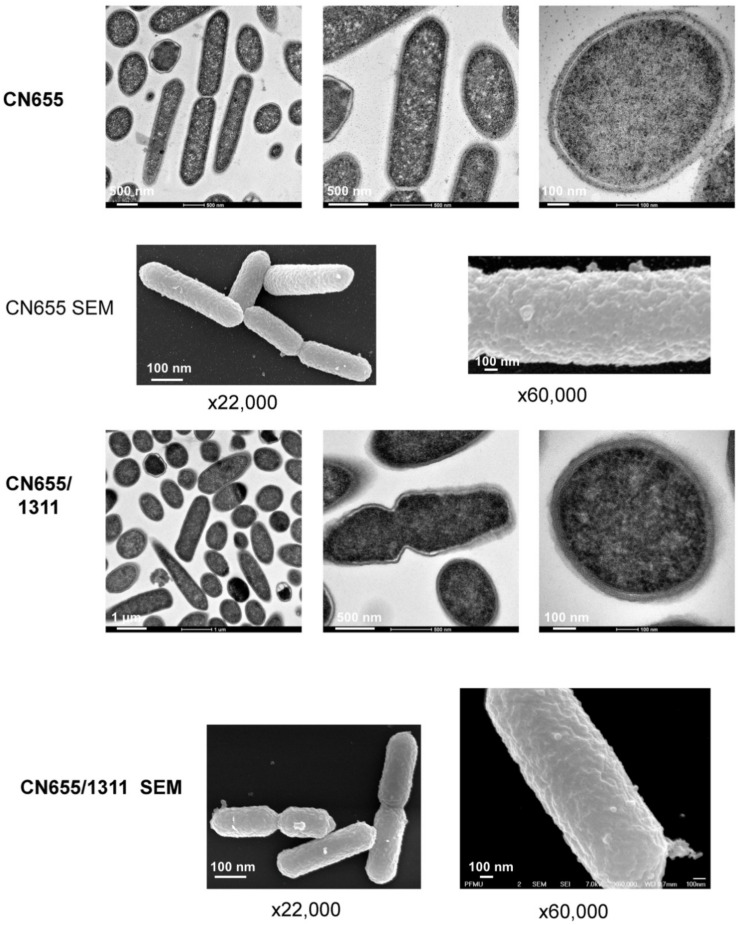
Ultrastructural morphology of CN655 and CN655/p1311. Bacteria from 18 h TGY culture were processed for transmission electron microscopy and scanning electron microscopy (SEM). CN655 showed well-delineated bacterial wall layers, whereas the bacterial wall of CN655/p1311 was disorganized with diffuse and enlarged wall layers. CN655/p1311 showed more abundant blebbings on the bacterial surface. About 100 bacterial cells were observed for each preparation.
Figure 9
Figure 9
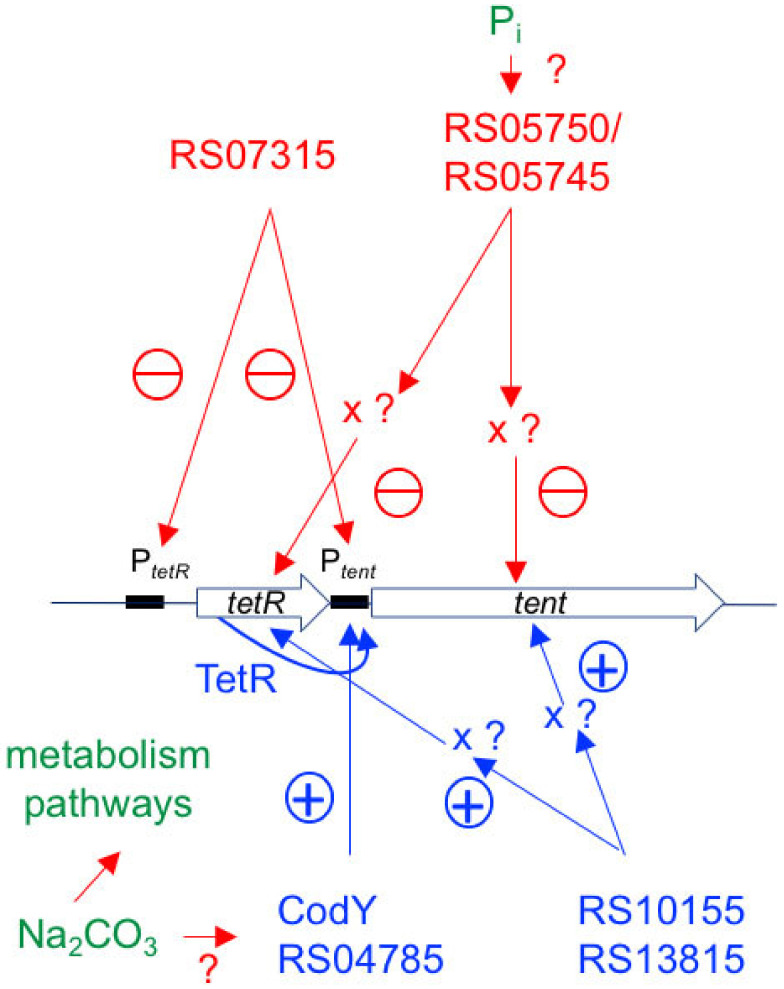
Schematic summary of the regulators of tetanus toxin (TeNT) synthesis of this study. Two two-component systems (TCSs) (RS13815 and RS10155) as well as CodY are positive regulators. They activate the transcription of tetR and tent, only CodY acts directly by interacting with the promoter of tent (Ptent). In addition, the TCS RS04785 increases the extracellular TeNT level without or only weakly affecting the total synthesis by interacting with Ptent. One TCS (RS07315) is a negative regulator that interacts with (Ptent) and (PtetR). The TCS RS05750 has a moderate negative effect by weakly and indirectly decreasing tent and tetR transcription. Inorganic phosphate (Pi) and carbonate are environmental factors that influence TeNT synthesis through the TCS pathway and/or through the general metabolism.

References

    1. Popoff M.R., Mazuet C., Poulain B. The Prokaryotes: Human Microbiology. 4th ed. Volume 5. Springer; Berlin/Heidelberg, Germany: 2013. Botulism and tetanus; pp. 247–290.
    1. Bercsenyi K., Schmieg N., Bryson J.B., Wallace M., Caccin P., Golding M., Zanotti G., Greensmith L., Nischt R., Schiavo G. Tetanus toxin entry. Nidogens are therapeutic targets for the prevention of tetanus. Science. 2014;346:1118–1123. doi: 10.1126/science.1258138. - DOI - PubMed
    1. Rossetto O., Scorzeto M., Megighian A., Montecucco C. Tetanus neurotoxin. Toxicon. 2013;66:59–63. doi: 10.1016/j.toxicon.2012.12.027. - DOI - PubMed
    1. Schmieg N., Berscenyi K., Schiavo G. Uptake and transport of clostridial neurotoxins. In: Alouf J., Ladant D., Popoff M.R., editors. The Comprehensive Sourcebook of Bacterial Protein Toxins. 4th ed. Elsevier; Amsterdam, The Netherlands: 2015. pp. 337–360.
    1. WHO Tetanus vaccines: WHO position paper—February 2017. Wkly. Epidemiol. Rec. 2017;92:53–76. - PubMed

Publication types

MeSH terms

LinkOut - more resources