


Health and care service utilisation and cost over the life-span: a descriptive analysis of population data
- PMID: 32429985
- PMCID: PMC7236310
- DOI: 10.1186/s12913-020-05295-2
Health and care service utilisation and cost over the life-span: a descriptive analysis of population data
Abstract
Background: Current demographic changes affect both the level and composition of health and care needs in the population. The aim of this study was to estimate utilisation and cost for a comprehensive range of health and care services by age and gender to provide an in-depth picture of the life-span pattern of service needs and related costs.
Methods: Data on service use in 2010 for the entire population in Norway were collected from four high-quality national registers. Cost for different services were calculated combining data on service utilisation from the registries and estimates of unit cost. Data on cost and users were aggregated within four healthcare services and seven long-term care services subtypes. Per capita cost by age and gender was decomposed into user rates and cost per user for each of the eleven services.
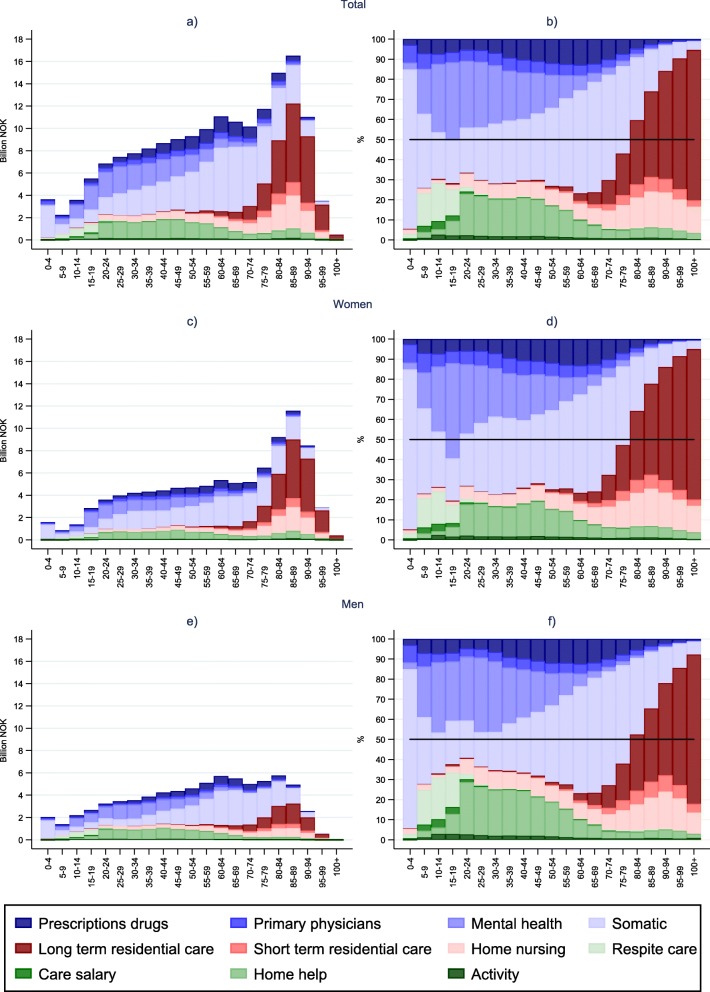
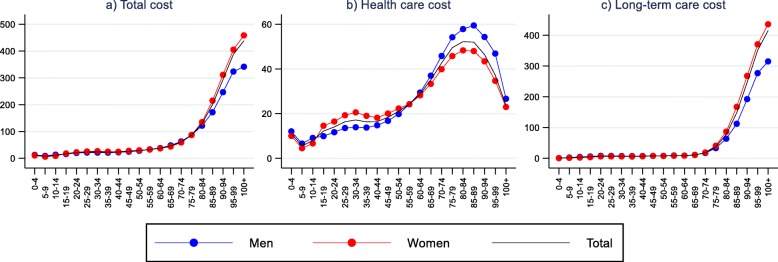
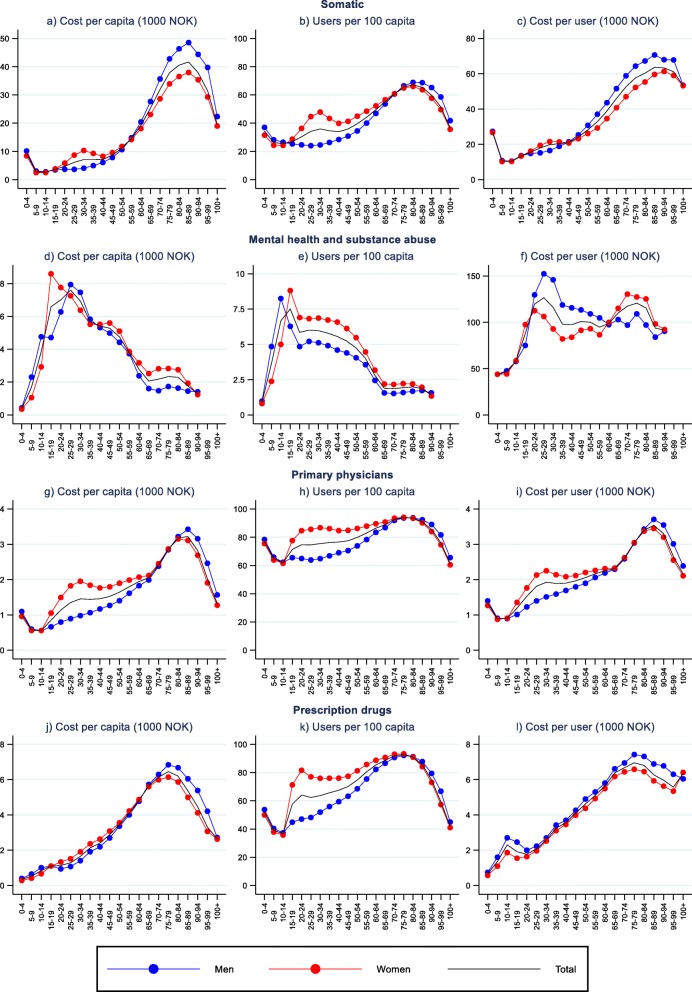
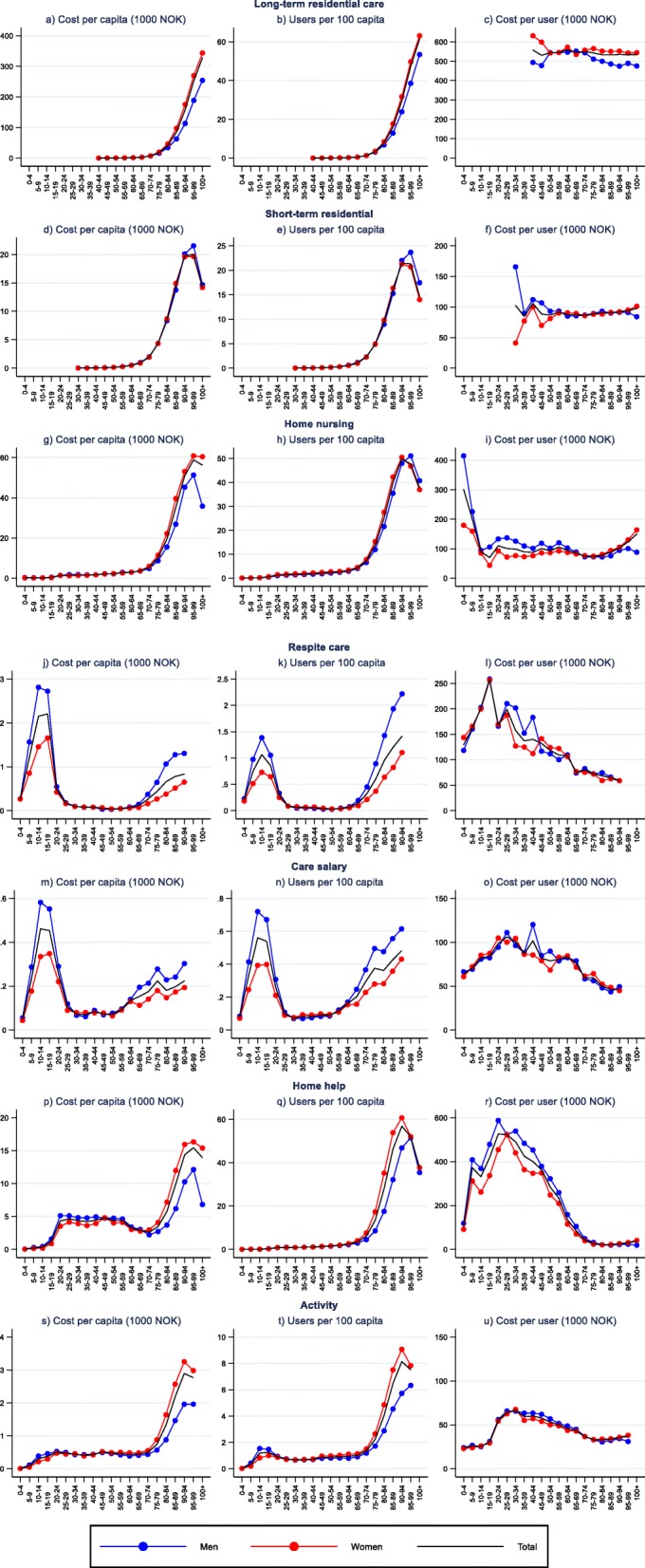
Results: Half of the population is under 40 years of age, but only a quarter of the health and care cost is used on this age group. The age-group of 65 or older, on the other hand, represent only 15% of the population, but is responsible for almost half of the total cost. Healthcare cost dominates in ages under 80 and mental health services dominates in adolescents and young adults. Use of other healthcare services are high in middle aged and elderly but decreases for the oldest old. Use of care services and in particular institutional care increases in old age. Healthcare cost per user follows roughly the same age pattern as user rates, whereas user cost for care services typically are either relatively stable or decrease with age among adults. Gender differences in the age pattern of health and care costs are also revealed and discussed.
Conclusion: The type of services used, and the related cost, show a clear life-span as well as gender pattern. Hence, population aging and narrowing gender-gap in longivety calls for high policy awarness on changing health and care needs. Our study also underscores the need for an attentive and pro-active stance towards the high service prevalence and high cost of mental health care in our upcoming generations.
Keywords: Age pattern; Gender differences; Health care costs; Health services; Home care; Hospital; Long-term care; Nursing home; Utilisation.
Conflict of interest statement
SINTEF is an independent, not-for-profit research organisation. The study was initiated by the authors and funded through an open research call. The authors declared no conflicts of interest with respect to the research, authorship and/or publication of this article.
Figures
References
-
- Karlsson M, Iversen T, Øien H. Scandinavian long-term care financing. In: Costa-Font J, Courbage C, editors. Financing long-term care in Europe: institutions, markets and models. London: Palgrave; 2012. p. 254–78.
-
- OECD. Health at a Glance 2017: OECD Indicators. Paris: OECD Publishing. p. 2017.
-
- Hagen TP, Amayu KN, Godager G, Iversen T, Øien H. Utviklingen i kommunenes helse- og omsorgstjenester 1986–2010. HERO 2011: 5. Oslo: University of Oslo; 2011.
MeSH terms
Grants and funding
LinkOut - more resources
Full Text Sources
Miscellaneous
