


Morbidity and Mortality of Typhoid Intestinal Perforation Among Children in Sub-Saharan Africa 1995-2019: A Scoping Review
- PMID: 32430740
- PMCID: PMC7236653
- DOI: 10.1007/s00268-020-05567-2
Morbidity and Mortality of Typhoid Intestinal Perforation Among Children in Sub-Saharan Africa 1995-2019: A Scoping Review
Abstract
Background: Typhoid fever incidence and complications, including intestinal perforation, have declined significantly in high-income countries, with mortality rates <1%. However, an estimated 10.9 million cases still occur annually, most in low- and middle-income countries. With the availability of a new typhoid conjugate vaccine licensed for children and recommended by the World Health Organization, understanding severe complications, including associated mortality rates, is essential to inform country-level decisions on introduction of this vaccine. This scoping review summarizes over 20 years of the literature on typhoid intestinal perforation in sub-Saharan Africa.
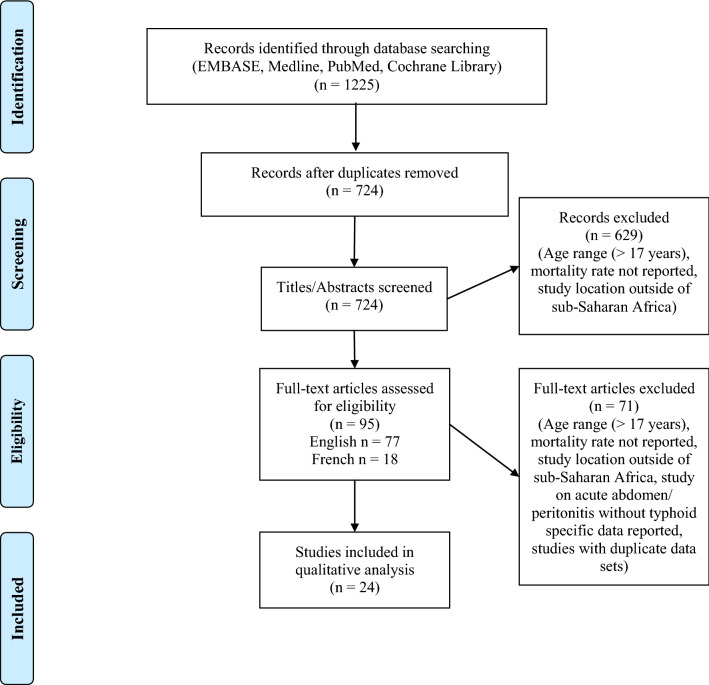
Methods: We searched EMBASE, PubMed, Medline, and Cochrane databases for studies reporting mortality rates due to typhoid intestinal perforation in children, under 18 years old, in sub-Saharan Africa published from January 1995 through June 2019.
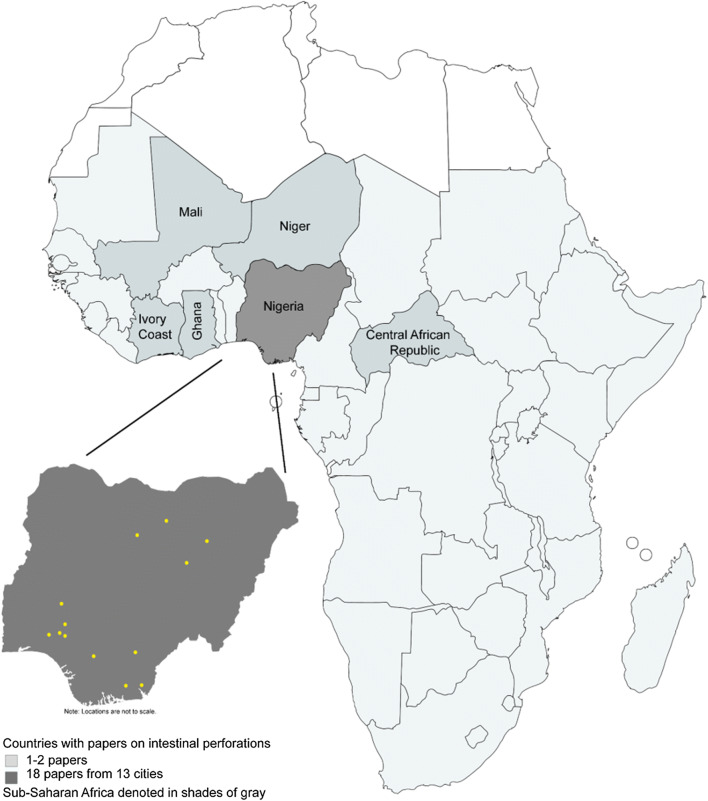
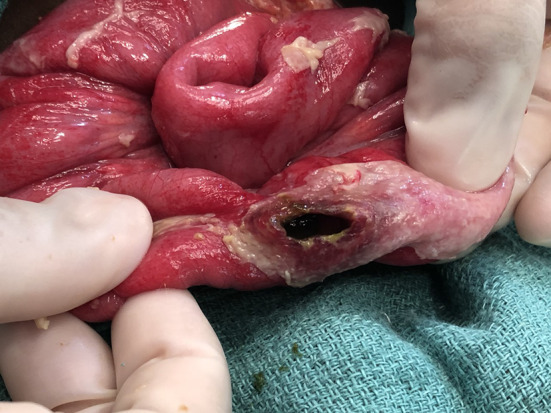
Results: Twenty-four papers from six countries were included. Reported mortality rates ranged from 4.6-75%, with 16 of the 24 studies between 11 and 30%. Thirteen papers included postoperative morbidity rates, ranging from 16-100%. The most documented complications included surgical site infections, intra-abdominal abscesses, and enterocutaneous fistulas. High mortality rates can be attributed to late presentation to tertiary centers, sepsis and electrolyte abnormalities requiring preoperative resuscitation, prolonged perforation-to-surgery interval, and lack of access to critical care or an intensive care unit postoperatively.
Conclusions: Current estimates of mortality related to typhoid intestinal perforation among children in sub-Saharan Africa remain unacceptably high. Prevention of typhoid fever is essential to reduce mortality, with the ultimate goal of a comprehensive approach that utilizes vaccination, improvements in water, sanitation, and hygiene, and greater access to surgical care.
Conflict of interest statement
The authors declare that they have no conflict of interest.
Figures
References
-
- Appiah GD, Hughes MJ, Chatham-Stephens K (2019) Typhoid & paratyphoid fever. In: CDC Yellow Book 2020: health information for international travel. Oxford University Press, New York
-
- World Health Organization (2018) Typhoid vaccines: WHO position paper, March 2018 - PubMed
Publication types
MeSH terms
Grants and funding
LinkOut - more resources
Full Text Sources
