


Evolution of cranberry juice compounds during in vitro digestion and identification of the organic acid responsible for the disruption of in vitro intestinal cell barrier integrity
- PMID: 32431359
- PMCID: PMC7230080
- DOI: 10.1007/s13197-020-04271-2
Evolution of cranberry juice compounds during in vitro digestion and identification of the organic acid responsible for the disruption of in vitro intestinal cell barrier integrity
Abstract
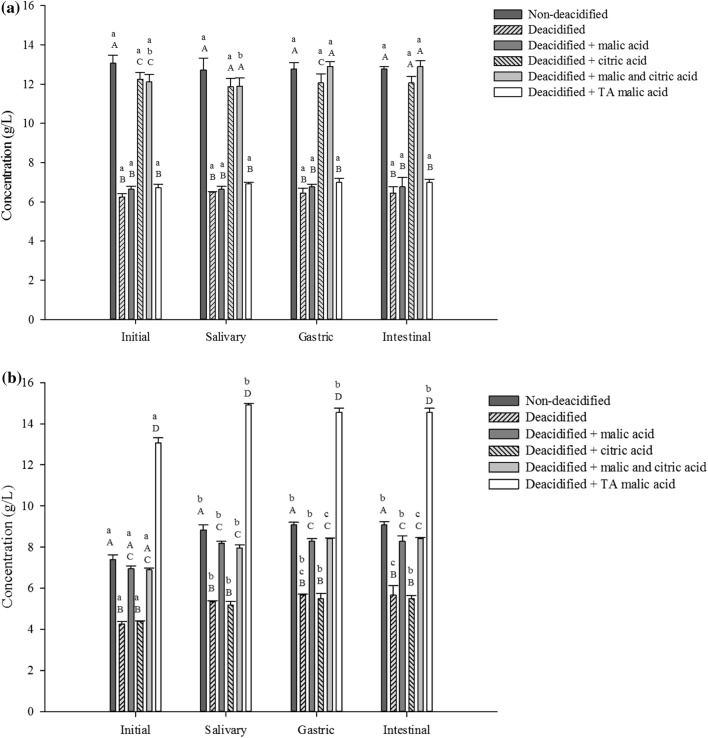
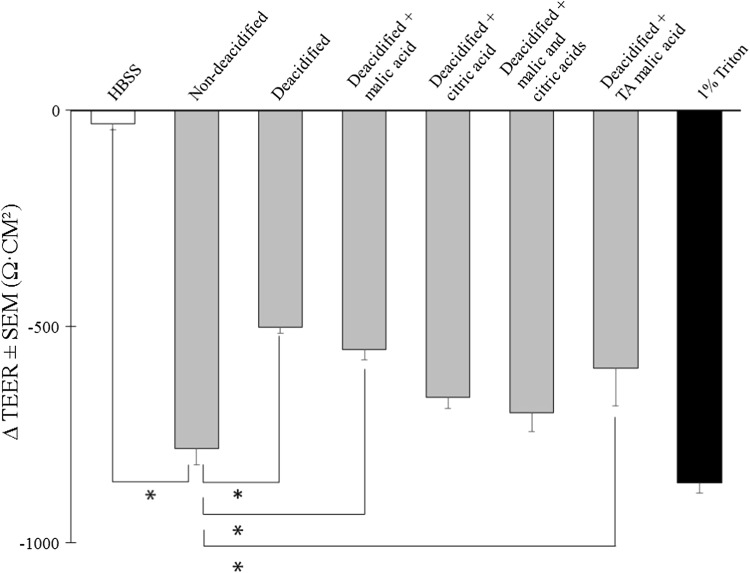
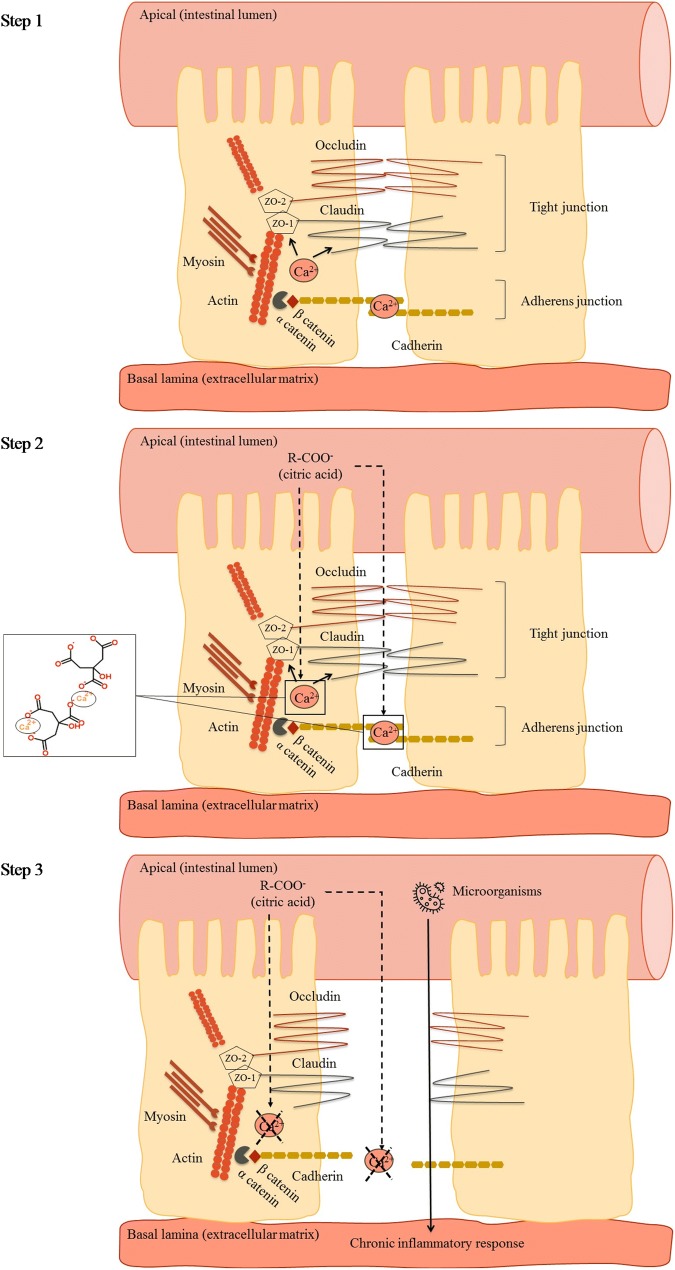
Cranberry juice is increasingly consumed for its richness in polyphenols having a positive impact on human health. Unfortunately, when regularly consumed, its high concentration in organic acids may cause some intestinal discomforts. In the present study, its organic acid content was reduced of 41% by electrodialysis with bipolar membrane (EDBM), and the resulted deacidified juice was divided in five different juices readjusted or not with different concentrations of citric and/or malic acid(s) corresponding to the concentration of this/these acid(s) recovered during EDBM or at the titratable acidity (TA) of the non-deacidified cranberry juice. The evolution of the cranberry juice main interesting compounds (organic acids and polyphenols), according to the concentration and nature of the organic acids present, was studied for the first time at each specific stages of the digestion. After digestion, Caco-2 cells were exposed to all digested juices to identify the organic acid(s) responsible for the loss of integrity of the epithelial barrier. It appeared that organic acid contents did not change during the different steps of the digestion while polyphenolic compounds decreased starting from the gastric phase. Whatever the organic acid concentration or nature, the concentration of PACs significantly decreased between the salivary and the gastric steps but was different according to their structure when the concentration of most of anthocyanins significantly decreased at the gastric step. Also, to the best of our knowledge, it was the first time that citric acid was demonstrated as the organic acid responsible for the loss of integrity of Caco-2 cell monolayers.
Keywords: Caco-2 cells; Cranberry juice; Electrodialysis with bipolar membrane; Epithelial barrier; In vitro digestion; Integrity; Organic acid removal; Organic acids; Polyphenols.
© Association of Food Scientists & Technologists (India) 2020.
Conflict of interest statement
Conflict of interestThe authors declare that they have no conflict of interest.
Figures
References
-
- Bazinet L, Brianceau S, Dubé P, Desjardins Y. Evolution of cranberry juice physico-chemical parameters during phenolic antioxidant enrichment by electrodialysis with filtration membrane. Sep Purif Technol. 2012;87:31–39. doi: 10.1016/j.seppur.2011.11.017. - DOI
-
- Bermúdez-Soto M-J, Tomás-Barberán F-A, García-Conesa M-T. Stability of polyphenols in chokeberry (Aronia melanocarpa) subjected to in vitro gastric and pancreatic digestion. Food Chem. 2007;102:865–874. doi: 10.1016/j.foodchem.2006.06.025. - DOI
-
- Cho MJ, Scieszka JF, Burton PS. Citric acid as an adjuvant for transepithelial transport. Int J Pharm. 1989;52:79–81. doi: 10.1016/0378-5173(89)90091-4. - DOI
LinkOut - more resources
Full Text Sources