. 2020 Jun:14:1-8.
doi: 10.1016/j.cobme.2020.04.001. Epub 2020 Apr 14.

Leveraging the Dynamic Blood-Brain Barrier for Central Nervous System Nanoparticle-based Drug Delivery Applications

Affiliations

Leveraging the Dynamic Blood-Brain Barrier for Central Nervous System Nanoparticle-based Drug Delivery Applications

Connor Copeland et al. Curr Opin Biomed Eng. 2020 Jun.

Abstract

Neurological diseases and injuries have profound impact on a patient's lifespan and functional capabilities, but often lack effective intervention strategies to address the underlying neuropathology. The blood-brain barrier (BBB) is a major hurdle in the effective delivery of therapeutics to the brain. Recent discoveries in BBB maintenance reveal a dynamic system where time of day, disease progression, and even biological variables all strongly influence its permeability and flux of molecules. Nanoparticles can be used to improve the efficacy of therapeutics by increasing circulation time, bioavailability, selectivity, and controlling the rate of payload release. Considering these recent findings, the next generation of pharmacological paradigms are evolving to leverage nanotechnology to turn therapeutic intervention to meet the needs of a specific patient (i.e. personalized medicine).

Keywords: Blood-brain barrier (BBB); Nanoparticle (NP); circadian rhythm; drug delivery; traumatic brain injury (TBI).


Conflict of interest statement

Disclosures The authors declare no conflict of interest.

Figures
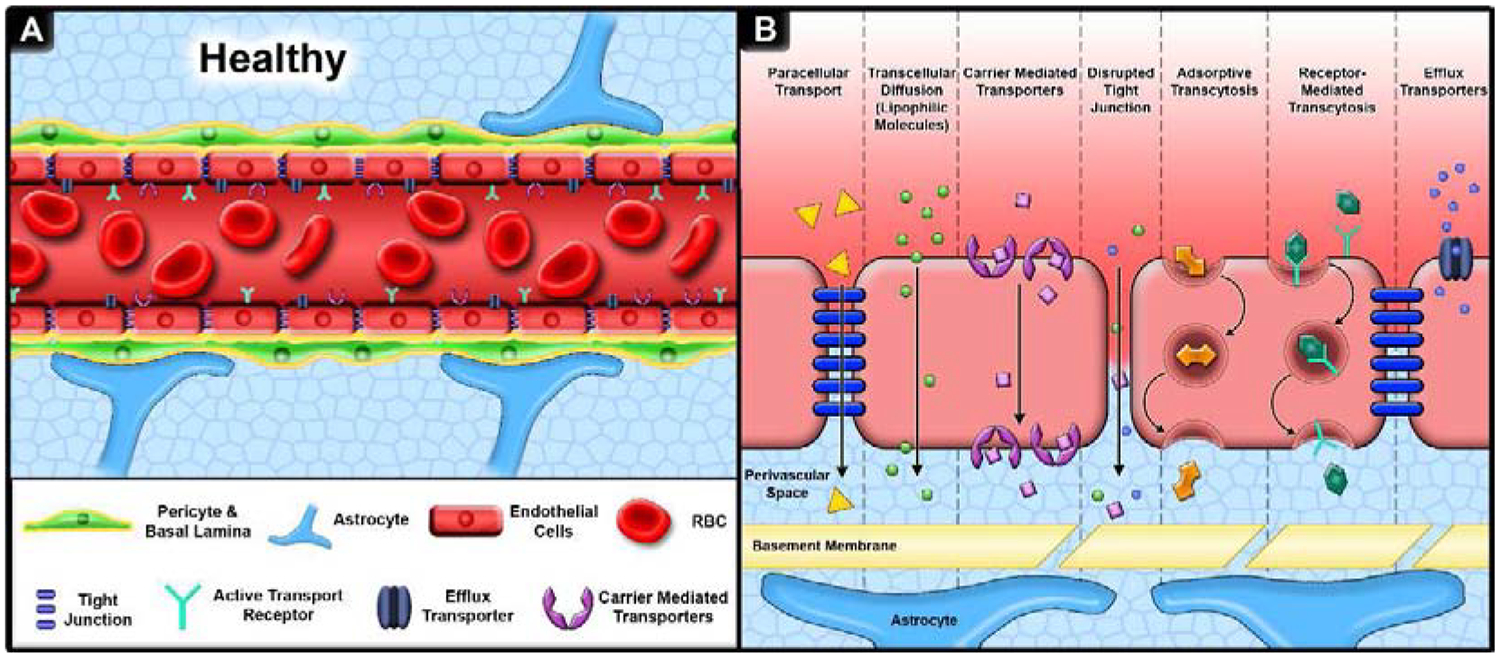
Figure 1:
Figure 1:
Overview of key elements of the BBB. A. The BBB consists of three primary layers, (1) endothelial cells connected by tight junctions surrounded by (2) pericytes and basal lamina with (3) astrocytic feet extending to and wrapping around the BBB. B. Molecular transport across the BBB is mediated by paracellular diffusion (hydrophilc molecules), transcellular diffusion (lipophilic and gas molecules), carrier mediated transport (glucose), absorptive transcytosis (albumin), receptor mediated transport (transferrin, insulin), and efflux transporters (P-gp). Alterations in homeostatic conditions such as trauma, neurodegenerative disease, or prolonged sleep deprivation can lead to the loss of tight junctions and altered active transport systems thereby increasing BBB permeability.
Figure 2:
Figure 2:
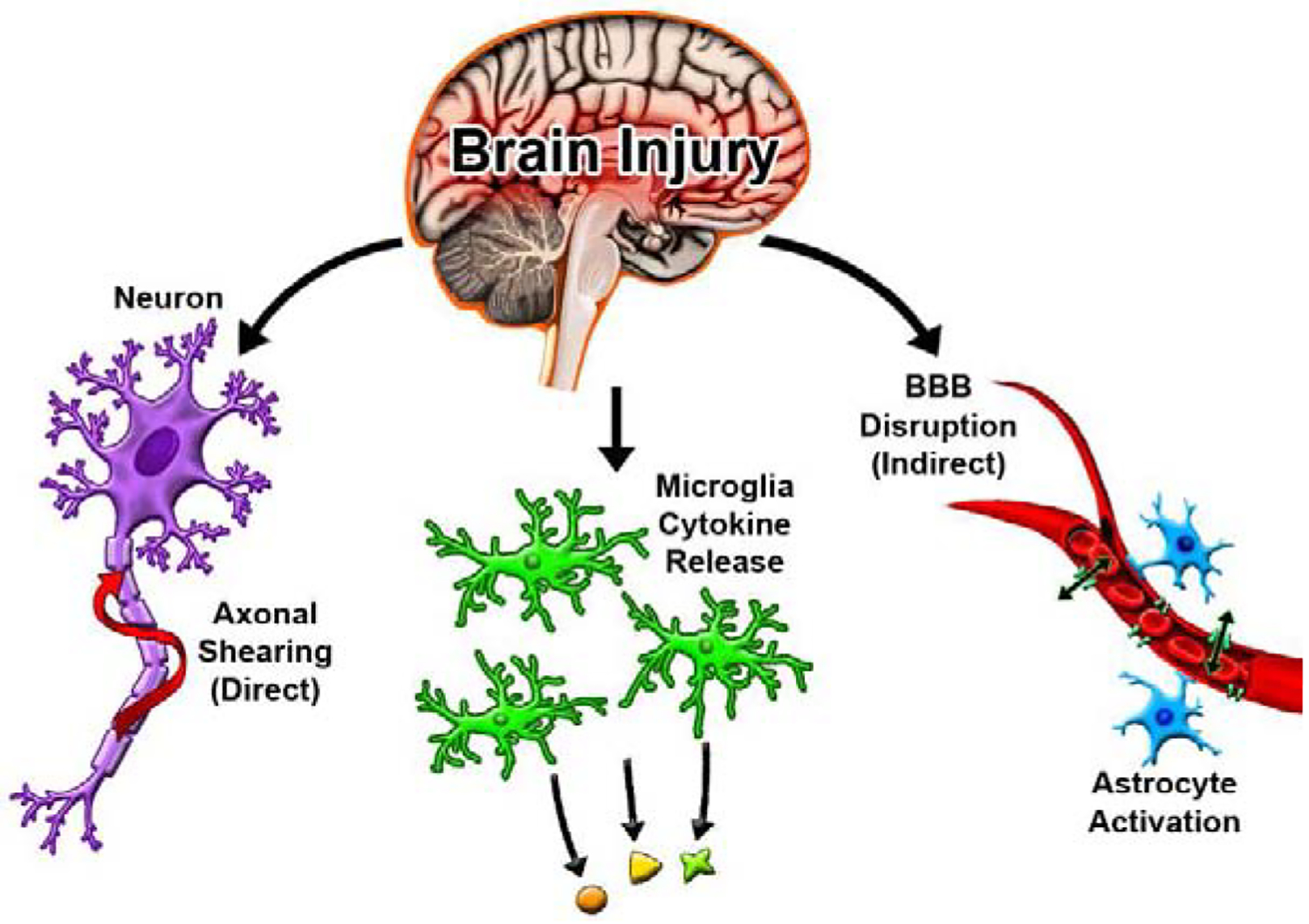
Immediately following a TBI, cells experience direct damage resulting in axonal shearing and the release of cellular debris. Microglia then initiate cytokine release and a cascading inflammatory response is triggered further disrupting the BBB and activating immune cells
Figure 3:
Figure 3:
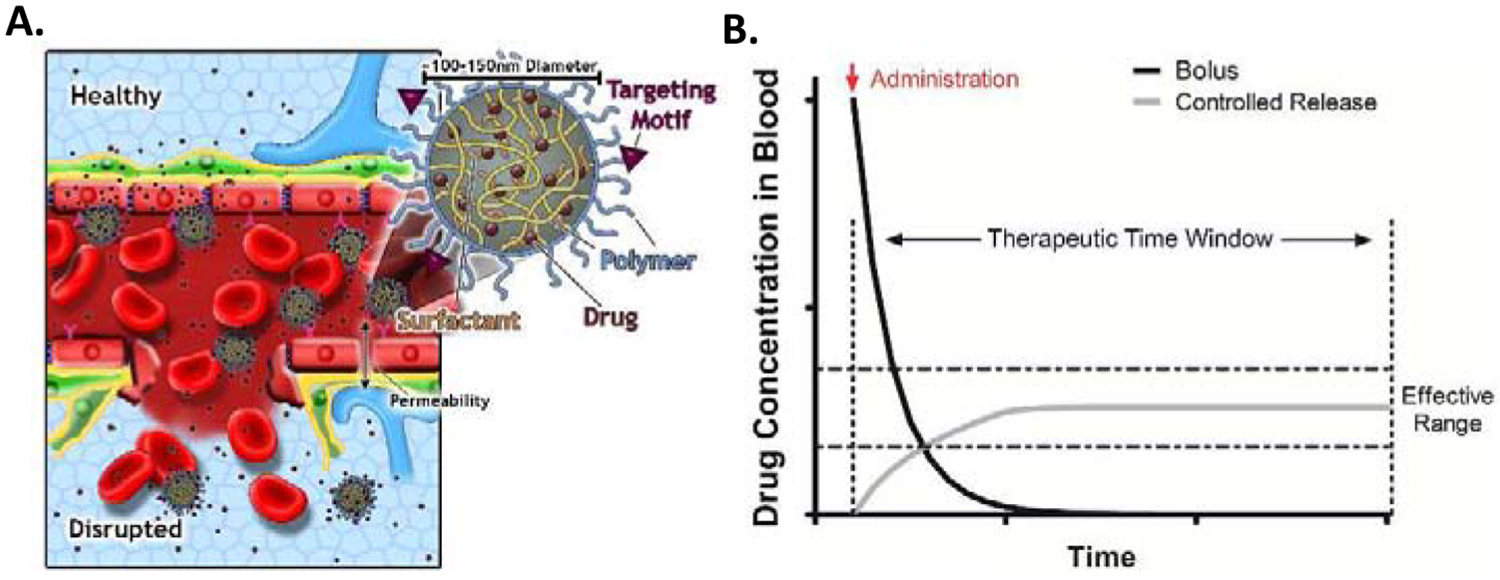
BBB NP delivery strategies. Multiple mechanisms May be employed for NPs to enhance drug delivery to the brain. A. NP surfaces May be functionalized with BBB specific receptors such as transferrin to enable local intravascular NP docking that May either enhance local drug concentrations of BBB permeable therapeutics or engage in active transcytosis of the NP. Secondly, BBB disruption due to trauma/neuropathology May further enhance NP accumulation/extravasation. B. NP encapsulation greatly benefits drug efficacy through prolonged release stabilizing drug concentration within the effective dosing window.

References

    1. “National Institute of Neurological Disorders and Stroke (NIH): Hope Through Research” https://www.ninds.nih.gov/Disorders/Patient-Caregiver-Education/Hope-Thr....
    1. Dong J, Shang Y, Inthavong K, Chan H-K, and Tu J, “Numerical Comparison of Nasal Aerosol Administration Systems for Efficient Nose-to-Brain Drug Delivery,” Pharm. Res, vol. 35, no. 1, p. 5, Jan. 2018, doi: 10.1007/s11095-017-2280-6. - DOI - PubMed
    1. Householder KT, “Nanoparticle Drug Delivery to Brain Tumors: From Intravenous to Intrathecal,” p. 115.
    1. Householder KT, Dharmaraj S, Sandberg DI, Wechsler-Reya RJ, and Sirianni RW, “Fate of nanoparticles in the central nervous system after intrathecal injection in healthy mice,” Sci. Rep, vol. 9, no. 1, p. 12587, Dec. 2019, doi: 10.1038/s41598-019-49028-w. - DOI - PMC - PubMed
    1. Lalatsa A and Butt AM, “Physiology of the Blood–Brain Barrier and Mechanisms of Transport Across the BBB,” in Nanotechnology-Based Targeted Drug Delivery Systems for Brain Tumors, Elsevier, 2018, pp. 49–74.

LinkOut - more resources