


Gram-Negative Antibiotic Active Through Inhibition of an Essential Riboswitch
- PMID: 32432858
- PMCID: PMC7405991
- DOI: 10.1021/jacs.0c04427
Gram-Negative Antibiotic Active Through Inhibition of an Essential Riboswitch
Abstract
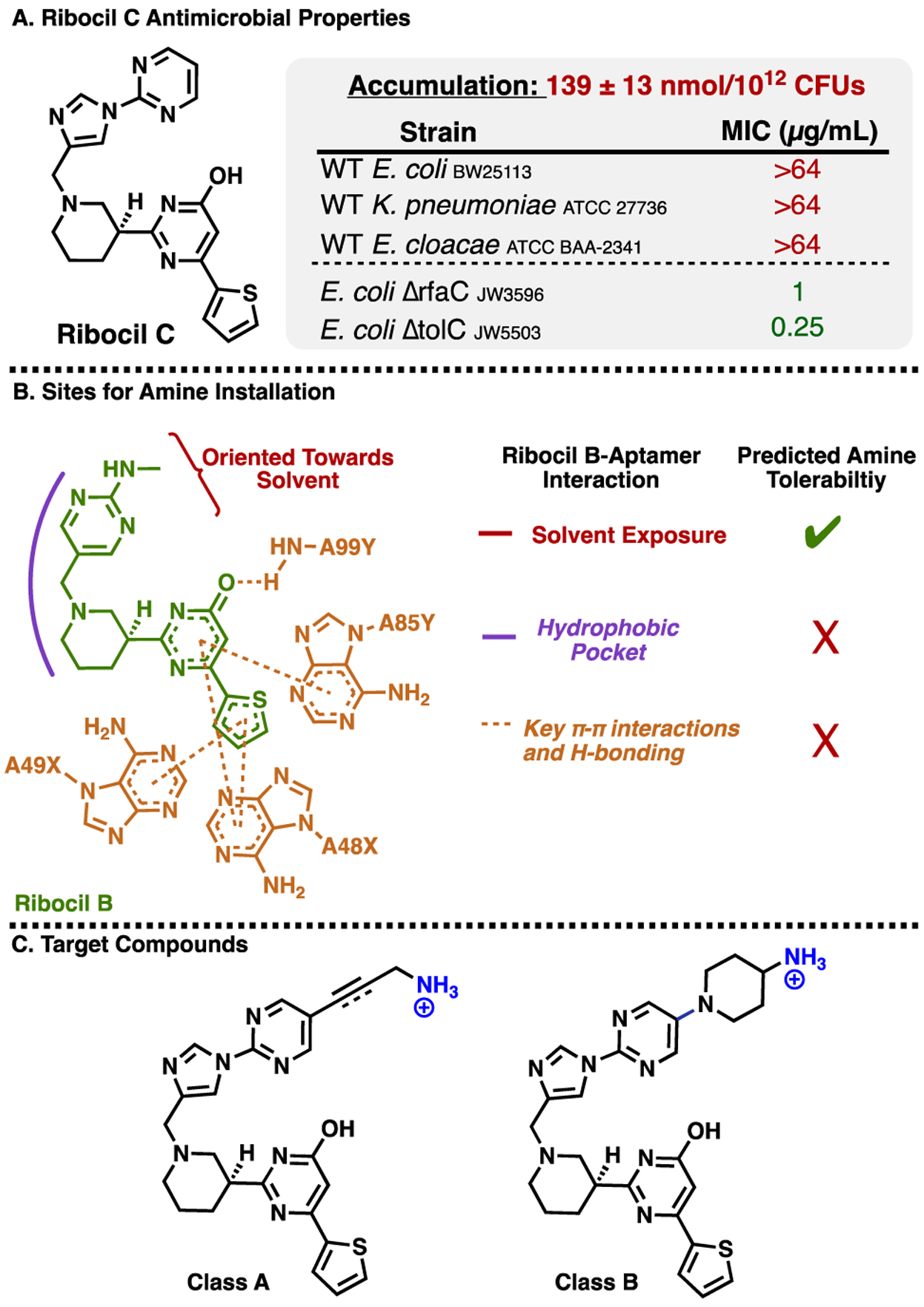
Multidrug-resistant Gram-negative (GN) infections for which there are few available treatment options are increasingly common. The development of new antibiotics for these pathogens is challenging because of the inability of most small molecules to accumulate inside GN bacteria. Using recently developed predictive guidelines for compound accumulation in Escherichia coli, we have converted the antibiotic Ribocil C, which targets the flavin mononucleotide (FMN) riboswitch, from a compound lacking whole-cell activity against wild-type GN pathogens into a compound that accumulates to a high level in E. coli, is effective against Gram-negative clinical isolates, and has efficacy in mouse models of GN infections. This compound allows for the first assessment of the translational potential of FMN riboswitch binders against wild-type Gram-negative bacteria.
Figures



References
-
- Gasser M; Zingg W; Cassini A; Kronenberg A; Swiss Centre for Antibiotic, R., Attributable deaths and disability-adjusted life-years caused by infections with antibiotic-resistant bacteria in Switzerland. Lancet Infect. Dis 2019, 19 (1), 17–18. - PubMed
-
- Livermore DM, The need for new antibiotics. Clin. Microbiol. Infect 2004, 10 Suppl 4, 1–9. - PubMed
-
- Perry C; Hall C, Antibiotic resistance: how it arises, the current position and strategies for the future. Nurs. Times 2009, 105 (36), 20–3. - PubMed
Publication types
MeSH terms
Substances
Grants and funding
LinkOut - more resources
Full Text Sources
Other Literature Sources
Medical
