


Improved adherence and treatment outcomes with an engaging, personalized digital therapeutic in amblyopia
- PMID: 32433490
- PMCID: PMC7239850
- DOI: 10.1038/s41598-020-65234-3
Improved adherence and treatment outcomes with an engaging, personalized digital therapeutic in amblyopia
Abstract
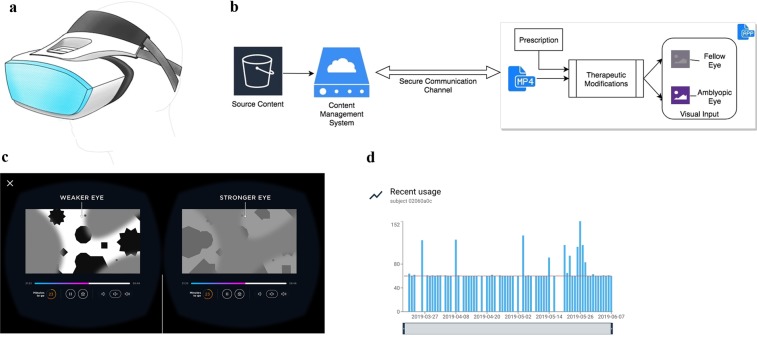
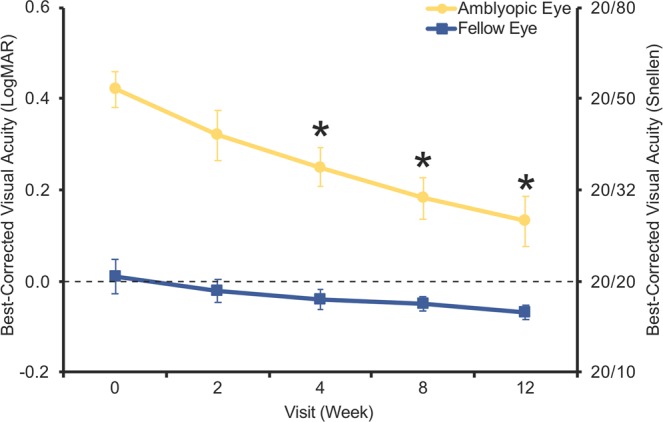
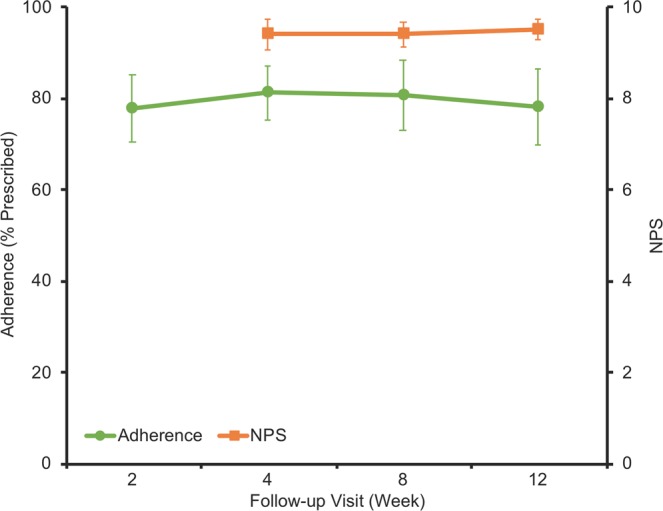
Given the prevalence of poor adherence to therapy and the biases of self-reporting across healthcare, we hypothesized that an engaging, personalized therapy may improve adherence and treatment outcomes in the home. We tested this hypothesis in the initial indication of amblyopia, a neurodevelopmental disorder for which available treatments are limited by low adherence. We designed a novel digital therapeutic that modifies patient-selected cinematic content in real-time into therapeutic visual input, while objectively monitoring adherence. The therapeutic design integrated a custom-designed headset that delivers precise visual input to each eye, computational algorithms that apply real-time therapeutic modifications to source content, a cloud-based content management system that enables treatment in the home, and a broad library of licensed content. In a proof-of-concept human study on the therapeutic, we found that amblyopic eye vision improved significantly after 12 weeks of treatment, with higher adherence than that of available treatments. These initial results support the utility of personalized therapy in amblyopia and may have broader relevance for improving treatment outcomes in additional indications.
Conflict of interest statement
This study was sponsored by Luminopia, Inc. S.X., D.A.T., E.A., and H.C.W. are employees of and have stock options in Luminopia, Inc., S.X. and D.A.T. are officers of Luminopia, Inc. M.L.M. and A.U.S. were provided funding for their involvement in the study as investigators, E.D.G., G.B., and D.G.H. are scientific advisors of and have stock options in Luminopia, Inc. S.X. and D.A.T. are inventors on a pending patent on this work, S.X., D.A.T., and E.D.G. are inventors on a pending patent on a novel amblyopia treatment technology that does not directly relate to this work.
Figures
References
-
- Pediatric Ophthalmology/Strabismus Preferred Practice Pattern Panel. Amblyopia Preferred Practice Pattern. Ophthalmol. 2018;125:P105–P142. - PubMed
Publication types
MeSH terms
LinkOut - more resources
Full Text Sources
Medical
