


Hypereosinophilia with Concurrent Venous Thromboembolism: Clinical Features, Potential Risk Factors, and Short-term Outcomes in a Chinese Cohort
- PMID: 32433573
- PMCID: PMC7239859
- DOI: 10.1038/s41598-020-65128-4
Hypereosinophilia with Concurrent Venous Thromboembolism: Clinical Features, Potential Risk Factors, and Short-term Outcomes in a Chinese Cohort
Abstract
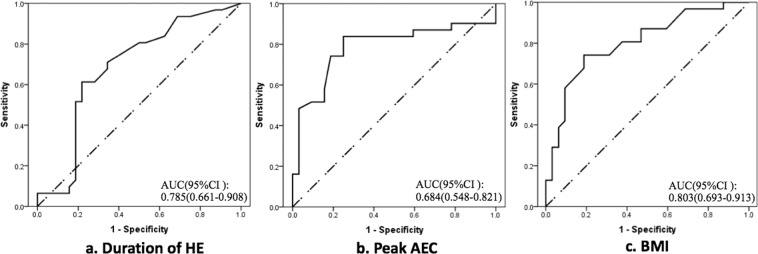
Idiopathic hypereosinophilia (IHE) and hypereosinophilic syndrome (HES) are benign haematological disorders. Studies have suggested that venous thromboembolism (VTE) is a rare but sometimes fatal complication of hypereosinophilia; however, data are limited. We retrospectively analysed clinical features and short-term outcomes of 63 consecutive patients (82.5% men; mean age, 40.92 ± 10.89 years) with IHE or HES with concurrent VTE from January 1998 through December 2018. Risk factors for pulmonary embolism (PE) were explored by multivariate logistic analysis. DVT and/or PE was detected by imaging in all patients. Independent risk factors for PE were a body mass index of >24.1 kg/m2 (odds ratio [OR]: 5.62, 95% confidence interval [CI]: 1.21-26.13, P = 0.028), peak absolute eosinophil count of >6.3 × 10⁹/L (OR: 5.55, 95% CI: 1.292-23.875, P = 0.021), and >13.9-month duration of hypereosinophilia (OR: 4.51, 95% CI: 1.123-18.09, P = 0.034). All patients were treated with corticosteroids and anticoagulants. The short-term hypereosinophilia remission rate was 100%; no recurrent VTE or major bleeding was observed. Hypereosinophilia is a potential risk factor for VTE. PE in patients with IHE/HES and DVT is associated with a higher body mass index, higher peak absolute eosinophil count, and longer duration of hypereosinophilia. Corticosteroids and anticoagulants provided effective short-term control of hypereosinophilia and VTE.
Conflict of interest statement
The authors declare no competing interests.
Figures
References
Publication types
MeSH terms
Substances
LinkOut - more resources
Full Text Sources
Medical
