


The Dreem Headband compared to polysomnography for electroencephalographic signal acquisition and sleep staging
- PMID: 32433768
- PMCID: PMC7751170
- DOI: 10.1093/sleep/zsaa097
The Dreem Headband compared to polysomnography for electroencephalographic signal acquisition and sleep staging
Abstract
Study objectives: The development of ambulatory technologies capable of monitoring brain activity during sleep longitudinally is critical for advancing sleep science. The aim of this study was to assess the signal acquisition and the performance of the automatic sleep staging algorithms of a reduced-montage dry-electroencephalographic (EEG) device (Dreem headband, DH) compared to the gold-standard polysomnography (PSG) scored by five sleep experts.
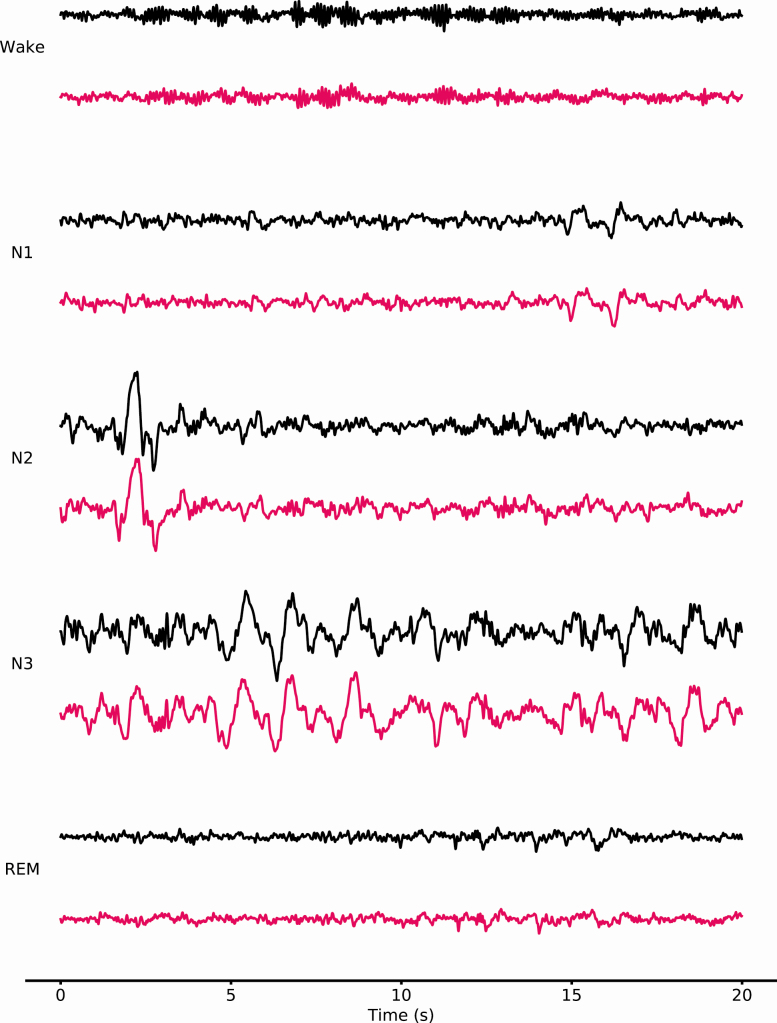
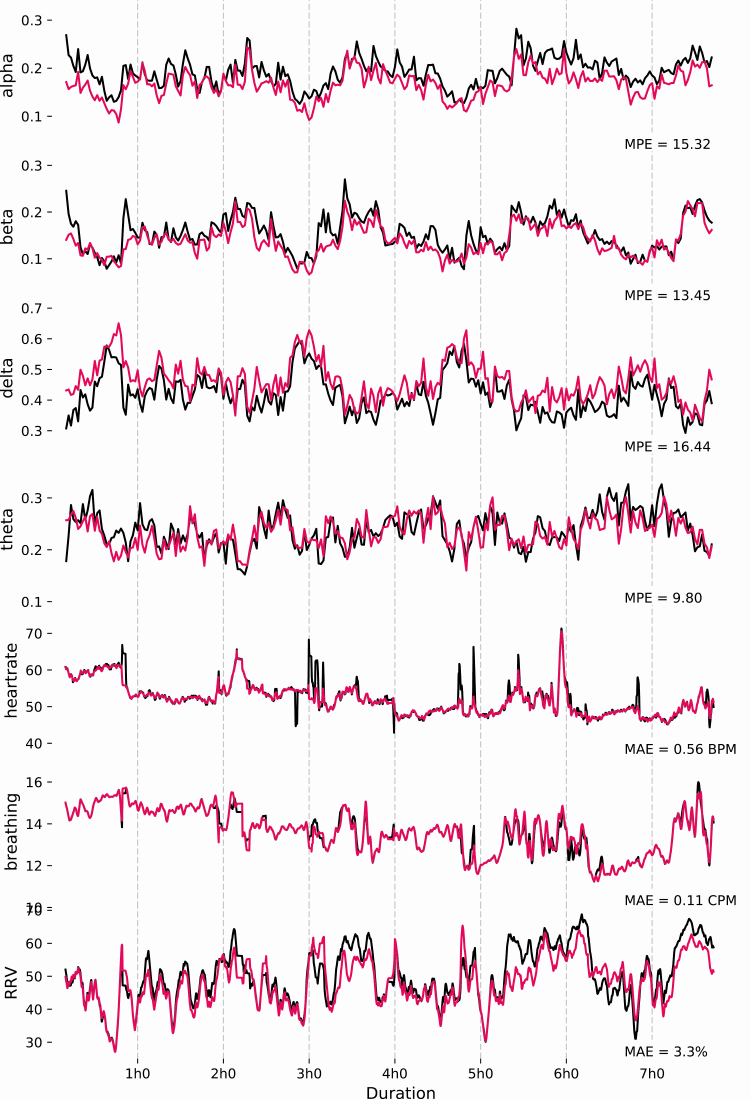
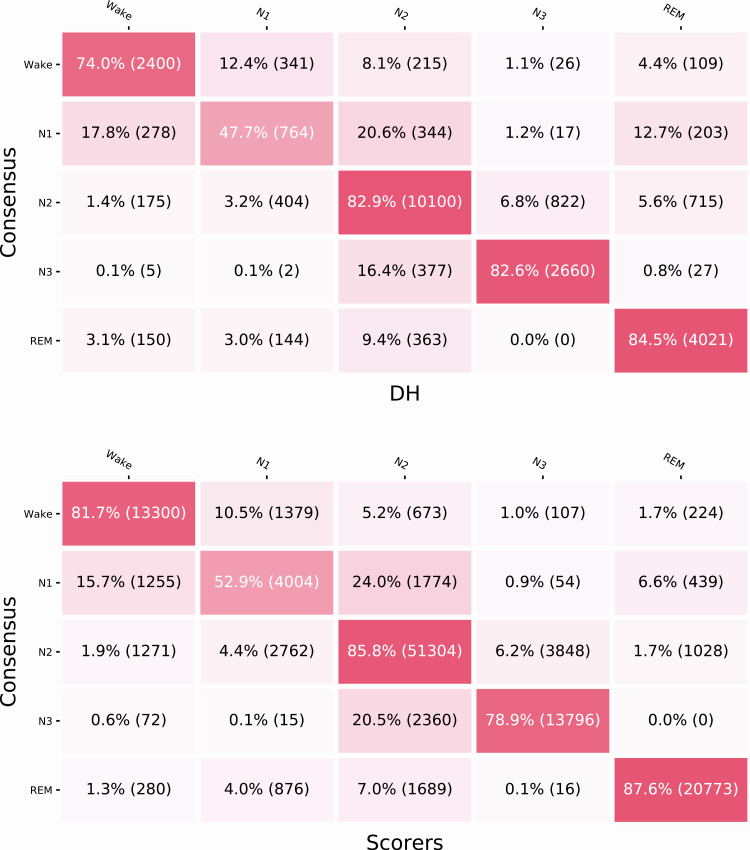
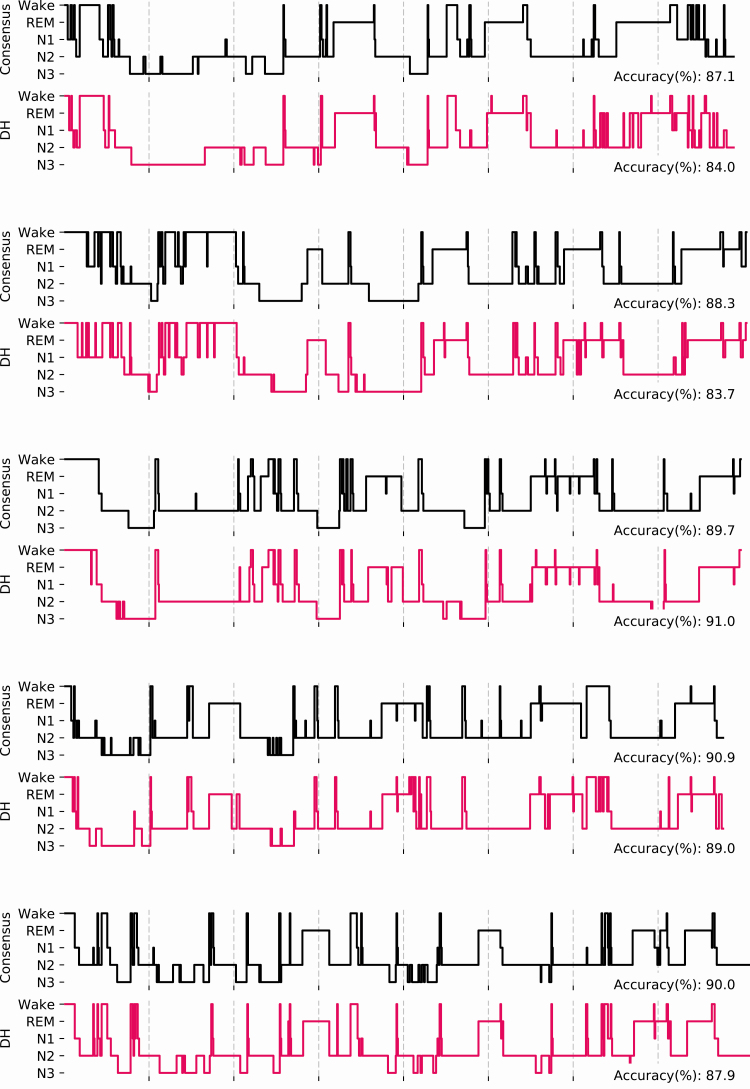
Methods: A total of 25 subjects who completed an overnight sleep study at a sleep center while wearing both a PSG and the DH simultaneously have been included in the analysis. We assessed (1) similarity of measured EEG brain waves between the DH and the PSG; (2) the heart rate, breathing frequency, and respiration rate variability (RRV) agreement between the DH and the PSG; and (3) the performance of the DH's automatic sleep staging according to American Academy of Sleep Medicine guidelines versus PSG sleep experts manual scoring.
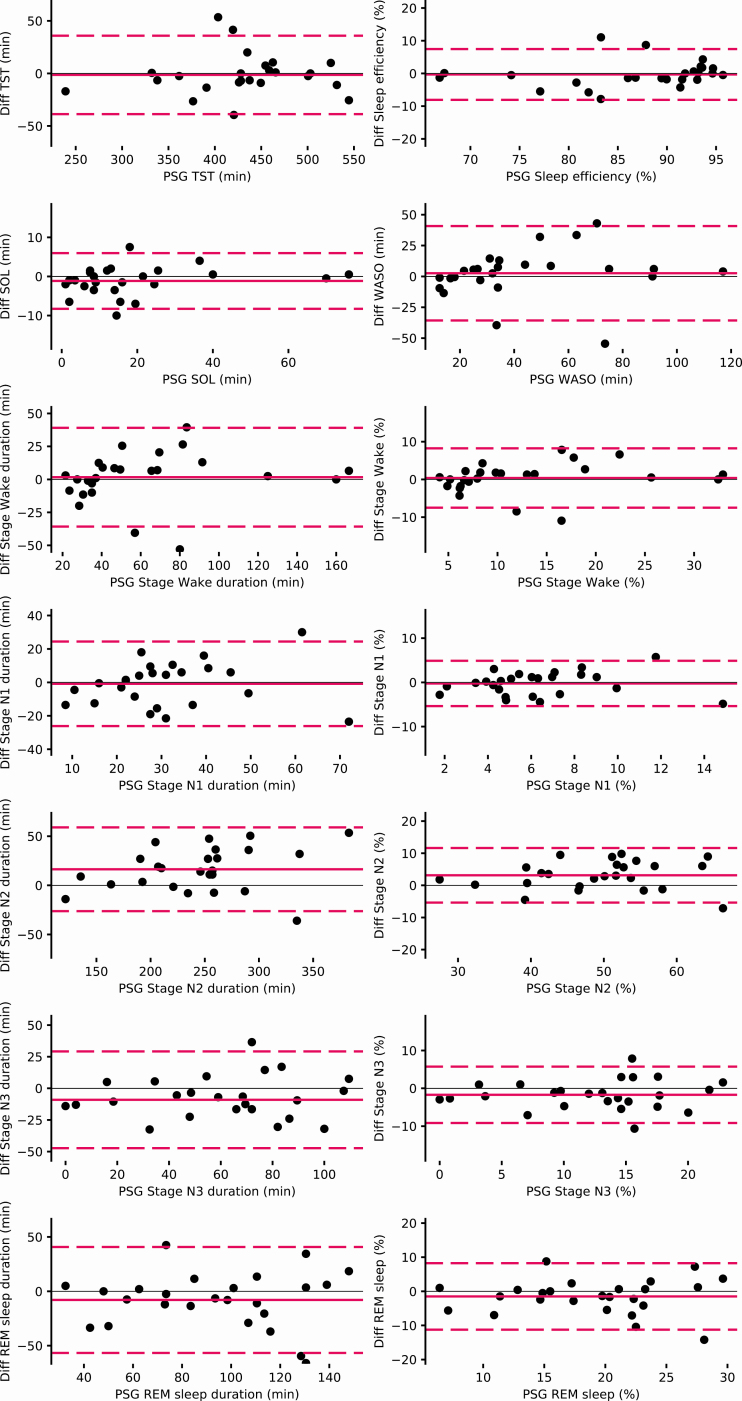
Results: The mean percentage error between the EEG signals acquired by the DH and those from the PSG for the monitoring of α was 15 ± 3.5%, 16 ± 4.3% for β, 16 ± 6.1% for λ, and 10 ± 1.4% for θ frequencies during sleep. The mean absolute error for heart rate, breathing frequency, and RRV was 1.2 ± 0.5 bpm, 0.3 ± 0.2 cpm, and 3.2 ± 0.6%, respectively. Automatic sleep staging reached an overall accuracy of 83.5 ± 6.4% (F1 score: 83.8 ± 6.3) for the DH to be compared with an average of 86.4 ± 8.0% (F1 score: 86.3 ± 7.4) for the 5 sleep experts.
Conclusions: These results demonstrate the capacity of the DH to both monitor sleep-related physiological signals and process them accurately into sleep stages. This device paves the way for, large-scale, longitudinal sleep studies.
Clinical trial registration: NCT03725943.
Keywords: EEG; device; machine learning; sleep; sleep stages.
© Sleep Research Society 2020. Published by Oxford University Press on behalf of the Sleep Research Society.
Figures
References
-
- National Center on Sleep Disorders Research and others. National Institutes of Health Sleep Disorders Research Plan. Bethesda, MD: National Institutes of Health;2011. Report No. DOT HS 808 707.
-
- Sateia MJ. International classification of sleep disorders—third edition: highlights and modifications. Chest. 2014;146:1387–1394. - PubMed
-
- Ohayon MM. Epidemiological overview of sleep disorders in the general population. Sleep Med Res. 2011;2(1):1–9.
-
- Iber C, et al. The AASM Manual for the Scoring of Sleep and Associated Events : Rules, Terminology, and Technical Specifications. Westchester, IL: American Academy of Sleep Medicine; 2007.
Publication types
MeSH terms
Associated data
LinkOut - more resources
Full Text Sources
Other Literature Sources
Medical
