Review
. 2020 May 19;52(5):742-752.
doi: 10.1016/j.immuni.2020.04.011.

The CD47-SIRPα Immune Checkpoint

Affiliations
Review

The CD47-SIRPα Immune Checkpoint

Meike E W Logtenberg et al. Immunity. .

Abstract

The cytotoxic activity of myeloid cells is regulated by a balance of signals that are transmitted through inhibitory and activating receptors. The Cluster of Differentiation 47 (CD47) protein, expressed on both healthy and cancer cells, plays a pivotal role in this balance by delivering a "don't eat me signal" upon binding to the Signal-regulatory protein alpha (SIRPα) receptor on myeloid cells. Here, we review the current understanding of the role of the CD47-SIRPα axis in physiological tissue homeostasis and as a promising therapeutic target in, among others, oncology, fibrotic diseases, atherosclerosis, and stem cell therapies. We discuss gaps in understanding and highlight where additional insight will be beneficial to allow optimal exploitation of this myeloid cell checkpoint as a target in human disease.


Conflict of interest statement

Declaration of Interests M.E.W.L., F.A.S., and T.N.S. are inventors of IP related to blockade of the CD47-SIRPα axis; T.N.S. is advisor to and shareholder in Scenic Biotech.

Figures
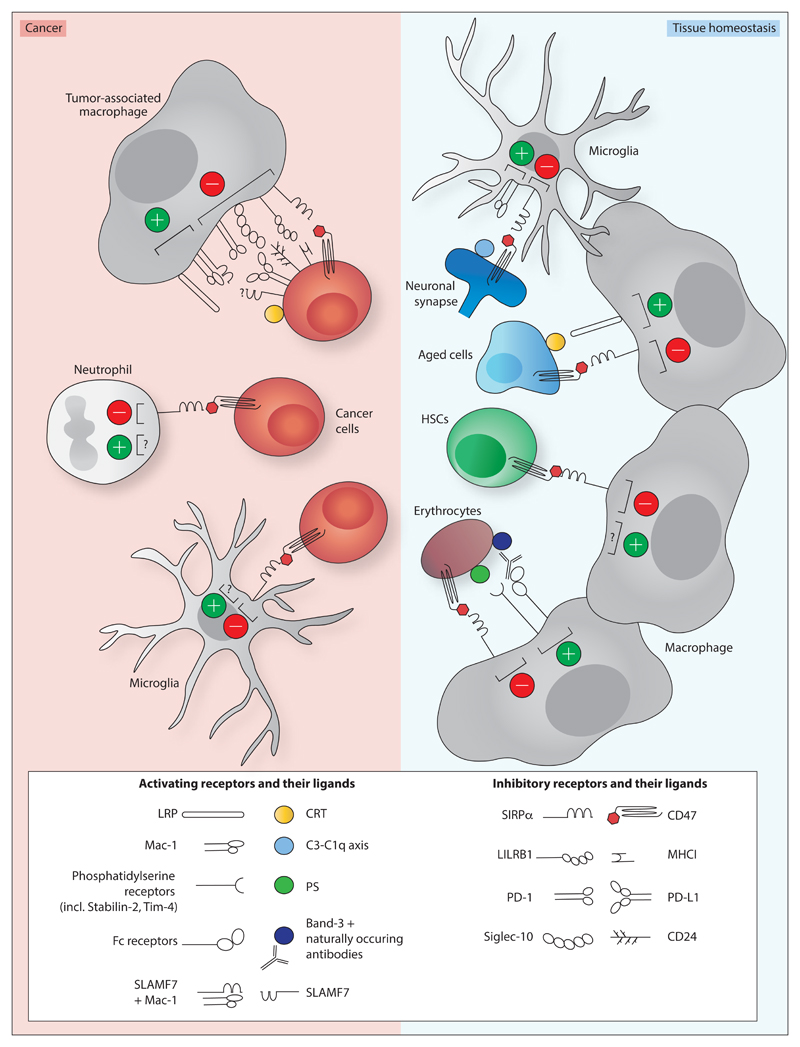
Figure 1
Figure 1. Activating receptors on myeloid cells that are influenced by the CD47-SIRPα axis in tissue homeostasis and in cancer
Macrophage-, neutrophil- and microglia-mediated cytotoxicity towards cancer cells (left panel) is inhibited by CD47-SIRPα signalling. Macrophage-mediated cytotoxicity has also been shown to be negatively influenced by additional inhibitory receptor-ligand interactions, including leukocyte immunoglobulin-like receptor 1 (LILRB1)/ major histocompatibility complex I (MHC-I) (Barkal et al. 2017), programmed cell death 1 (PD-1)/ programmed cell death 1 ligand 1 (PD-L1) (Gordon et al. 2017), and Siglec-10/CD24 (Barkal et al. 2019). The interaction between prolow-density lipoprotein receptor-related protein (LRP) and calreticulin (CRT) (Chao et al. 2010) has been identified as activating signal in myeloid-mediated cytotoxicity towards cancer cells. In tissue homeostasis (right panel), synaptic pruning by microglia, and removal of aged cells, erythrocytes and hematopoietic stem cells (HSCs) by macrophages has been shown to be inhibited by CD47-SIRPα signalling (Boas et al. 1998; Kay et al. 1994; Lutz & Bogdanova 2013; Oldenborg et al. 2000; Jaiswal et al. 2009; Lehrman et al. 2018; Feng et al. 2018). C1q or C3 localization to neuronal synapses enhances microglia-dependent synaptic pruning by binding Mac-1 (Schafer et al. 2012; Stevens et al. 2007). CRT binding to LRP on macrophages stimulates the removal of ageing neutrophils (Feng et al. 2018). Binding of naturally occurring antibodies to band-3 and increased phosphatidylserine (PS) exposure may enhance macrophage-mediated removal of ageing erythrocytes (Boas et al. 1998; Kay et al. 1994; Lutz & Bogdanova 2013). Activating signals on HSCs remain unidentified.
Figure 2
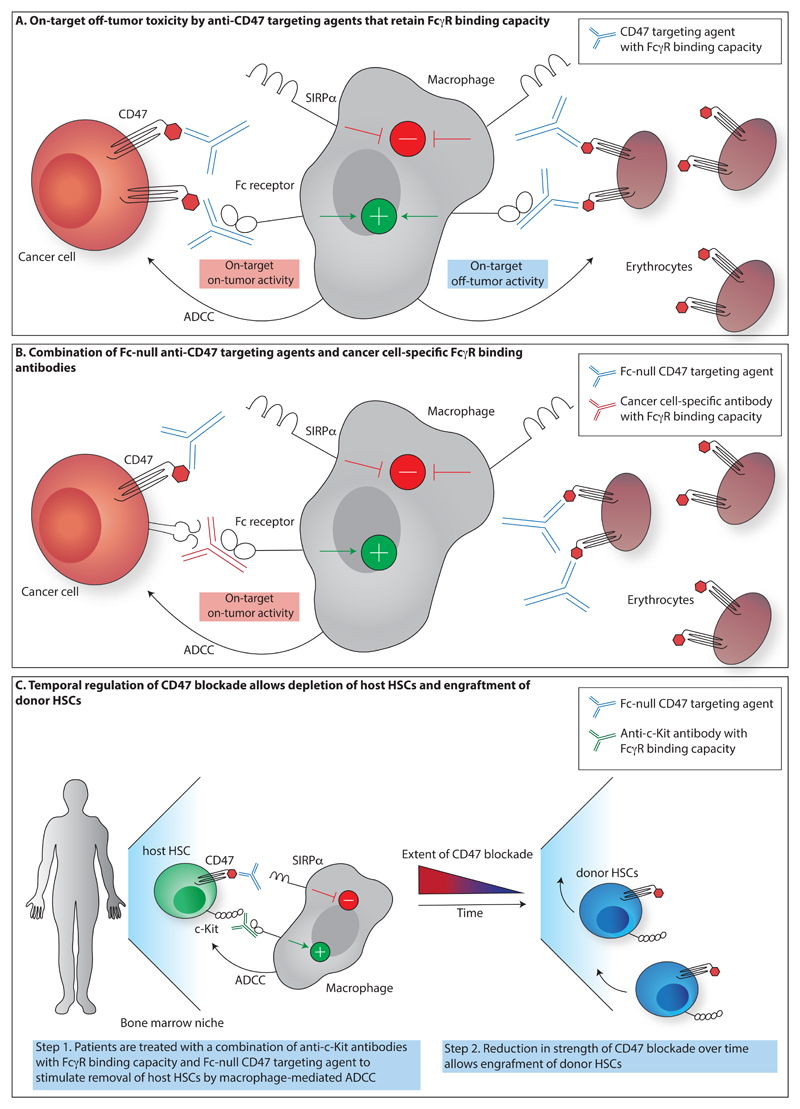
Figure 2. Strategies to exploit CD47 blockade.
A. Blocking CD47 targeting agents that retain FcγR binding capacity prevent inhibitory signalling through SIRPα, but simultaneously decorate CD47+ cells with an activating signal, thereby inducing antibody-dependent cytotoxicity (ADCC) by, for example, macrophages. Use of such agents can result in on-target off-tumor toxicity towards healthy CD47-expressing cells, such as erythrocytes. B. Fc-null CD47 targeting agents, such as the high-affinity SIRPα-Fc fusion protein ALX148 that contains an inactive Fc domain, prevent inhibitory signalling through SIRPα, but without the simultaneous delivery of an activating signal. Combination of such CD47 blocking agents with cancer cell-specific antibodies that retain FcγR binding capacity forms a strategy to direct ADCC activity towards cancer cells while minimizing on-target off-tumor toxicity. C. Selective depletion of defined cell pools may be achieved by temporal control over CD47 blockade. For example, as shown by Chhabra et al., recipient hematopoietic stem cells (HSCs) can be targeted for removal by the combination of blocking agents targeting CD47 and opsonizing anti-c-Kit antibodies (Chhabra et al. 2016). Transplantation of donor HSCs at a time when the strength of CD47 inhibition has diminished then allows donor HSC engraftment.

References

    1. Adams S, van der Laan LJ, Vernon-Wilson E, Renardel de Lavalette C, Döpp EA, Dijkstra CD, Simmons DL, van den Berg TK. Signal-regulatory protein is selectively expressed by myeloid and neuronal cells. J Immunol. 1998;161:1853–1859. - PubMed
    1. Advani R, Flinn I, Popplewell L, Forero A, Bartlett NL, Ghosh N, Kline J, Roschewski M, LaCasce A, Collins GP, Tran T, et al. CD47 Blockade by Hu5F9-G4 and Rituximab in Non-Hodgkin’s Lymphoma. N Engl J Med. 2018;379:1711–1721. doi: 10.1056/NEJMoa1807315. - DOI - PMC - PubMed
    1. Autio KA, Boni V, Humphrey RW, Naing A. Probody Therapeutics: An Emerging Class of Therapies Designed to Enhance On-target Effects with Reduced Off-tumor Toxicity for Use in Immuno-Oncology. Clinical Cancer Research clincanres. 2019 doi: 10.1158/1078-0432.CCR-19-1457. - DOI - PMC - PubMed
    1. Barcellini W. New Insights in the Pathogenesis of Autoimmune Hemolytic Anemia. Transfus Med Hemother. 2015;42:287–293. doi: 10.1159/000439002. - DOI - PMC - PubMed
    1. Barkal AA, Brewer RE, Markovic M, Kowarsky M, Barkal SA, Zaro BW, Krishnan V, Hatakeyama J, Dorigo O, Barkal LJ, Weissman IL. CD24 signalling through macrophage Siglec-10 is a target for cancer immunotherapy. Nature. 2019;138:286. doi: 10.1038/s41586-019-1456-0. - DOI - PMC - PubMed

Publication types