Randomized Controlled Trial
. 2021 Jun;19(6):1151-1159.e14.
doi: 10.1016/j.cgh.2020.05.019. Epub 2020 May 17.

Gastrointestinal Eosinophil Responses in a Longitudinal, Randomized Trial of Peanut Oral Immunotherapy

Affiliations
Randomized Controlled Trial

Gastrointestinal Eosinophil Responses in a Longitudinal, Randomized Trial of Peanut Oral Immunotherapy

Benjamin L Wright et al. Clin Gastroenterol Hepatol. 2021 Jun.

Abstract

Background & aims: Gastrointestinal side effects are common during oral immunotherapy (OIT) and eosinophilic esophagitis (EoE) is a potential complication. We aimed to characterize eosinophilic gastrointestinal responses to peanut OIT, in which peanut protein is given orally, with incremental increases in dose over time.

Methods: Twenty adults with IgE-mediated peanut allergy were randomly assigned to groups given peanut OIT (n = 15) or placebo (n = 5); 1 additional subject withdrew before randomization. Serial gastrointestinal biopsies were collected at baseline (n = 21, 0 weeks), following dose escalation (n = 10, 52 weeks), and during the maintenance phase (n = 11, 104 weeks). Endoscopic findings were characterized using the EoE endoscopic reference score. Biopsies were assessed for eosinophils per high-power field (eos/hpf) and other pathology features using EoE histologic scoring system scores. We performed immunohistochemical analyses of eosinophil peroxidase deposition, quantified using automated image analysis.

Results: At baseline, no subjects reported current gastrointestinal symptoms. However, 3 of the 21 subjects (14%) had esophageal peak eosinophil counts ≥15 eos/hpf and all subjects had dilated intercellular spaces (DIS). OIT induced or exacerbated esophageal eosinophilia (EE) at 52 weeks in most subjects (peak eosinophil counts >5 eos/hpf in 6 of 7 patients [86%]; peak eosinophil counts ≥15 eos/hpf in 4 of 7 patients [57%]). One subject met clinicopathologic criteria for EoE and withdrew; no significant changes in esophageal peak eosinophil counts were observed in the placebo group. EE in the OIT group corresponded with significant increases in EoE histologic scoring system scores and deposition of eosinophil peroxidase. In 4 of 6 participants (67%), OIT-induced EE and gastrointestinal eosinophilia resolved by the end of the maintenance phase. Gastrointestinal symptoms were not clearly associated with EE or gastrointestinal eosinophilia.

Conclusions: In this pilot study, we found that peanut OIT-induced EE and gastrointestinal eosinophilia are usually transient and are not always associated with gastrointestinal symptoms. Clinicaltrials.gov no: NCT02103270.

Keywords: EREFS; EoEHSS; Food Allergy; Inflammation.


Figures

Figure 1.
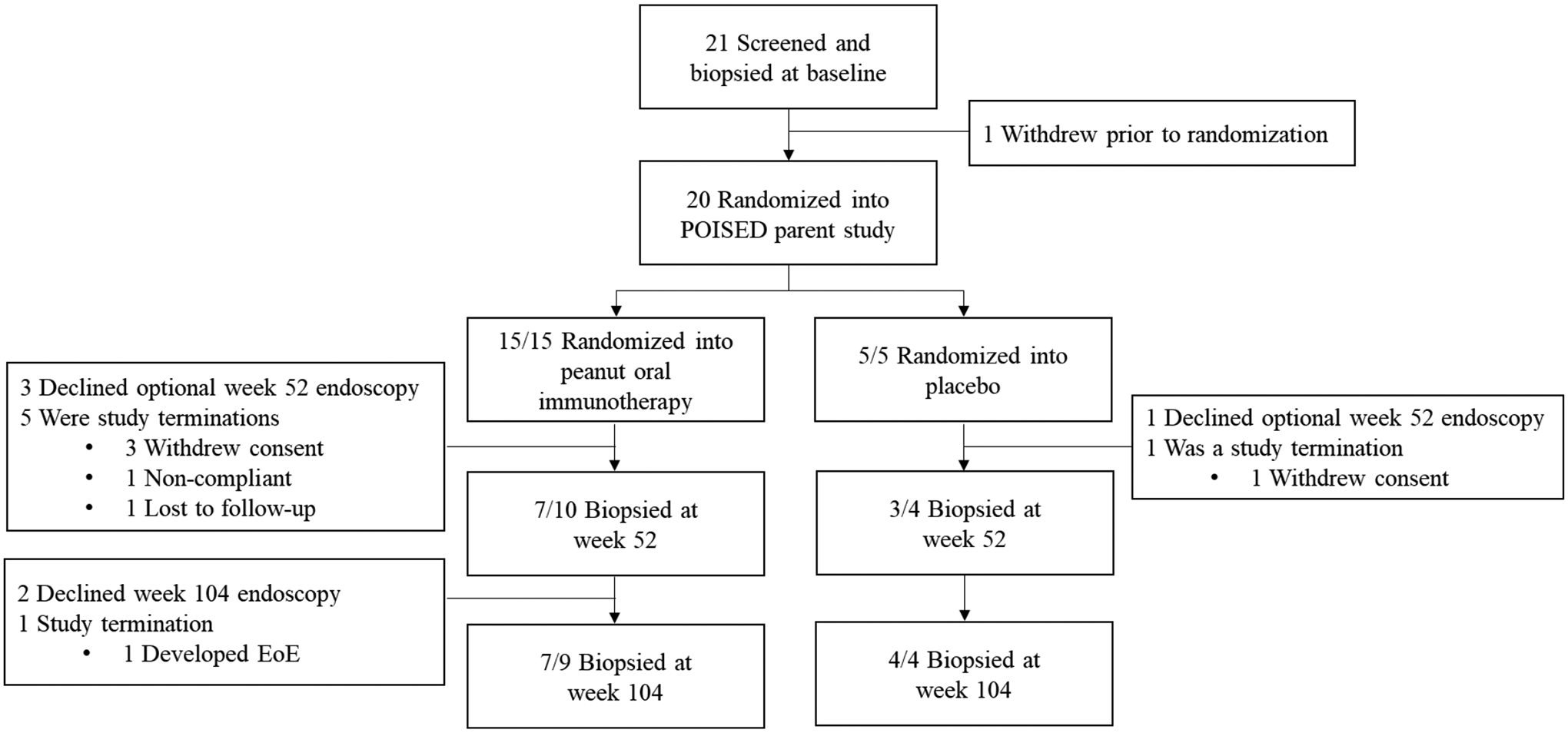
Figure 1.. CONSORT diagram.
Denominators indicate the number of subjects still enrolled in the trial at each time point.
Figure 2.
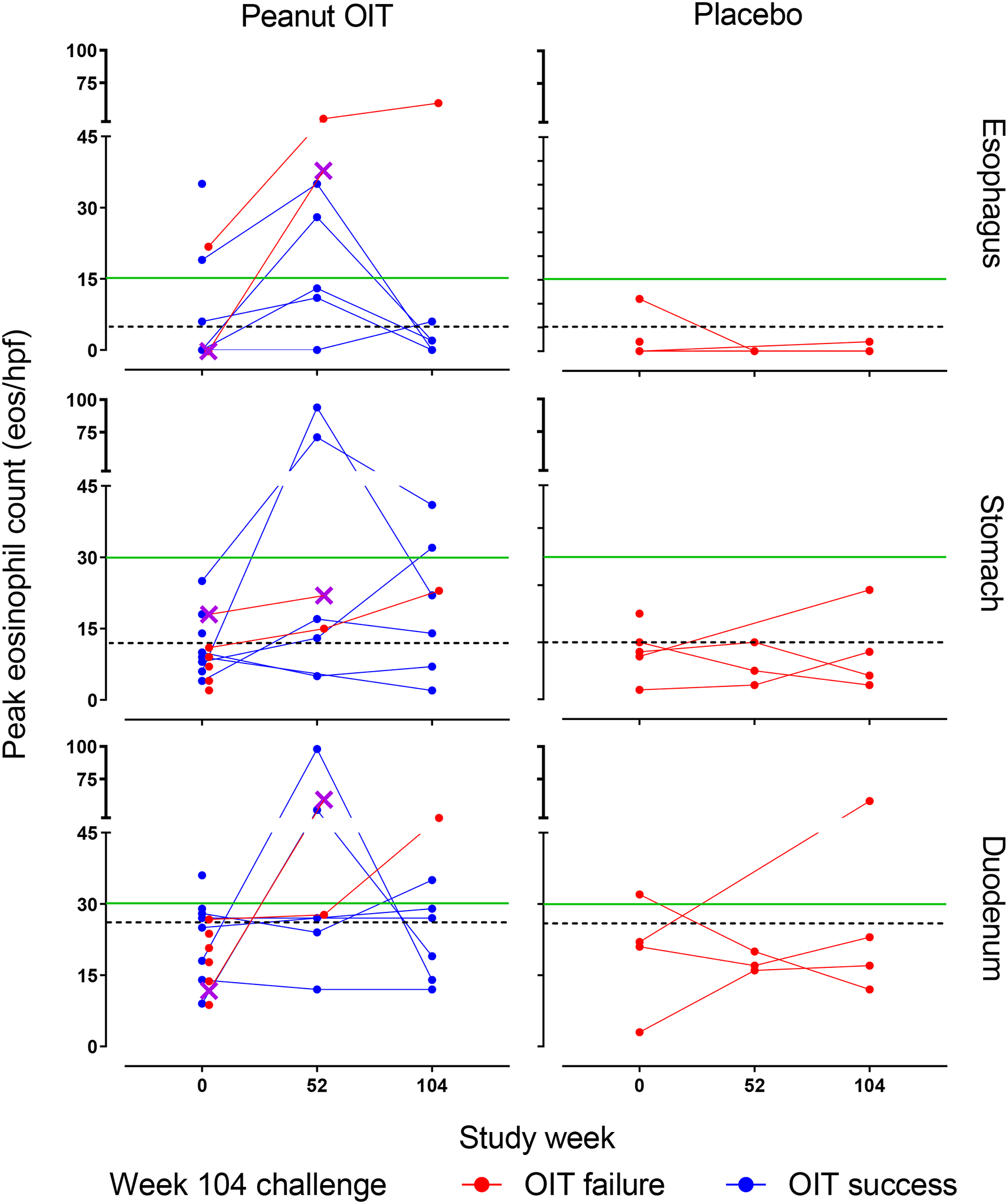
Figure 2.
PEC over time by treatment arm, biopsy site, and week 104 challenge outcome. PEC at week 0 (peanut OIT 15, placebo 5), week 52 (peanut OIT 7, placebo 3), and week 104 (peanut OIT 7, placebo 4). Horizontal dashed black lines indicate upper limit of normal in the esophagus (5 eos/hpf), gastric antrum (12 eos/hpf), and duodenum (26 eos/hpf). Horizontal green line indicates histologic threshold for eosinophilic gastrointestinal disease (≥15 for esophagus, ≥30 for stomach and duodenum). Purple X denotes participant #11, who developed eosinophilic esophagitis, eos/hpf, eosinophils per high-power field; OIT, oral immunotherapy; PEC, peak eosinophil count.
Figure 3.
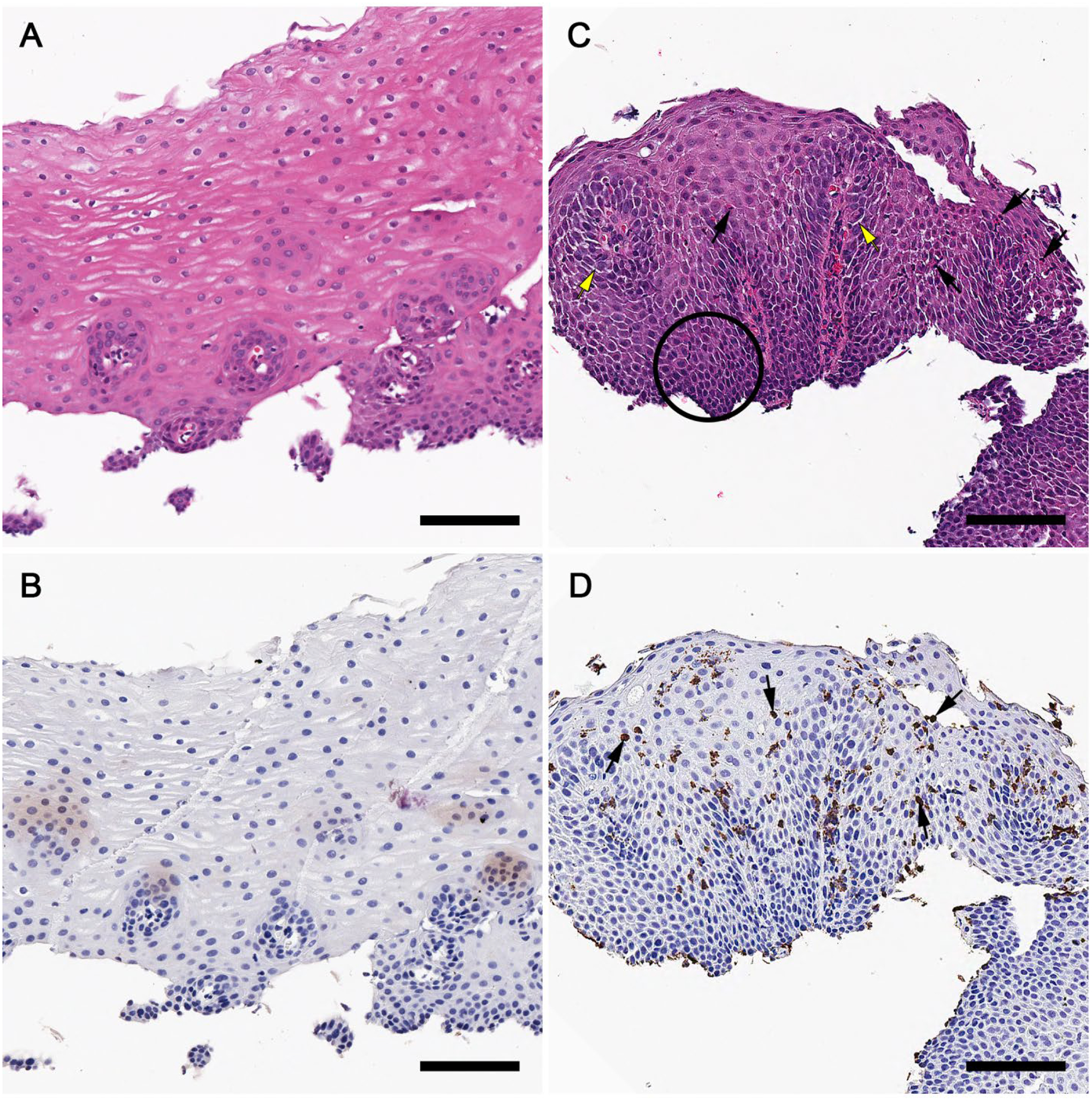
Figure 3.. Histology and EPX immunohistochemistry in a subject with OIT-induced EoE.
Hematoxylin and eosin (H&E) stains of distal esophageal (DE) biopsies from participant #11 at baseline (A) and week 52 (C). Corresponding EPX stains shown are shown below (B and D). EI (black arrows, C and D), BZH (black circle, C), and DIS (yellow arrows, C) are notable at 52 weeks. A marked increase in EI and degranulation is seen (C and D) compared to baseline (A and B). Scale bar=100 microns.
Figure 4.
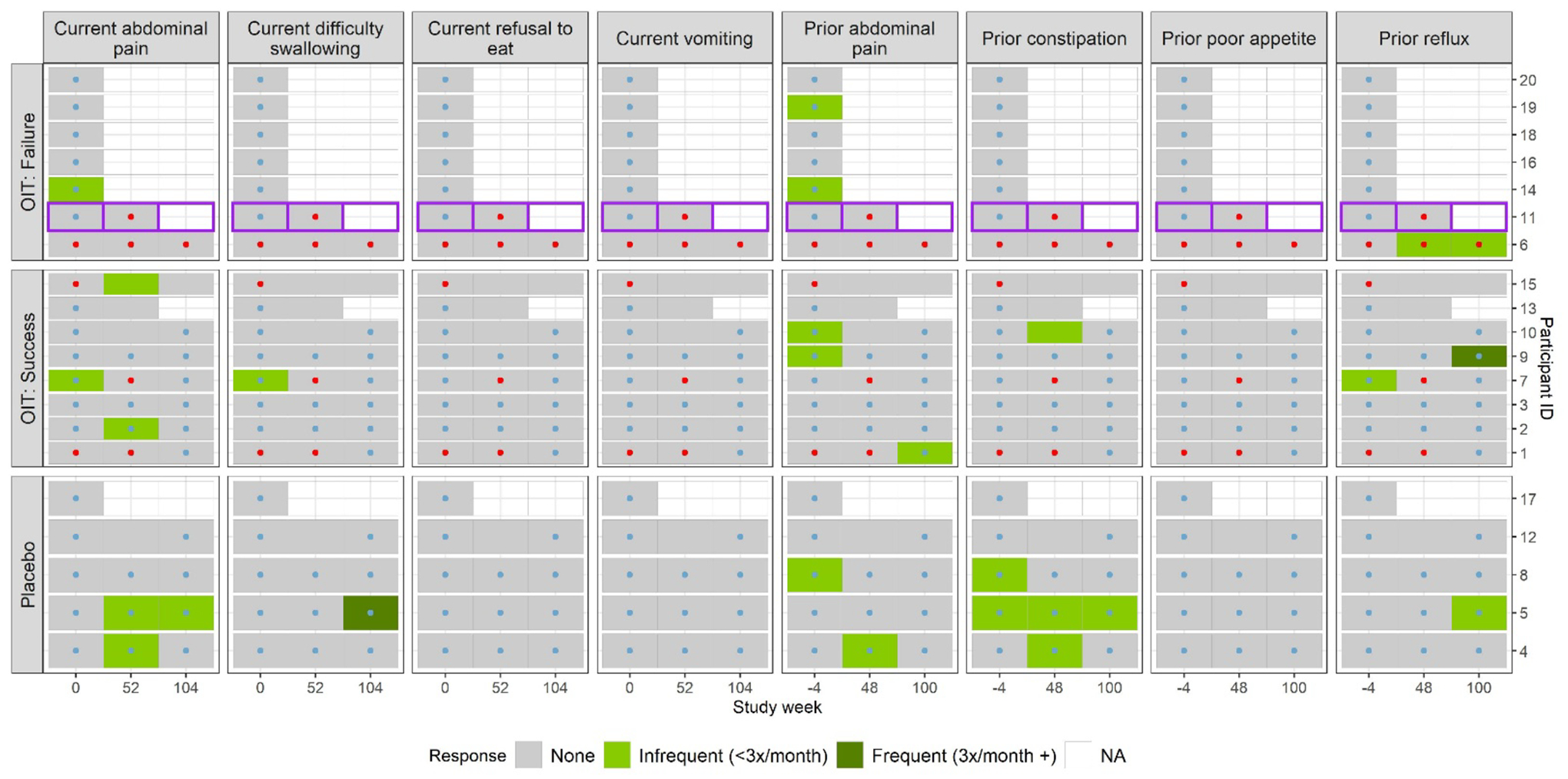
Figure 4.. Frequency of gastrointestinal symptom questionnaire results.
Questionnaire results over time by treatment arm and week 104 challenge outcome for prior (4 weeks prior to the relevant endoscopy) and current (at time of the study visit) gastrointestinal symptoms. Red dots denote that the participant had a PEC ≥ 15 (eos/hpf) in at least 1/3 esophageal sites in that study week; blue dots denote that the participant had a PEC <15 (eos/hpf) in all three esophageal sites in that study week. The participant who developed EoE (participant #11) is outlined in purple. This subject developed dysphagia and food impaction 6 months after the EGD at 52 weeks. NA signifies that the patient did not answer the questionnaire.
Figure 5.
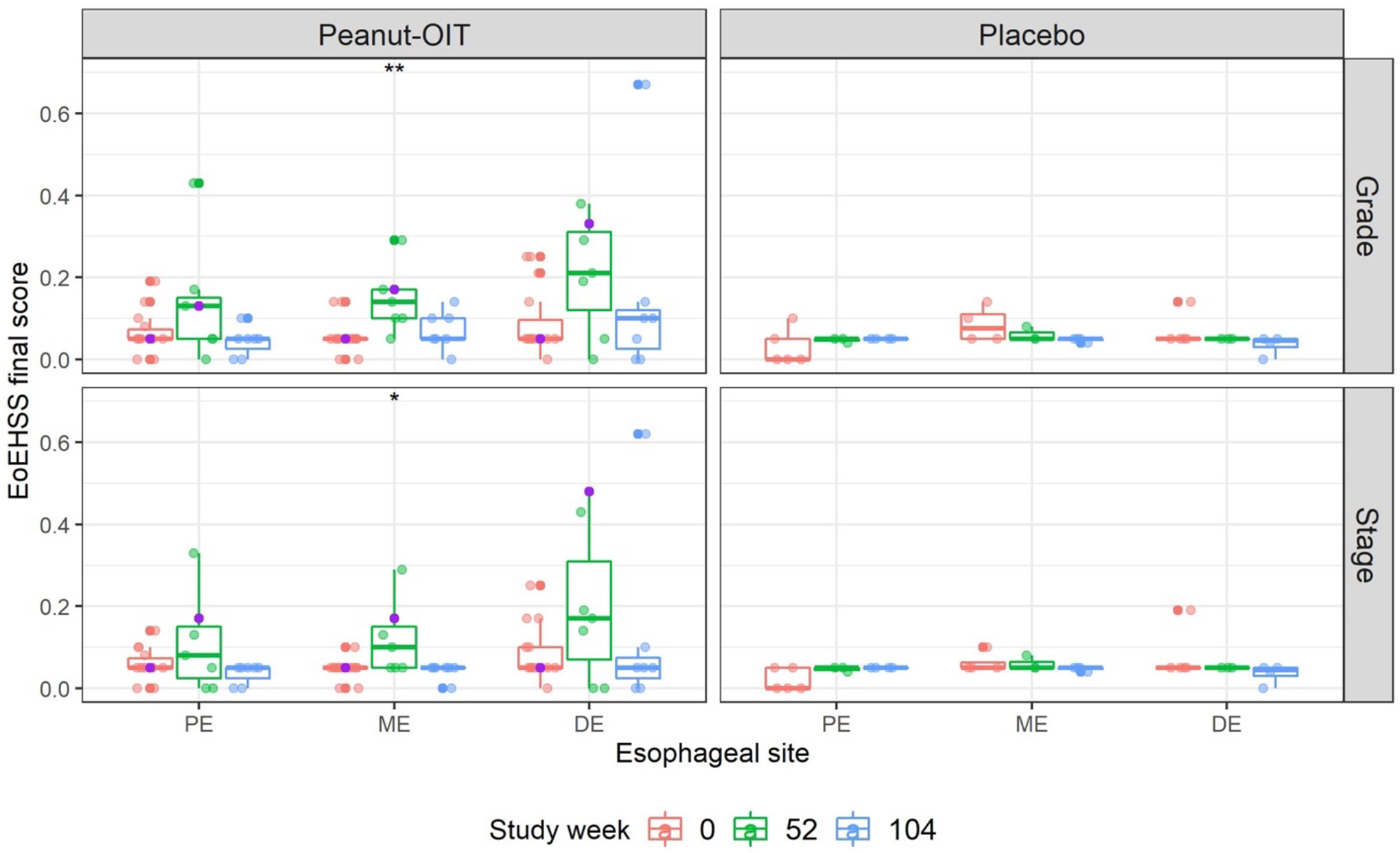
Figure 5.. EoEHSS scores by study week, treatment arm, and esophageal biopsy site, and grade/stage.
Boxplots of EoEHSS final score by treatment arm, esophageal biopsy site and study week. Participant #11, who developed EoE, is identified by the purple points. The Kruskal-Wallis rank sum test was used to determine whether differences in score across study week were present within each treatment, score type, and esophageal site. ** p=0.007, * p=0.010.

References

    1. Burks AW, Sampson HA, Plaut M, et al. Treatment for food allergy. J Allergy Clin Immunol. 2018;141(1):1–9. - PubMed
    1. Vickery BP, Berglund JP, Burk CM, et al. Early oral immunotherapy in peanut-allergic preschool children is safe and highly effective. J Allergy Clin Immunol. 2017;139(1):173–81 e8. - PMC - PubMed
    1. Varshney P, Jones SM, Scurlock AM, et al. A randomized controlled study of peanut oral immunotherapy: clinical desensitization and modulation of the allergic response. J Allergy Clin Immunol. 2011;127(3):654–60. - PMC - PubMed
    1. Anagnostou K, Islam S, King Y, et al. Assessing the efficacy of oral immunotherapy for the desensitisation of peanut allergy in children (STOP II): a phase 2 randomised controlled trial. Lancet. 2014;383(9925):1297–304. - PMC - PubMed
    1. Andorf S, Purington N, Block WM, et al. Anti-IgE treatment with oral immunotherapy in multifood allergic participants: a double-blind, randomised, controlled trial. Lancet Gastroenterol Hepatol. 2018;3(2):85–94. - PMC - PubMed

Publication types

Associated data