Randomized Controlled Trial
. 2020 May 21;5(10):e134520.
doi: 10.1172/jci.insight.134520.

Monounsaturated fat rapidly induces hepatic gluconeogenesis and whole-body insulin resistance

Affiliations
Randomized Controlled Trial

Monounsaturated fat rapidly induces hepatic gluconeogenesis and whole-body insulin resistance

Theresia Sarabhai et al. JCI Insight. .

Abstract

BACKGROUNDWhile saturated fat intake leads to insulin resistance and nonalcoholic fatty liver, Mediterranean-like diets enriched in monounsaturated fatty acids (MUFA) may have beneficial effects. This study examined effects of MUFA on tissue-specific insulin sensitivity and energy metabolism.METHODSA randomized placebo-controlled cross-over study enrolled 16 glucose-tolerant volunteers to receive either oil (OIL, ~1.18 g/kg), rich in MUFA, or vehicle (VCL, water) on 2 occasions. Insulin sensitivity was assessed during preclamp and hyperinsulinemic-euglycemic clamp conditions. Ingestion of 2H2O/acetaminophen was combined with [6,6-2H2]glucose infusion and in vivo 13C/31P/1H/ex vivo 2H-magnet resonance spectroscopy to quantify hepatic glucose and energy fluxes.RESULTSOIL increased plasma triglycerides and oleic acid concentrations by 44% and 66% compared with VCL. Upon OIL intervention, preclamp hepatic and whole-body insulin sensitivity markedly decreased by 28% and 27%, respectively, along with 61% higher rates of hepatic gluconeogenesis and 32% lower rates of net glycogenolysis, while hepatic triglyceride and ATP concentrations did not differ from VCL. During insulin stimulation hepatic and whole-body insulin sensitivity were reduced by 21% and 25%, respectively, after OIL ingestion compared with that in controls.CONCLUSIONA single MUFA-load suffices to induce insulin resistance but affects neither hepatic triglycerides nor energy-rich phosphates. These data indicate that amount of ingested fat, rather than its composition, primarily determines the development of acute insulin resistance.TRIAL REGISTRATIONClinicalTrials.gov NCT01736202.FUNDINGGerman Diabetes Center, German Federal Ministry of Health, Ministry of Culture and Science of the state of North Rhine-Westphalia, German Federal Ministry of Education and Research, German Diabetes Association, German Center for Diabetes Research, Portugal Foundation for Science and Technology, European Regional Development Fund, and Rede Nacional de Ressonancia Magnética Nuclear.

Keywords: Diabetes; Endocrinology; Glucose metabolism; Insulin signaling; Metabolism.


Conflict of interest statement

Conflict of interest: MR received personal fees from Boehringer Ingelheim, Eli Lilly, Fishawack Group, Novo Nordisk, ProSciento, Sanofi, Servier Laboratories, Target NASH, and Terra Firma and investigator-initiated research support from Boehringer Ingelheim, Danone Nutricia, and Sanofi-Aventis. CH received research support from Sanofi-Aventis.

Figures

Figure 1
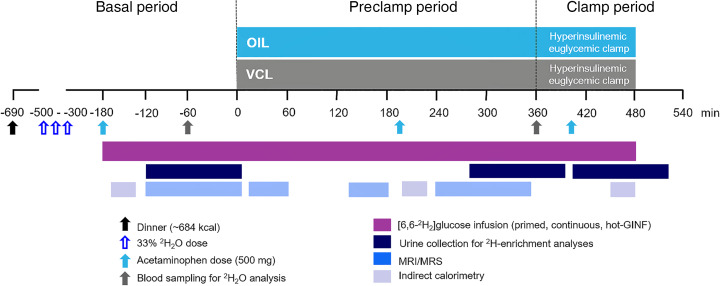
Figure 1. Study design.
Participants randomly received either an oral dose of canola oil (OIL, blue) or an identical volume of water (vehicle [VCL]) on 2 occasions spaced by an 8-week period. Hepatic glucose and energy metabolism was measured by in vivo 13C/31P/1H and ex vivo 2H-magnetic resonance spectroscopy (MRS) combined with 2H2O and acetaminophen ingestion before and during hyperinsulinemic-euglycemic clamps, for which a “hot” glucose infusion (hot-GINF) protocol with [6,6-2H2]glucose was used.
Figure 2
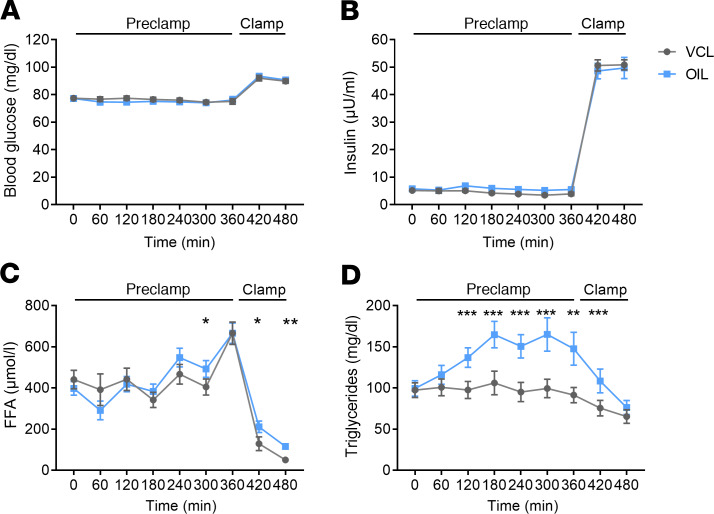
Figure 2. Time course of circulating metabolites and hormones.
Blood glucose (A), plasma insulin (B), free fatty acids (FFA) (C), and TG (D) in healthy humans after canola oil (OIL, blue) or water (vehicle [VCL], gray) administration at 0 minutes. Data are shown as mean ± SEM. ANOVA was adjusted for repeated measures with Bonferroni’s testing. n = 16; *P < 0.05 vs. CON; **P < 0.005 vs. CON; ***P < 0.001 vs. CON.
Figure 3
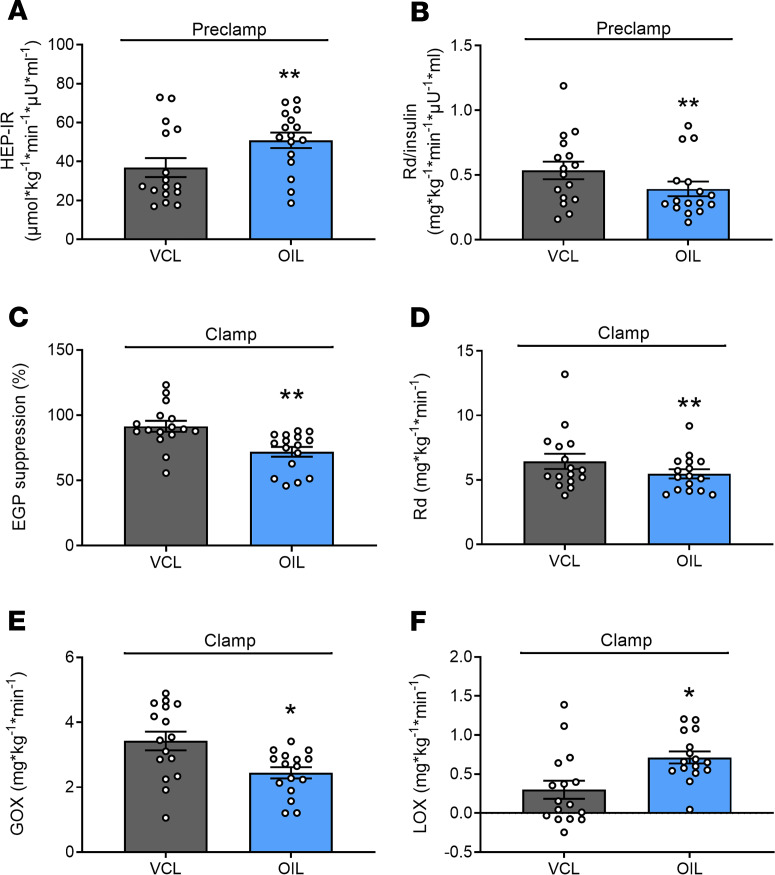
Figure 3. Whole-body glucose disposal and hepatic insulin sensitivity of the preclamp and clamp period.
Insulin resistance of the liver (HEP-IR; A); rate of glucose disappearance (Rd) per serum insulin concentration (Rd/insulin; B) between +300 minutes and +360 minutes of the preclamp period; hepatic insulin sensitivity (EGP suppression; C); Rd (D); GOX (E); and LOX (F) between +420 minutes and +480 minutes of the clamp period in healthy humans after canola oil (OIL, blue) and water (vehicle [VCL], gray) ingestion at 0 minutes. Data are shown as mean ± SEM; cross-over test, n = 16. **P < 0.005 vs. VCL; +P < 0.05 GOX OIL vs. GOX VCL; ##P < 0.005 NOXGD OIL vs. NOXGD VCL. GOX, glucose oxidation; LOX, lipid oxidation; EGP, endogenous glucose production.
Figure 4
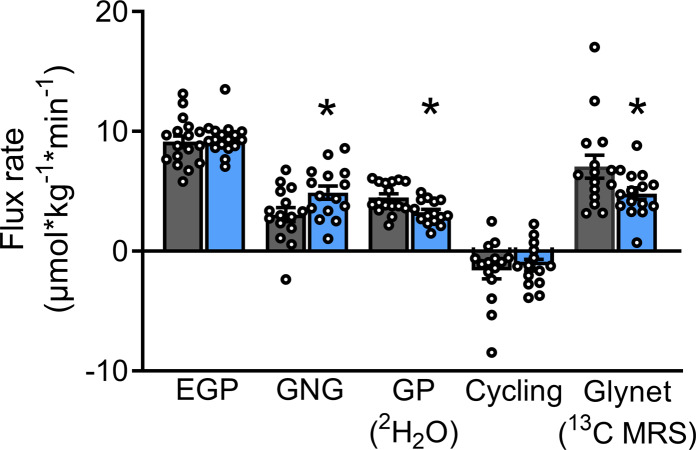
Figure 4. Hepatic glucose and glycogen fluxes between +15 minutes and +360 minutes of the preclamp period.
Rates of gluconeogenesis (GNG), glycogen phosphorylase flux (GP), glycogen cycling (Cycling), and net glycogenolysis (GLYnet) were assessed using in vivo 13C/31P/1H and ex vivo 2H-MRS combined with 2H2O/acetaminophen ingestion in humans after canola oil (OIL, blue) or water (vehicle, [VCL], gray) administration. Data are shown as mean ± SEM; cross-over test, n = 16; GP and cycling n = 15. *P < 0.05 vs. CON.

References

    1. Echouffo-Tcheugui JB, Ahima RS. Does diet quality or nutrient quantity contribute more to health? J Clin Invest. 2019;129(10):3969–3970. doi: 10.1172/JCI131449. - DOI - PMC - PubMed
    1. Baratta F, et al. Adherence to Mediterranean diet and non-alcoholic fatty liver disease: effect on insulin resistance. Am J Gastroenterol. 2017;112(12):1832–1839. doi: 10.1038/ajg.2017.371. - DOI - PubMed
    1. Estruch R, et al. Primary prevention of cardiovascular disease with a Mediterranean diet supplemented with extra-virgin olive oil or nuts. N Engl J Med. 2018;378(25):e34. doi: 10.1056/NEJMoa1800389. - DOI - PubMed
    1. Luukkonen PK, et al. Saturated fat is more metabolically harmful for the human liver than unsaturated fat or simple sugars. Diabetes Care. 2018;41(8):1732–1739. doi: 10.2337/dc18-0071. - DOI - PMC - PubMed
    1. Hernández EÁ, et al. Acute dietary fat intake initiates alterations in energy metabolism and insulin resistance. J Clin Invest. 2017;127(2):695–708. doi: 10.1172/JCI89444. - DOI - PMC - PubMed

Publication types

Associated data