


Metabolomic Responses of Maize Shoots and Roots Elicited by Combinatorial Seed Treatments With Microbial and Non-microbial Biostimulants
- PMID: 32435233
- PMCID: PMC7218175
- DOI: 10.3389/fmicb.2020.00664
Metabolomic Responses of Maize Shoots and Roots Elicited by Combinatorial Seed Treatments With Microbial and Non-microbial Biostimulants
Abstract
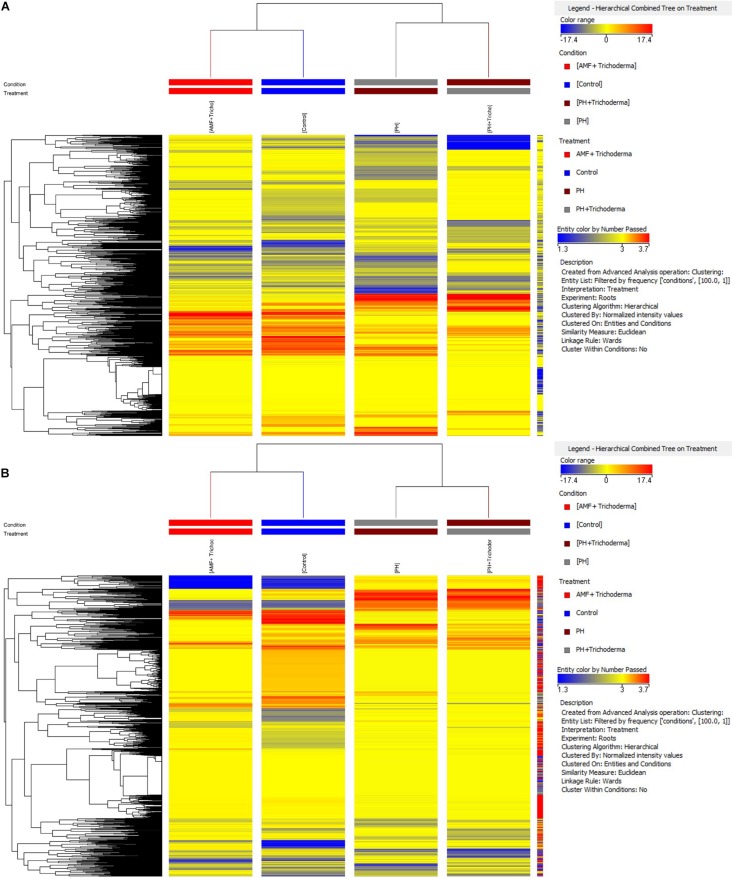
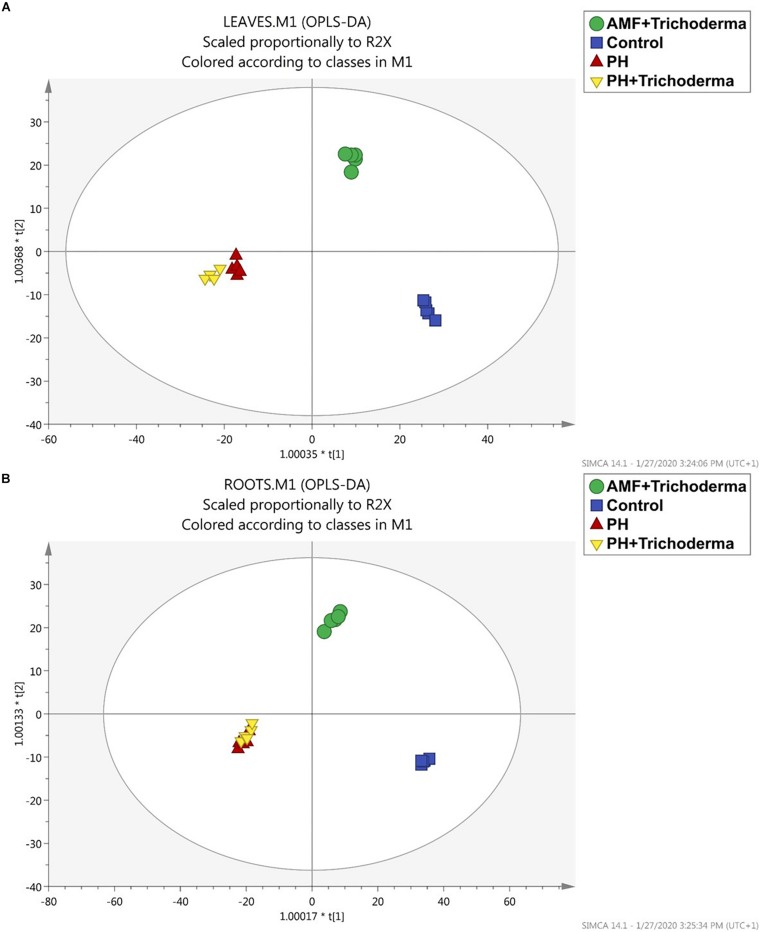
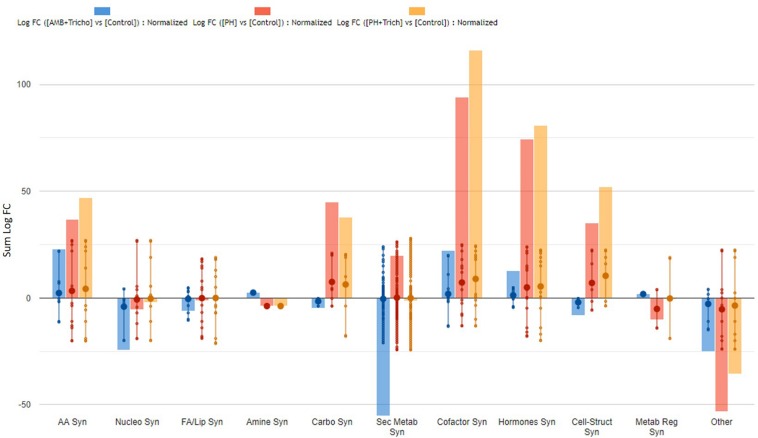
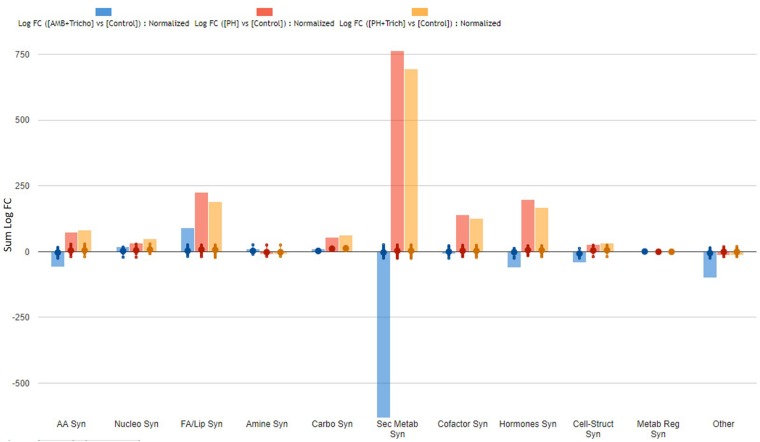
Microbial and non-microbial plant biostimulants have been successfully used to improve agriculture productivity in a more sustainable manner. Since the mode of action of biostimulants is still largely unknown, the present work aimed at elucidating the morpho-physiological and metabolomic changes occurring in maize (Zea mays L.) leaves and roots following seed treatment with (i) a consortium of two beneficial fungi [arbuscular mycorrhizal fungi (AMF) and Trichoderma koningii TK7] and rhizobacteria, (ii) a protein hydrolyzate-based biostimulant (PH) alone, or (iii) in combination with a consortium of T. koningii TK7 and rhizobacteria. The application of PH alone or in combination with Trichoderma elicited significant increases (+16.6%) in the shoot biomass compared to untreated maize plants, whereas inoculation with AMF + Trichoderma elicited significant increases in root dry biomass (+48.0%) compared to untreated plants. Distinctive metabolomic signatures were achieved from the different treatments, hence suggesting that different molecular processes were involved in the plants response to the biostimulants. The metabolic reprogramming triggered by the treatments including the protein hydrolyzate was hierarchically more pronounced than the application of microorganisms alone. Most of the differential metabolites could be ascribed to the secondary metabolism, with phenylpropanoids and terpenes being the most represented compounds. The application of PH triggered an accumulation of secondary metabolites, whereas the opposite trend of accumulation was seen in the case of microorganisms alone. The increase in biomass could be related to two processes, namely the modulation of the multilayer phytohormone interaction network and a possible increase in nitrogen use efficiency via the GS-GOGAT system.
Keywords: Trichoderma; Zea mays L.; mycorrhiza; phytohormones; plant metabolomics; protein hydrolyzate.
Copyright © 2020 Rouphael, Lucini, Miras-Moreno, Colla, Bonini and Cardarelli.
Figures
References
-
- Basu S., Rabara R. C., Negi S. (2018). AMF: the future prospect for sustainable agriculture. Physiol. Mol. Plant Pathol. 102 36–45. 10.1016/j.pmpp.2017.11.007 - DOI
-
- Battacharyya D., Babgohari M. Z., Rathor P., Prithiviraj B. (2015). Seaweed extracts as biostimulants in horticulture. Sci. Hortic. 196 39–48. 10.1016/j.scienta.2015.09.012 - DOI
-
- Böttger A., Vothknecht U., Bolle C., Wolf A. (2018). Lessons on Caffeine, Cannabis & Co. Cham: Springer, 171–178.
-
- Calvo P., Nelson L., Kloepper J. W. (2014). Agricultural uses of plant biostimulants. Plant Soil 383 3–41. 10.1007/s11104-014-2131-8 - DOI
LinkOut - more resources
Full Text Sources
