


Fetal Brain-Sparing, Postnatal Cerebral Oxygenation, and Neurodevelopment at 4 Years of Age Following Fetal Growth Restriction
- PMID: 32435629
- PMCID: PMC7218090
- DOI: 10.3389/fped.2020.00225
Fetal Brain-Sparing, Postnatal Cerebral Oxygenation, and Neurodevelopment at 4 Years of Age Following Fetal Growth Restriction
Abstract
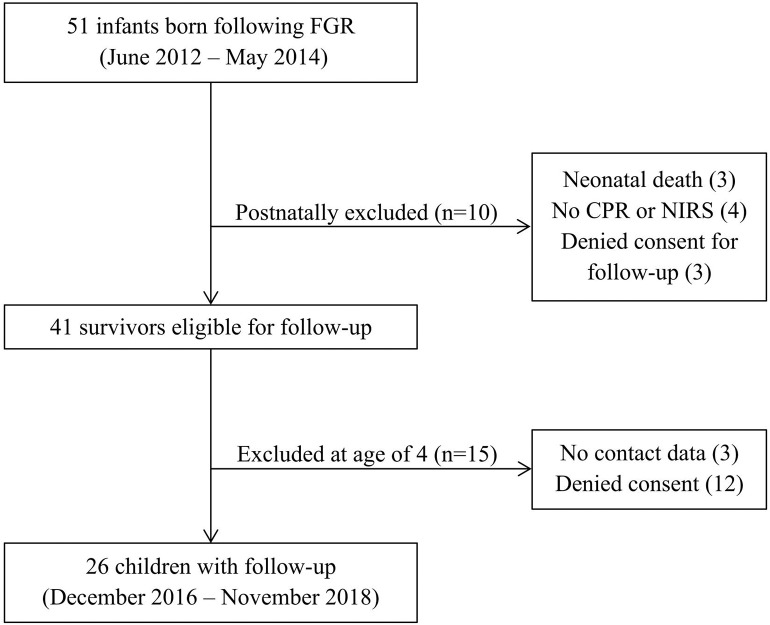
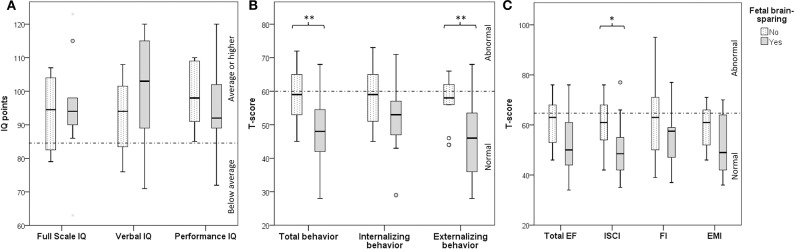
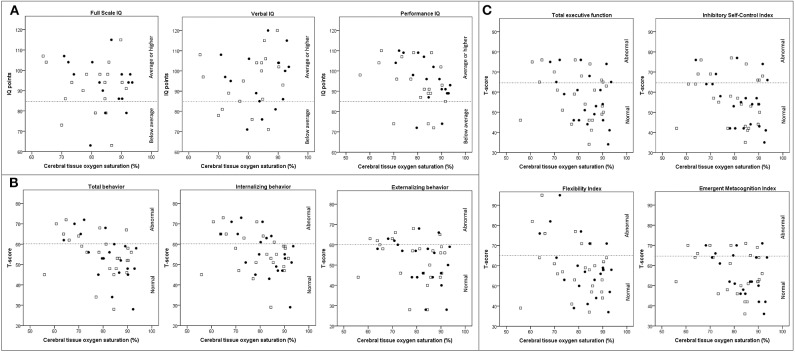
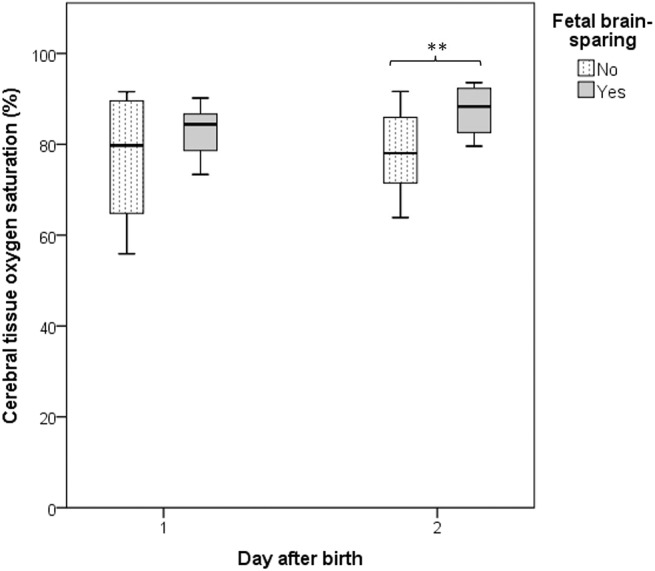
Objectives: To assess the role of fetal brain-sparing and postnatal cerebral oxygen saturation (rcSO2) as determinants of long-term neurodevelopmental outcome following fetal growth restriction (FGR). Methods: This was a prospective follow-up study of an FGR cohort of 41 children. Prenatally, the presence of fetal brain-sparing (cerebroplacental ratio < 1) was assessed by Doppler ultrasound. During the first two days after birth, rcSO2 was measured with near-infrared spectroscopy. At 4 years of age, intelligence (IQ points), behavior (T-scores), and executive function (T-scores) were assessed using the Wechsler Preschool and Primary Scale of Intelligence, Child Behavior Checklist, and Behavior Rating Inventory of Executive Function-Preschool Version, respectively. Using linear regression analyses, we tested the association (p < 0.05) between brain-sparing/rcSO2 and normed neurodevelopmental scores. Results: Twenty-six children (gestational age ranging from 28.0 to 39.9 weeks) participated in the follow-up at a median age of 4.3 (range: 3.6 to 4.4) years. Autism spectrum disorder was reported in three children (11.5%). Fetal brain-sparing was associated with better total and externalizing behavior (betas: -0.519 and -0.494, respectively). RcSO2 levels above the lowest quartile, particularly on postnatal day 2 (≥ 77%), were associated with better total and internalizing behavior and executive functioning (betas: -0.582, -0.489, and -0.467, respectively), but also lower performance IQ (beta: -0.530). Brain-sparing mediated some but not all of these associations. Conclusions: In this FGR cohort, fetal brain-sparing and high postnatal rcSO2 were-independently, but also as a reflection of the same mechanism-associated with better behavior and executive function. Postnatal cerebral hyperoxia, however, was negatively associated with brain functions responsible for performance IQ.
Keywords: behavior; cerebroplacental ratio; executive function; fetal brain-sparing; fetal doppler; intelligence; near-infrared spectroscopy; regional cerebral oxygen saturation.
Copyright © 2020 Richter, Salavati, Kooi, Heijer, Foreman, Schoots, Bilardo, Scherjon, Tanis and Bos.
Figures
References
LinkOut - more resources
Full Text Sources
Miscellaneous
