Prevalence of Themes Linked to Delayed Presentation of Breast Cancer in Africa: A Meta-Analysis of Patient-Reported Studies
- PMID: 32437263
- PMCID: PMC7268898
- DOI: 10.1200/JGO.19.00402
Prevalence of Themes Linked to Delayed Presentation of Breast Cancer in Africa: A Meta-Analysis of Patient-Reported Studies
Abstract
Purpose: The prevalence of themes linked to delay in presentation of breast cancer (BC) and their underlying factors vary considerably throughout Africa. Regional differences and trends are largely unreported. The purpose of this research was to provide summary estimates of the prevalence and distribution of the themes and underlying factors linked to delay in the presentation of BC, regional variation, and trends in an effort to identify targets for intervention.
Design: We screened articles found through PubMed/Medline, African Journal OnLine, Science Direct, Google/Google Scholar, and ResearchGate. We included patient-reported surveys on the reasons linked to delayed presentation under 6 previously identified themes: symptom misinterpretation, fear, preference for alternative care, social influence, hospital-related factors, and access factors. The meta-analytical procedure in MetaXL used the quality-effect model.
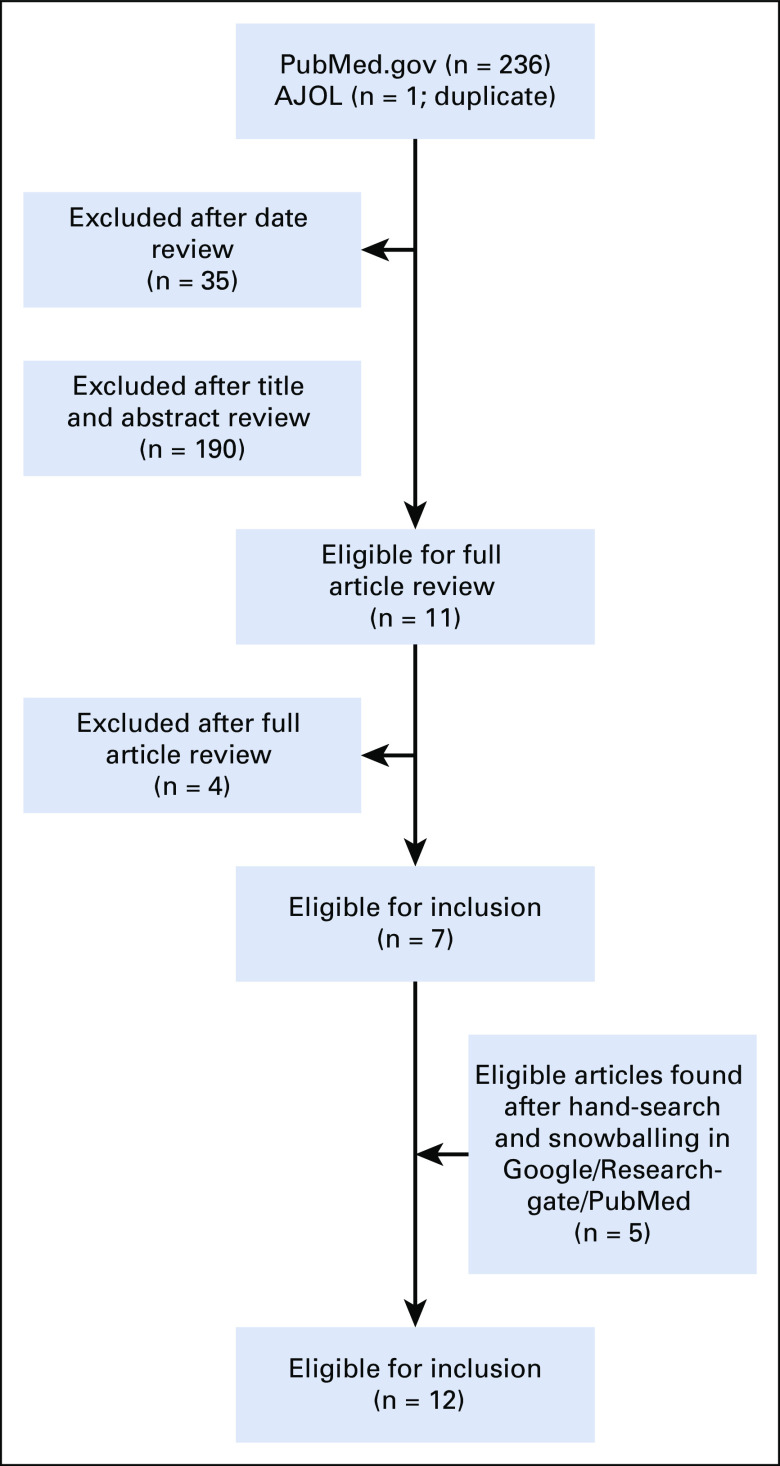
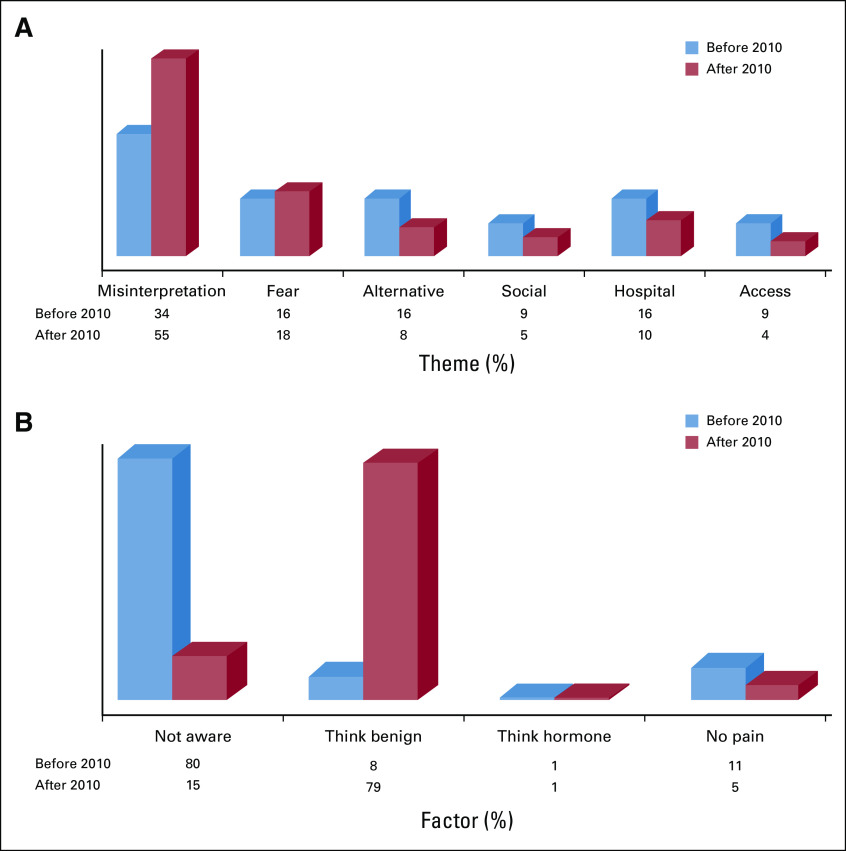
Results: Twelve of the 236 identified articles were eligible for this review. The overall summary estimate of late presentation (> 90 days) was 54% (95% CI, 23 to 85) and was worst in the eastern and central regions. Symptom misinterpretation was the most common theme (50%; 95% CI, 21 to 56), followed by fear (17%; 95% CI, 3 to 27), hospital-related theme (11%; 95% CI, 1 to 21), preference for alternative care (10%; 95% CI, 0 to 21), social influence (7%; 95% CI, 0 to 14), and access-related theme (6%; 95% CI, 0 to 13). The most common factor underlying symptom misinterpretation was mischaracterizing the breast lesion as benign (60%; 95% CI, 4 to 100) which surpassed lack of awareness in the last decade. Misdiagnosis and failure to refer were the dominant hospital-related factors.
Conclusion: Modifiable factors such as mischaracterizing malignant masses as benign, fear, misdiagnosis, and failure to refer were the prevalent factors contributing to delays throughout Africa. These factors are promising targets for intervention.
Conflict of interest statement
The following represents disclosure information provided by authors of this manuscript. All relationships are considered compensated unless otherwise noted. Relationships are self-held unless noted. I = Immediate Family Member, Inst = My Institution. Relationships may not relate to the subject matter of this manuscript. For more information about ASCO's conflict of interest policy, please refer to
Open Payments is a public database containing information reported by companies about payments made to US-licensed physicians (
No potential conflicts of interest were reported.
Figures
References
-
- Yip CH, Smith RA, Anderson BO, et al. Guideline implementation for breast healthcare in low- and middle-income countries: Early detection resource allocation Cancer 1132244–2256.20088suppl - PubMed
-
- dos Santos Silva I, McCormack V, Jedy-Agba E, et al. Downstaging breast cancer in sub-Saharan Africa: A realistic target? Cancer Control. 2017;47:46–52.
Publication types
MeSH terms
LinkOut - more resources
Full Text Sources
Medical