Meta-Analysis
. 2020 May 1;3(5):e204693.
doi: 10.1001/jamanetworkopen.2020.4693.

Association of Ketamine With Psychiatric Symptoms and Implications for Its Therapeutic Use and for Understanding Schizophrenia: A Systematic Review and Meta-analysis

Affiliations
Meta-Analysis

Association of Ketamine With Psychiatric Symptoms and Implications for Its Therapeutic Use and for Understanding Schizophrenia: A Systematic Review and Meta-analysis

Katherine Beck et al. JAMA Netw Open. .

Abstract

Importance: Ketamine hydrochloride is increasingly used to treat depression and other psychiatric disorders but can induce schizophrenia-like or psychotomimetic symptoms. Despite this risk, the consistency and magnitude of symptoms induced by ketamine or what factors are associated with these symptoms remain unknown.

Objective: To conduct a meta-analysis of the psychopathological outcomes associated with ketamine in healthy volunteers and patients with schizophrenia and the experimental factors associated with these outcomes.

Data sources: MEDLINE, Embase, and PsychINFO databases were searched for within-participant, placebo-controlled studies reporting symptoms using the Brief Psychiatric Rating Scale (BPRS) or the Positive and Negative Syndrome Scale (PANSS) in response to an acute ketamine challenge in healthy participants or patients with schizophrenia.

Study selection: Of 8464 citations retrieved, 36 studies involving healthy participants were included. Inclusion criteria were studies (1) including healthy participants; (2) reporting symptoms occurring in response to acute administration of subanesthetic doses of ketamine (racemic ketamine, s-ketamine, r-ketamine) intravenously; (3) containing a placebo condition with a within-subject, crossover design; (4) measuring total positive or negative symptoms using BPRS or PANSS; and (5) providing data allowing the estimation of the mean difference and deviation between the ketamine and placebo condition.

Data extraction and synthesis: Two independent investigators extracted study-level data for a random-effects meta-analysis. Total, positive, and negative BPRS and PANSS scores were extracted. Subgroup analyses were conducted examining the effects of blinding status, ketamine preparation, infusion method, and time between ketamine and placebo conditions. The Meta-analysis of Observational Studies in Epidemiology (MOOSE) and Preferred Reporting Items for Systematic Reviews and Meta-analyses (PRISMA) guidelines were followed.

Main outcomes and measures: Standardized mean differences (SMDs) were used as effect sizes for individual studies. Standardized mean differences between ketamine and placebo conditions were calculated for total, positive, and negative BPRS and PANSS scores.

Results: The overall sample included 725 healthy volunteers (mean [SD] age, 28.3 [3.6] years; 533 [73.6%] male) exposed to the ketamine and placebo conditions. Racemic ketamine or S-ketamine was associated with a statistically significant increase in transient psychopathology in healthy participants for total (SMD = 1.50 [95% CI, 1.23-1.77]; P < .001), positive (SMD = 1.55 [95% CI, 1.29-1.81]; P < .001), and negative (SMD = 1.16 [95% CI, 0.96-1.35]; P < .001) symptom ratings relative to the placebo condition. The effect size for this association was significantly greater for positive than negative symptoms of psychosis (estimate, 0.36 [95% CI, 0.12-0.61]; P = .004). There was significant inconsistency in outcomes between studies (I2 range, 77%-83%). Bolus followed by constant infusion increased ketamine's association with positive symptoms relative to infusion alone (effect size, 1.63 [95% CI, 1.36-1.90] vs 0.84 [95% CI, 0.35-1.33]; P = .006). Single-day study design increased ketamine's ability to generate total symptoms (effect size, 2.29 [95% CI, 1.69-2.89] vs 1.39 [95% CI, 1.12-1.66]; P = .007), but age and sex did not moderate outcomes. Insufficient studies were available for meta-analysis of studies in schizophrenia. Of these studies, 2 found a statistically significant increase in symptoms with ketamine administration in total and positive symptoms. Only 1 study found an increase in negative symptom severity with ketamine.

Conclusions and relevance: This study found that acute ketamine administration was associated with schizophrenia-like or psychotomimetic symptoms with large effect sizes, but there was a greater increase in positive than negative symptoms and when a bolus was used. These findings suggest that bolus doses should be avoided in the therapeutic use of ketamine to minimize the risk of inducing transient positive (psychotic) symptoms.


Conflict of interest statement

Conflict of Interest Disclosures: Dr Beck reported receiving grants from the Royal College of Psychiatrists and Rosetrees Trust during the conduct of the study. Dr Ranganathan reported receiving grants from the National Institutes of Health (NIH) during the conduct of the study. Dr Ranganathan reported receiving grant funding from the NIH administered by Yale University, funding administered by Yale University from Roche and Insys Therapeutics, and consulting for Bioxcel Therapeutics. Dr D’Souza reported receiving grants from the National Institute of Mental Health (NIMH), Organon International, Pfizer, Inc, AstraZeneca, and the National Center for Advancing Translational Sciences (NCATS) during the conduct of the study; funding from the NIH administered by Yale University; funding administered by Yale University from Takeda Pharmaceutical Company Limited, the Heffter Institute, and the Wallace Foundation; and consulting for Abide. Dr Taylor reported receiving personal fees from H Lundbeck A/S, Otsuka Pharmaceutical Co, Ltd, and Sunovion Pharmaceuticals, Inc, outside the submitted work. Dr Krystal reported receiving grants from NCATS during the conduct of the study; personal fees from Sunovion Pharmacueticals, Inc, Janssen Pharmaceutica, Biogen, Inc, Cerevel Therapeutics, LLC, Boehringer Ingelheim International, Taisho Pharmaceutical Co, Ltd, Takeda Pharmaceutical Company Limited, and BioXcel Therapeutics, Inc, Terran Pharmaceuticals, Biohaven Pharmaceuticals, BlackThorn Therapeutics, Spring Health, Inc, Sage Therapeutics, Inc, and Inheris Pharmaceuticals, Inc, outside the submitted work; consulting relationships with AstraZeneca, Biogen, Inc, IDEC Corporation, Biomedisyn Corporation, Bionomics, Ltd (Australia), Boehringer Ingelheim International, Concert Pharmaceuticals, Inc, Epiodyne, Inc, Heptares Therapeutics, Janssen Research & Development, Otsuka Pharmaceutical Co, Ltd, Perception Neuroscience Holdings, Inc, Spring Health, Inc, Sunovion Pharmaceuticals, Inc, and Takeda Pharmaceutical Company Limited; serving on scientific advisory boards of Bioasis Technologies, Inc, Biohaven Pharmaceuticals, BioXcel Therapeutics, Inc (clinical advisory board), BlackThorn Therapeutics, Cadent Therapeutics (clinical advisory board), Cerevel Therapeutics, LLC, Lohocla Research Corporation, and PsychoGenics; a paid editorial relationship with Biological Psychiatry (editor); patents for dopamine and noradrenergic reuptake inhibitors in treatment of schizophrenia, glutamate modulating agents in the treatment of mental disorders, intranasal administration of ketamine to treat depression, methods for treating suicidal ideation, composition and methods to treat addiction, treatment selection for major depressive disorder, compounds, compositions, and methods for treating or preventing depression and other diseases, combination therapy for treating or preventing depression or other mood diseases, ketamine for treatment-resistant depression with royalties paid and for suicide prevention licensed, and riluzole for generalized anxiety with royalties paid; stock ownership in Biohaven Pharmaceuticals, Sage Pharmaceuticals, and Spring Health, Inc; and stock options in Biohaven Pharmaceuticals, Medical Sciences, BlackThorn Therapeutics, and Terran Life Sciences, Inc. Dr Howes reported receiving investigator-initiated research funding from and/or participating in advisory/speaker meetings organized by Angellini, AstraZeneca, Autifony Therapeutics, Biogen, Inc, Eli Lilly and Company, Heptares Therapeutics, Jansenn, H Lundbeck A/C, Lyden-Delta, Otsuka Pharmaceutical Co, Ltd, Sunovion Pharmaceuticals, Inc, RAND Corporation, Recordati SpA, and Roche. No other disclosures were reported.

Figures

Figure 1.
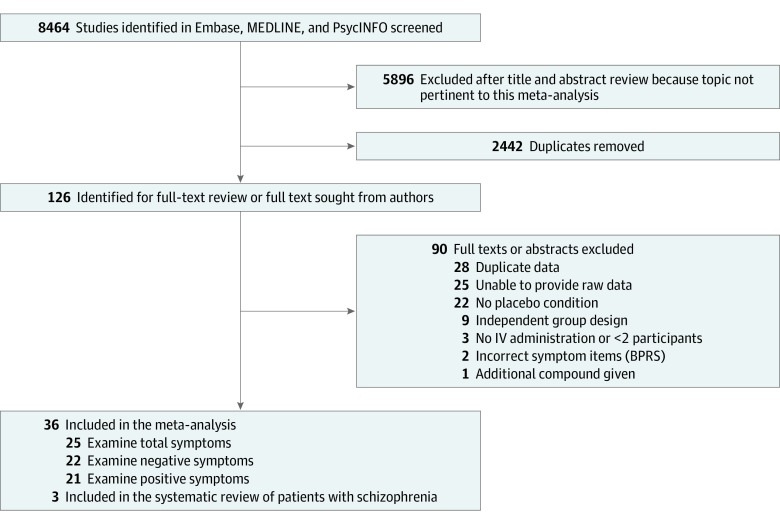
Figure 1.. Search Process Summarizing the Review and Exclusion of Studies
BPRS indicates Brief Psychiatric Rating Scale; IV, intravenous.
Figure 2.
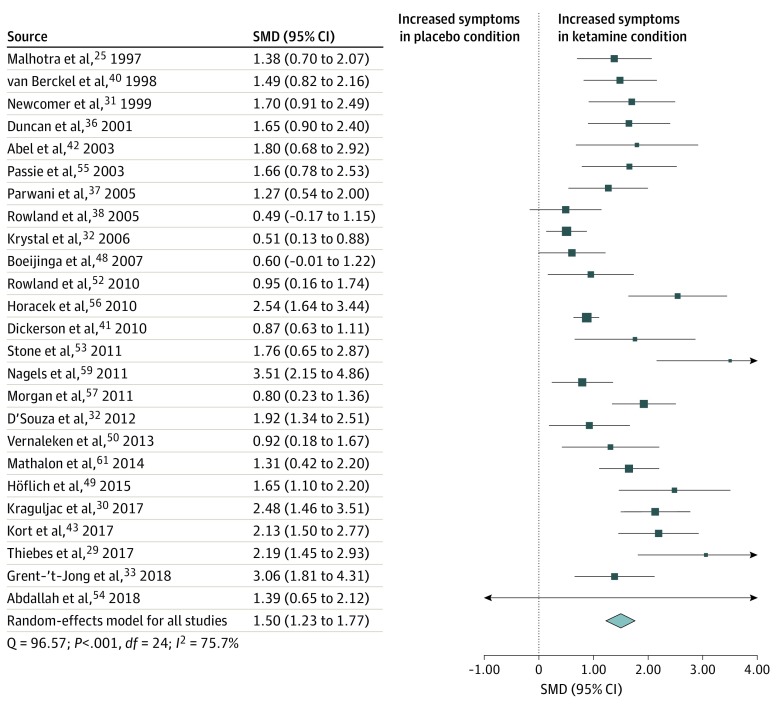
Figure 2.. Standardized Mean Difference (SMD) in Total Symptoms Scores for Healthy Volunteers After Ketamine vs Placebo Administration
Scores include Positive and Negative Syndrome Scale and Brief Psychiatric Rating Scale. A statistically significant increase in total symptoms occurred in healthy volunteers in the ketamine condition compared with the placebo condition (SMD = 1.50 [95% CI, 1.23-1.77]; P < .001). Each square shows the effect size for a single study, with the horizontal error bars representing the width of the 95% CI. The size of the squares reflects the weight attributed to each study. The diamond illustrates the summary effect size, and the width of the diamond depicts the width of the overall 95% CI.
Figure 3.
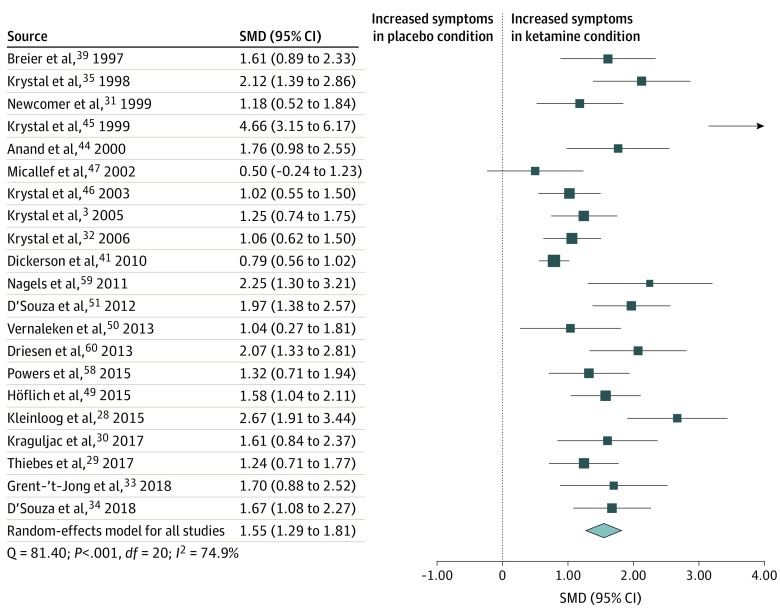
Figure 3.. Standardized Mean Difference (SMD) in Positive Symptom Scores for Healthy Volunteers After Ketamine vs Placebo Administration
Scores include Positive and Negative Syndrome Scale and Brief Psychiatric Rating Scale. A statistically significant increase in positive symptoms occurred in healthy volunteers in the ketamine condition compared with the placebo condition (SMD = 1.55 [95% CI, 1.29-1.81]; P < .001). Each square shows the effect size for a single study, with the horizontal error bars representing the width of the 95% CI. The size of the squares reflects the weight attributed to each study. The diamond illustrates the summary effect size, and the width of the diamond depicts the width of the overall 95% CI.
Figure 4.
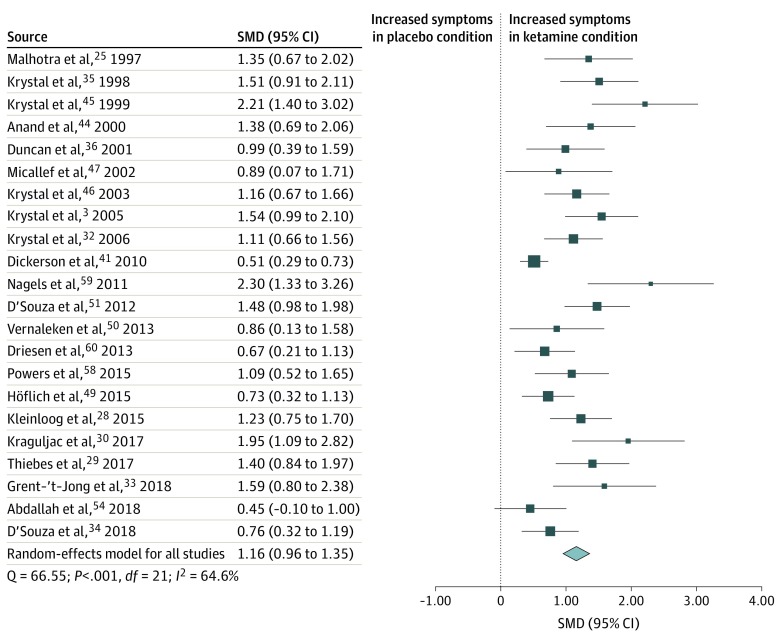
Figure 4.. Standardized Mean Difference (SMD) in Negative Symptom Scores in Healthy Volunteers After Ketamine vs Placebo Administration
Scores include Positive and Negative Syndrome Scale and Brief Psychiatric Rating Scale. A statistically significant increase in negative symptoms occurred in healthy volunteers in the ketamine condition compared with the placebo condition (SMD = 1.16 [95% CI, 0.96-1.35]; P < .001). Each square shows the effect size for a single study, with the horizontal error bars representing the width of the 95% CI. The size of the squares reflects the weight attributed to each study. The diamond illustrates the summary effect size, and the width of the diamond depicts the width of the overall 95% CI.

References

    1. Stevenson C. Ketamine: a review. Updat Anaesth. 2005;20(20):25-29.
    1. Schwartzman RJ, Alexander GM, Grothusen JR, Paylor T, Reichenberger E, Perreault M. Outpatient intravenous ketamine for the treatment of complex regional pain syndrome: a double-blind placebo controlled study. Pain. 2009;147(1-3):107-115. doi: 10.1016/j.pain.2009.08.015 - DOI - PubMed
    1. Krystal JH, Perry EB Jr, Gueorguieva R, et al. Comparative and interactive human psychopharmacologic effects of ketamine and amphetamine: implications for glutamatergic and dopaminergic model psychoses and cognitive function. Arch Gen Psychiatry. 2005;62(9):985-994. doi: 10.1001/archpsyc.62.9.985 - DOI - PubMed
    1. Vollenweider FX, Geyer MA. A systems model of altered consciousness: integrating natural and drug-induced psychoses. Brain Res Bull. 2001;56(5):495-507. doi: 10.1016/S0361-9230(01)00646-3 - DOI - PubMed
    1. Krystal JH, Karper LP, Seibyl JP, et al. Subanesthetic effects of the noncompetitive NMDA antagonist, ketamine, in humans: psychotomimetic, perceptual, cognitive, and neuroendocrine responses. Arch Gen Psychiatry. 1994;51(3):199-214. doi: 10.1001/archpsyc.1994.03950030035004 - DOI - PubMed

Publication types

MeSH terms