


Clinical Characteristics and Outcomes of 421 Patients With Coronavirus Disease 2019 Treated in a Mobile Cabin Hospital
- PMID: 32437696
- PMCID: PMC7207119
- DOI: 10.1016/j.chest.2020.05.515
Clinical Characteristics and Outcomes of 421 Patients With Coronavirus Disease 2019 Treated in a Mobile Cabin Hospital
Abstract
Background: In December 2019, a novel coronavirus-associated pneumonia, now known as coronavirus disease 2019 (COVID-19), was first detected in Wuhan, China. To prevent the rapid spread of the severe acute respiratory syndrome coronavirus 2 (SARS-CoV-2) and treat patients with mild symptoms, sports stadiums and convention centers were reconstructed into mobile hospitals.
Research question: It is unknown whether a mobile cabin hospital can provide a safe treatment site for patients with mild COVID-19 symptoms.
Study design and methods: This study retrospectively reviewed the medical records of 421 patients with COVID-19 admitted to a mobile cabin hospital in Wuhan from February 9, 2020, to March 5, 2020. Clinical data comprised patient age, sex, clinical presentation, chest imaging, nucleic acid testing, length of hospitalization, and outcomes.
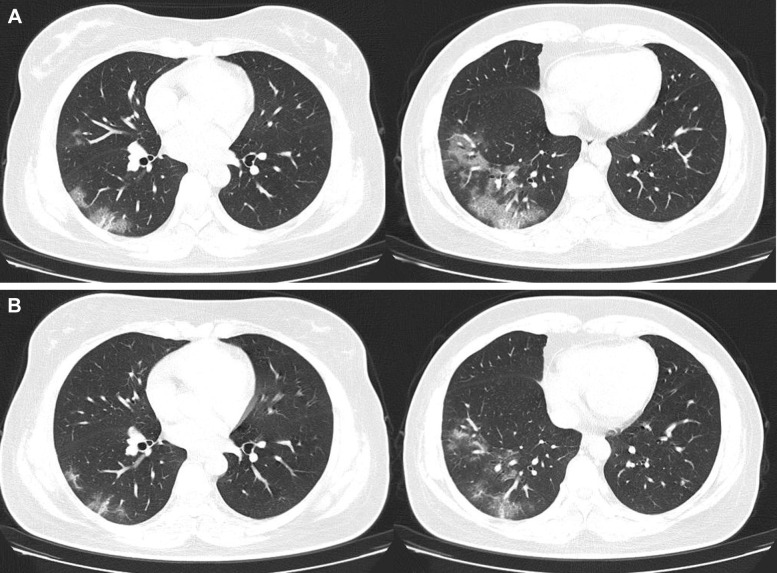
Results: Of the patients who were discharged from the cabin hospital, 362 (86.0%) were categorized as recovered; 14.0% developed severe symptoms and were transferred to a designated hospital. The most common presenting symptoms were fever (60.6%) and cough (52.0%); 5.2% exhibited no obvious symptoms. High fever (> 39.0°C) was more common in severe cases than in recovered cases (18.6% vs 6.6%). The distribution of lung lesions was peripheral in 85.0% of patients, multifocal in 69.4%, and bilateral in 68.2%. The most common pattern was ground-glass opacity (67.7%), followed by patchy shadowing (49.2%). The incidence of patchy shadowing was higher in patients with severe disease (66.1%) than in those who recovered (31.8%, P < .0001). The median length of hospitalization was 17 days (interquartile range, 14-19 days), and the median time taken for positive real-time reverse transcriptase polymerase chain reaction results to become negative in recovered patients was 8 days (interquartile range, 6-10 days).
Interpretation: Mobile cabin hospitals provide a safe treatment site for patients with mild COVID-19 symptoms and offer an effective isolation area to prevent the spread of severe acute respiratory syndrome coronavirus 2.
Keywords: COVID-19; COVID-19, coronavirus disease 2019; RT-PCR, real-time reverse transcription polymerase chain reaction; SARS-CoV-2; SARS-CoV-2, severe acute respiratory syndrome coronavirus 2; clinical characteristics; mobile cabin hospital; outcomes.
© 2020 American College of Chest Physicians. Published by Elsevier Inc. All rights reserved.
Figures
Comment in
-
Home or Cabin: Community Care for Coronavirus Disease 2019.Chest. 2020 Sep;158(3):839-840. doi: 10.1016/j.chest.2020.06.002. Chest. 2020. PMID: 32892875 Free PMC article. No abstract available.
References
MeSH terms
Substances
LinkOut - more resources
Full Text Sources
Miscellaneous
