Case Reports
. 2020 May;30(5):360-367.
doi: 10.1016/j.nmd.2020.03.005. Epub 2020 Apr 16.

Pathogenic variants in COL6A3 cause Ullrich-like congenital muscular dystrophy in young Labrador Retriever dogs

Affiliations
Case Reports

Pathogenic variants in COL6A3 cause Ullrich-like congenital muscular dystrophy in young Labrador Retriever dogs

Véronique Bolduc et al. Neuromuscul Disord. 2020 May.

Abstract

The collagen VI-related muscular dystrophies in people include a broad spectrum of diseases ranging from the severe Ullrich congenital muscular dystrophy to the mild Bethlem myopathy. Clinical features are attributable to both muscle and connective tissue and include progressive muscle weakness and respiratory failure, hyperlaxity of distal joints, and progressive contracture of large joints. Here we describe two different COL6A3 pathogenic variants in Labrador Retriever dogs that result in autosomal recessive or autosomal dominant congenital myopathies with hyperlaxity of distal joints and joint contracture, similar to the condition in people.

Keywords: Canine; Collagen VI; Muscle; Myopathy.


Figures

Figure 1.
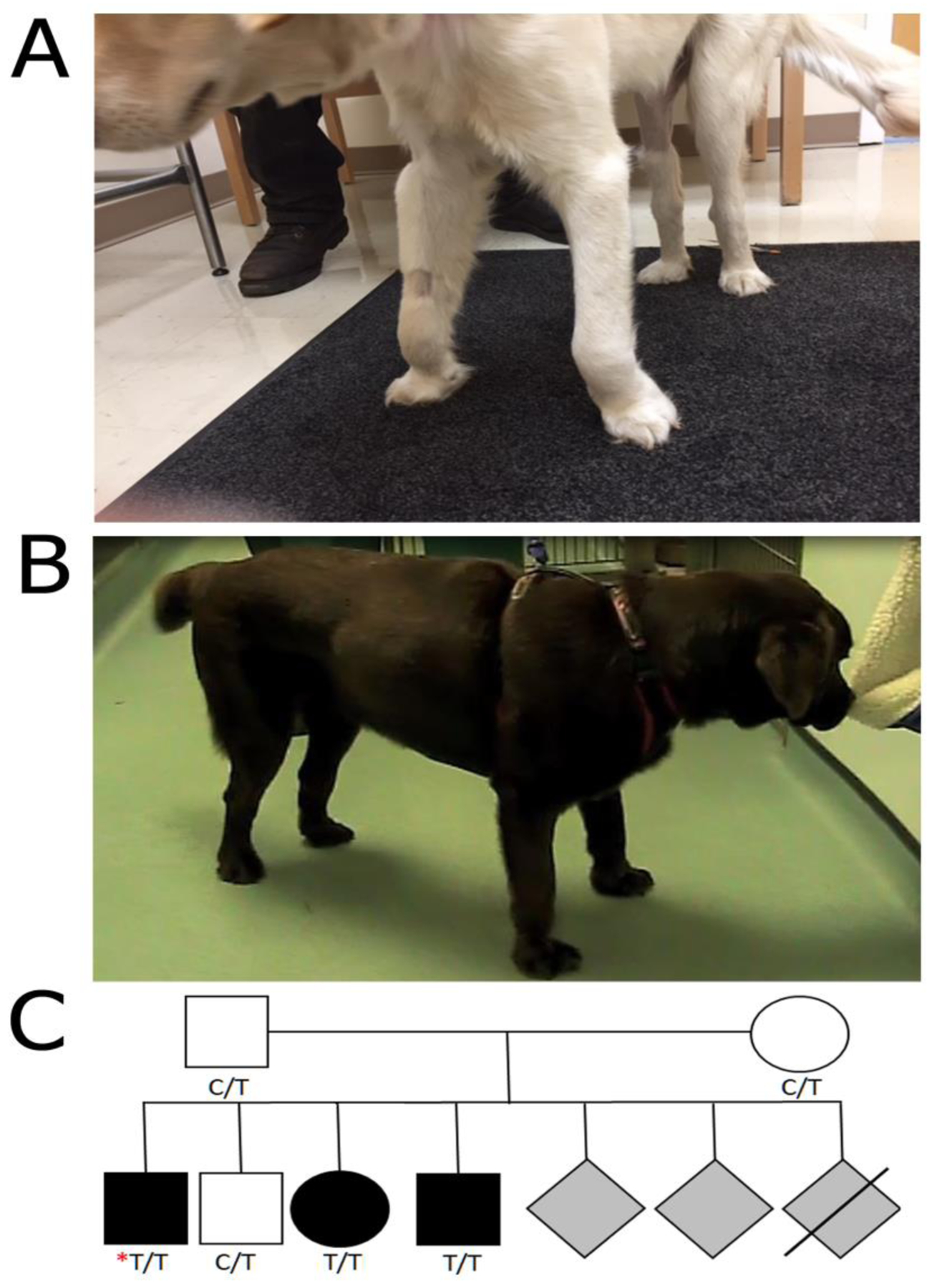
Figure 1.. Clinical signs of congenital muscular dystrophy in two Labrador Retrievers.
(A) Image of a 6 month-old male (Case 1) showing carpal hyperflexion and limb deformities. (B) Image of a 11 month-old female (Case 2) showing carpal and tarsal hyperflexion. (C) Limited pedigree of Case 1 (identified by the red asterisk). Genotypes at the COL6A3 c.4726C>T (p.R1576*) locus are indicated for individuals tested.
Figure 2.
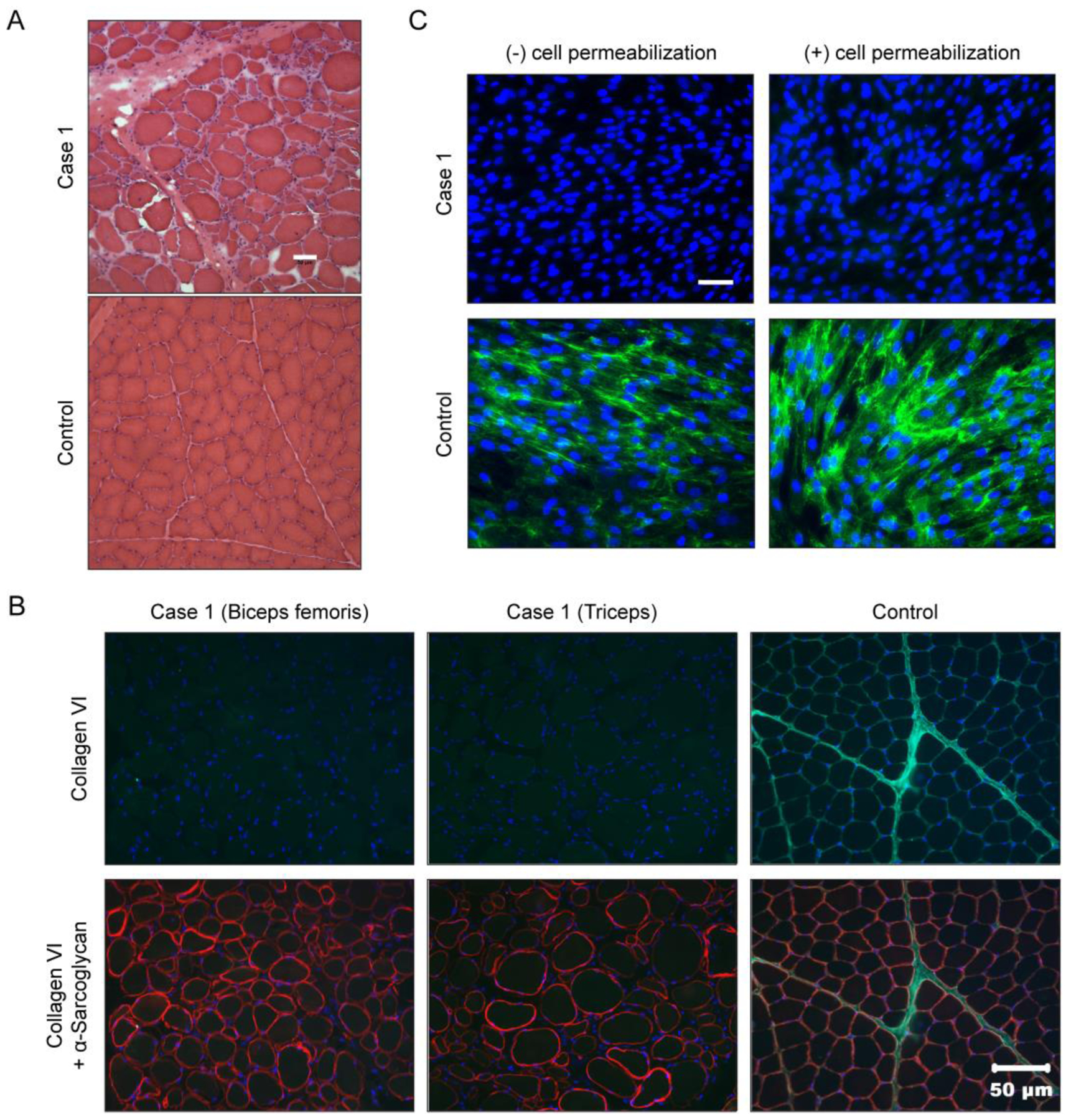
Figure 2.. Abnormal muscle histology and absence of collagen VI staining in Case 1.
(A) Hematoxylin and eosin (H&E) staining of cryosections from the biceps femoris muscle from Case 1 showing a dystrophic phenotype including excessive variability in myofiber size, endomysial fibrosis and excessive internal nuclei. Scale bar = 50 μm. (B) Muscle biopsy sections co-stained for collagen VI (green) and α-sarcoglycan (red). Scale bar = 50 μm. (C) Primary dermal fibroblasts cultured and stained for collagen VI (green), and nuclei (DAPI, blue), in absence (−) or presence (+) of a cell permeabilizing agent. Scale bar = 50 μm.
Figure 3.
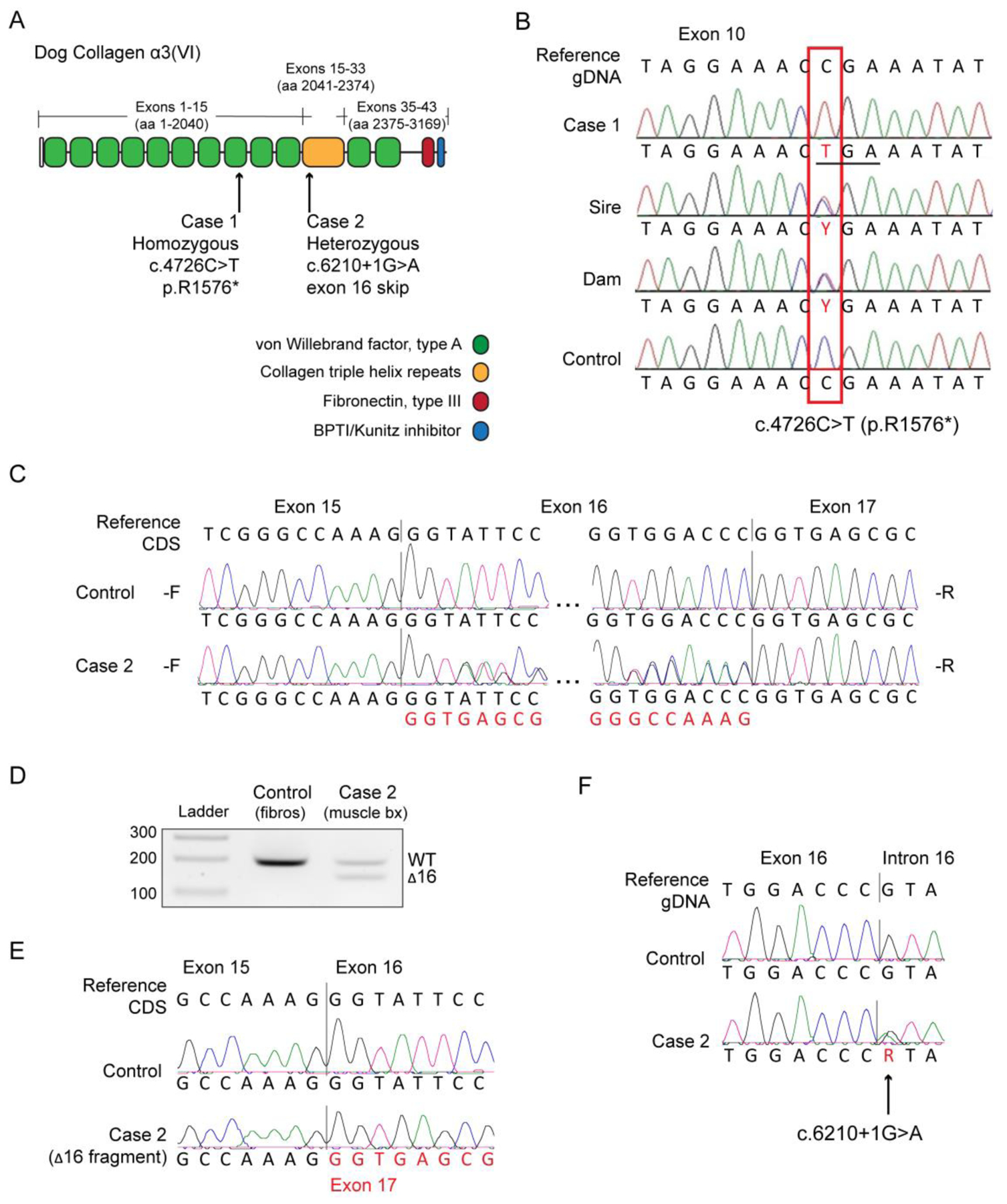
Figure 3.. Muscular dystrophy in Labrador retriever dogs caused by variants in COL6A3.
(A) Schematic of the main collagen a3(VI) chain protein domains in the dog, and the relative positions of the recessive and dominant variants found in the affected Labrador retriever dogs Case 1 and Case 2, respectively. aa = amino acid. (B) Alignments of exon 10 sequences of Case 1, the sire, the dam, and a control obtained by Sanger sequencing of a PCR amplicon. The box indicates the location where a homozygous C nucleotide in the control genome is replaced with a homozygous T nucleotide in the case. Both the sire and dam are heterozygous. The variant changes the codon for an arginine residue (CGA) to TCA to the stop codon (TGA). (C) Complementary DNA (cDNA) forward (-F) and reverse (-R) sequencing chromatograms of a control dog and of Case 2, spanning exon 16 of the COL6A3 gene. CDS = coding sequence. (D) cDNA amplification and electrophoresis of COL6A3 transcripts. The fragments in Case 2 lane show an approximately equal expression of normal transcripts (wild-type, WT) and transcripts lacking exon 16 (Δ16), which is 54 nucleotides in size. (E) Sequencing chromatograms of the PCR fragments isolated from the electrophoresis gel in (B) showing the junction of exon 15 to exon 17. (F) Sequencing chromatograms from genomic DNA show that Case 2 is a heterozygous carrier of the COL6A3 c.6210+1G>A variant.

References

    1. Bonneman CG. The collagen VI-related myopathies: muscle meets matrix. Nat Rev Neurol 2011;7(7):379–90. doi: 10.1038/nrneurol.2011.81. - DOI - PMC - PubMed
    1. Allamand V, Briñas L, Richard P, Stojkovic T, Quijano-Roy S, Bonne G. Col VI myopathies: where do stand, where do we go. Skelet Muscle 2011. September 23;1:30. doi: 10.1186/2044-5040-1-30. - DOI - PMC - PubMed
    1. Norwood FL, Harling C, Chinnery PF, Eagle M, Bushby K, Straub V. Prevalence of genetic muscle disease in Northern England: in-depth analysis of a muscle clinic population. Brain 2009; 32(11): 3175–86. doi: 10.1093/brain/awp236. - DOI - PMC - PubMed
    1. Steffen F, Bilzer T, Brands J, Golini L, Jagannathan V, Weidmer M, et al. A nonsense variant in COL6A1 in Landseer dogs with muscular dystrophy. G3 (Bethesda). 2015; 5(12):2611–7. doi: 10.1534/g3.115.021923. - DOI - PMC - PubMed
    1. Marioni-Henry K, Haworth P, Scott H, Witte P, Guo LT, Shelton GD. Sarcolemmal specific collagen VI deficient myopathy in a Labrador Retriever. J Vet Intern Med 2014; 28:243–9. - PMC - PubMed

Publication types

Substances