


Failed Genetic Protection: Type 1 Diabetes in the Presence of HLA-DQB1*06:02
- PMID: 32439825
- PMCID: PMC7372070
- DOI: 10.2337/db20-0038
Failed Genetic Protection: Type 1 Diabetes in the Presence of HLA-DQB1*06:02
Abstract
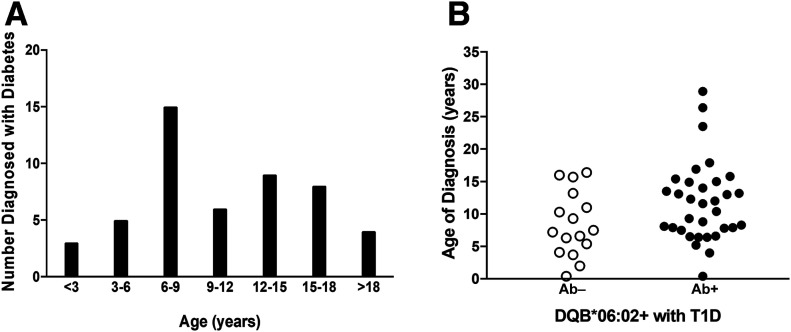
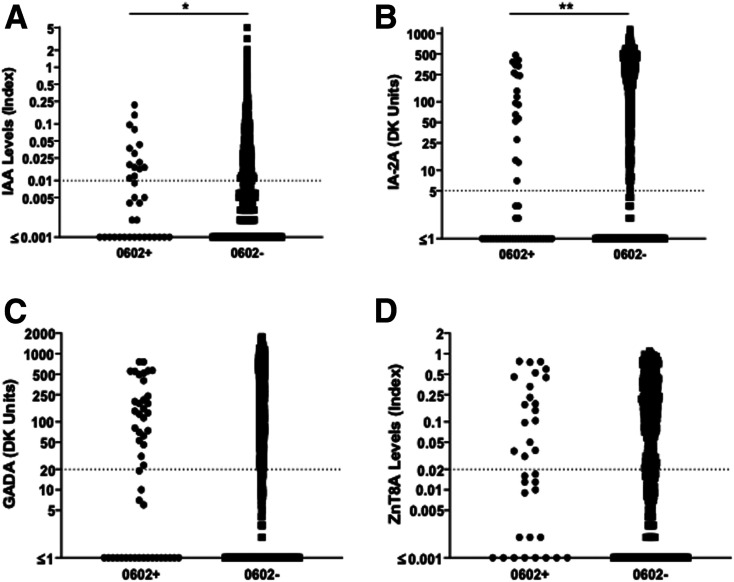
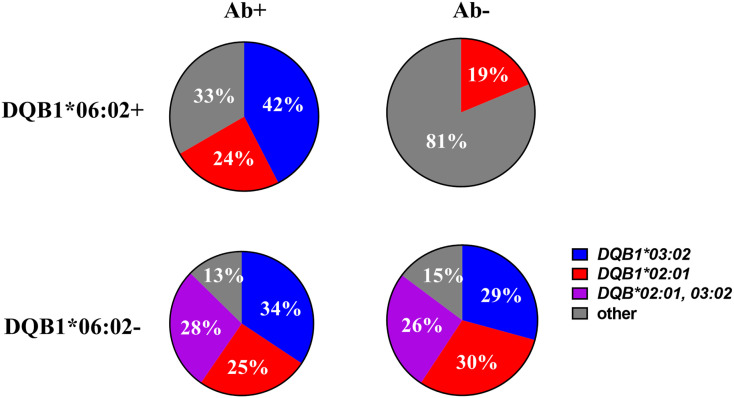
Certain HLA class II genes increase the risk for type 1 diabetes (T1D) development while others provide protection from disease development. HLA class II alleles encode MHC proteins on antigen-presenting cells, which function to present peptides and activate CD4 T cells. The DRB1*15:01 (DR15)-DQA1*01:02-DQB1*06:02 (DQ6) haplotype provides dominant protection across all stages of T1D and is a common haplotype found in Caucasians. However, it is present in <1% of people with T1D. Knowing which metabolic, immunologic, and genetic features are unique to individuals who fail genetic protection and develop T1D is important for defining the underlying mechanisms of DQB1*06:02-mediated protection. We describe a T1D cohort with DQB1*06:02 (n = 50) and compare them to individuals with T1D and without DQB1*06:02 (n = 2,759) who were identified over the last 26 years at the Barbara Davis Center for Diabetes. The age at diagnosis was similar between the cohorts and normally distributed throughout childhood and early adulthood. The average hemoglobin A1c was 10.8 ± 2.8% (95 ± 7 mmol/mol) at diagnosis in those DQB1*06:02 positive. The majority of T1D DQB1*06:02 + individuals were positive for one or more islet autoantibodies; however, there was a greater proportion who were islet autoantibody negative compared with those T1D DQB1*06:02 - individuals. Interestingly, DQB1*03:02, which confers significant T1D risk, was present in only those DQB1*06:02 + individuals with islet autoantibodies. This is one of the largest studies examining patients presenting with clinical T1D in the presence of DQB1*06:02, which provides a population to study the mechanisms of failed genetic protection against T1D.
© 2020 by the American Diabetes Association.
Figures
References
-
- Concannon P, Erlich HA, Julier C, et al. .; Type 1 Diabetes Genetics Consortium . Type 1 diabetes: evidence for susceptibility loci from four genome-wide linkage scans in 1,435 multiplex families. Diabetes 2005;54:2995–3001 - PubMed
Publication types
MeSH terms
Substances
Associated data
Grants and funding
LinkOut - more resources
Full Text Sources
Medical
Research Materials
