


Effect of CPAP Therapy on Serum Lipids and Blood Pressure in Patients with Obstructive Sleep Apnea Syndrome
- PMID: 32440300
- PMCID: PMC7230123
Effect of CPAP Therapy on Serum Lipids and Blood Pressure in Patients with Obstructive Sleep Apnea Syndrome
Abstract
Background: Most of patients with Obstructive Sleep Apnea (OSA) are at risk of metabolic syndrome. The treatment of choice for OSA patients is the Continuous Positive Airway Pressure (CPAP). Reports about the effect of CPAP on metabolic parameters are controversial. So, we aimed to evaluate the effect of CPAP therapy on blood pressure, Fasting Blood Sugar (FBS), and serum lipids including: Triglycerides (TG), total cholesterol (Chol), High Density Lipoproteins (HDL), and Low Density Lipoproteins (LDL).
Materials and methods: This study included 35 OSA patients. Initially, their baseline demographic and clinical characteristics were recorded. Then, the patients underwent CPAP therapy on average 4-7 hours for 8 weeks. The level of FBS, TG, Cholesterol, HDL, LDL, and blood pressure were measured and recorded before and after treatment. Finally, the collected data were analyzed with SPSS version 22.
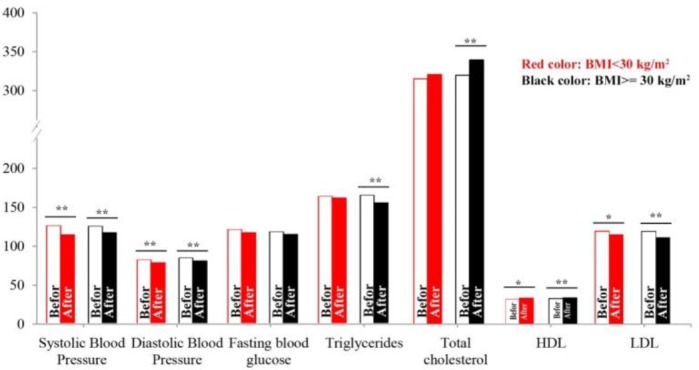
Results: This study included 35 OSA patients [24 men (68.6%)], with mean age of 45.58±8.02 years. Results indicated that CPAP therapy led to decrease of 9.76 and 3.49 mmHg in systolic and diastolic blood pressures, respectively. Also, LDL decreased to 6.27mg/dl and HDL increased to 0.75 mg/dl (P<0.001) with treatment. The changes of other variables were not significant (P>0.05).
Conclusion: Treatment of OSA with CPAP has beneficial effects on blood pressure and some items of lipid profile. Regarding the importance of metabolic disturbances in OSA complications, choosing an appropriate treatment for OSA patients can play an important role in improvement of patients status as well as prevention of these complications.
Keywords: Blood Pressure; Continuous positive airway pressure; Obstructive Sleep Apnea Syndrome; Serum Lipids.
Copyright© 2019 National Research Institute of Tuberculosis and Lung Disease.
Conflict of interest statement
Conflicts of interest There are no conflicts of interest
Figures
References
-
- Chokroverty S, Ferini-Strambi L, editors. Oxford textbook of sleep disorders. Oxford University Press; 2017.
-
- Peled N, Kassirer M, Shitrit D, Kogan Y, Shlomi D, Berliner AS, Kramer MR. The association of OSA with insulin resistance, inflammation and metabolic syndrome. Respir Med 2007;101(8):1696–701. - PubMed
-
- Young T, Palta M, Dempsey J, Skatrud J, Weber S, Badr S. The occurrence of sleep-disordered breathing among middle-aged adults. N Engl J Med 1993;328(17):1230–5. - PubMed
-
- Riha RL, Diefenbach K, Jennum P, McNicholas WT, Management Committee, COST B26 Action on Sleep Apnoea Syndrome Genetic aspects of hypertension and metabolic disease in the obstructive sleep apnoea-hypopnoea syndrome. Sleep Med Rev 2008;12(1):49–63. - PubMed
-
- Molnar MZ, Szentkiralyi A, Lindner A, Czira ME, Szabo A, Mucsi I, Novak M. High prevalence of patients with a high risk for obstructive sleep apnoea syndrome after kidney transplantation--association with declining renal function. Nephrol Dial Transplant 2007;22(9):2686–92. - PubMed
LinkOut - more resources
Full Text Sources
Miscellaneous