


Breast Implant Illness: A Biofilm Hypothesis
- PMID: 32440423
- PMCID: PMC7209857
- DOI: 10.1097/GOX.0000000000002755
Breast Implant Illness: A Biofilm Hypothesis
Abstract
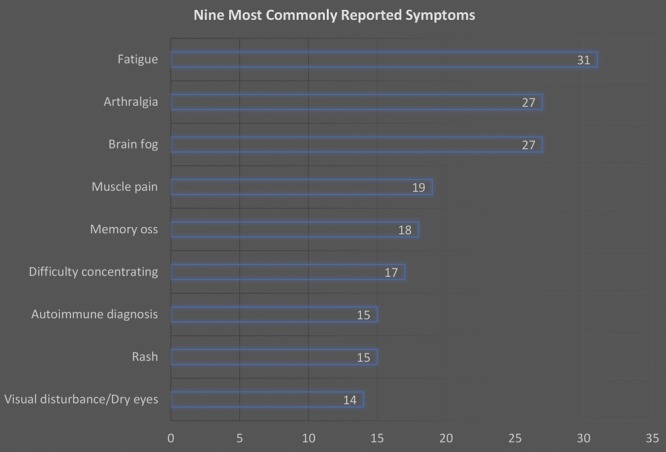
Background: "Breast implant illness" (BII) is a poorly defined cluster of nonspecific symptoms, attributed by patients as being caused by their breast implants. These symptoms can include joint pain, skin and hair changes, concentration, and fatigue. Many patients complaining of BII symptoms are dismissed as psychosomatic. There are currently over 10,000 peer-reviewed articles on breast implants, but at the time of commencing this study, only 2 articles discussed this entity. At the same time, mainstream media and social media are exploding with nonscientific discussion about BII.
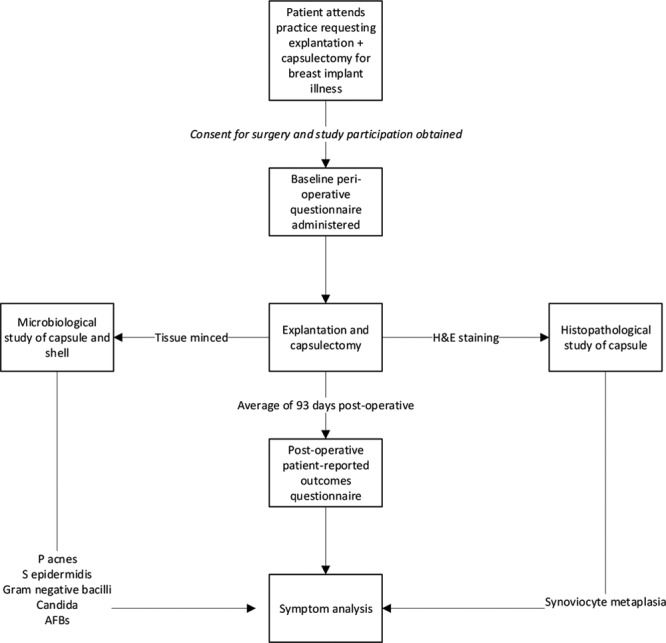
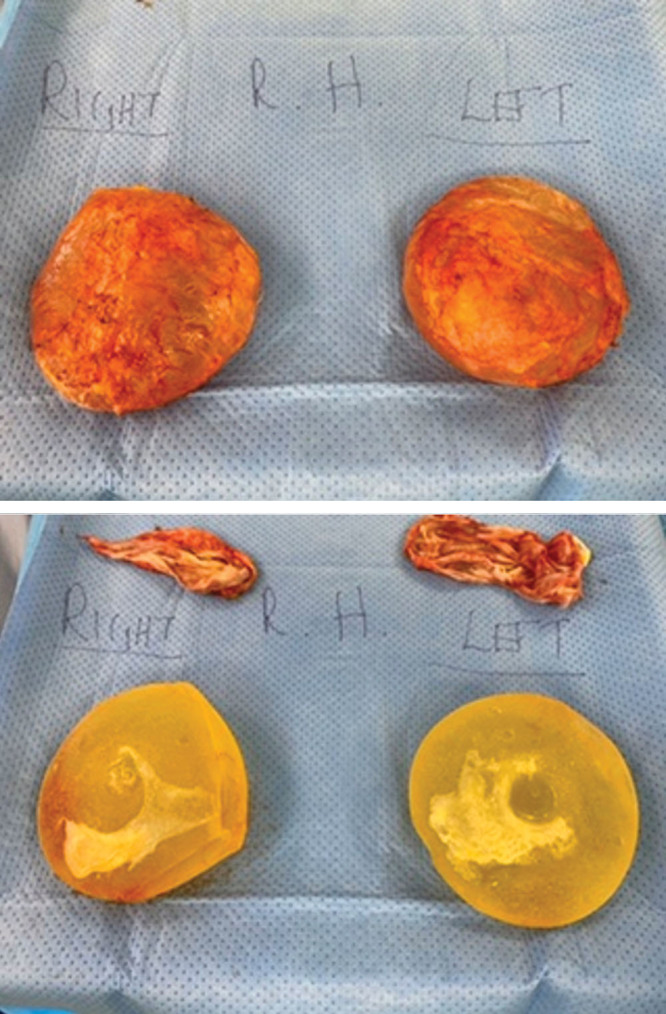
Methods: We have prospectively followed 50 consecutive patients, self-referring for explantation due to BII. We analyzed their preoperative symptoms and followed up each patient with a Patient-Reported Outcome Questionnaire. All implants and capsules were, if possible, removed en bloc. Explanted implants were photographed. Implant shell and capsule sent for histology and microbiological culture.
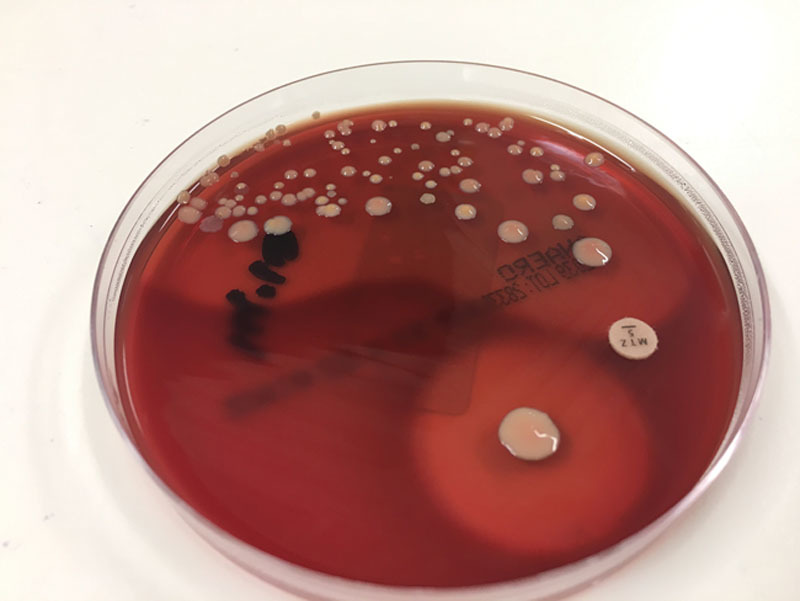
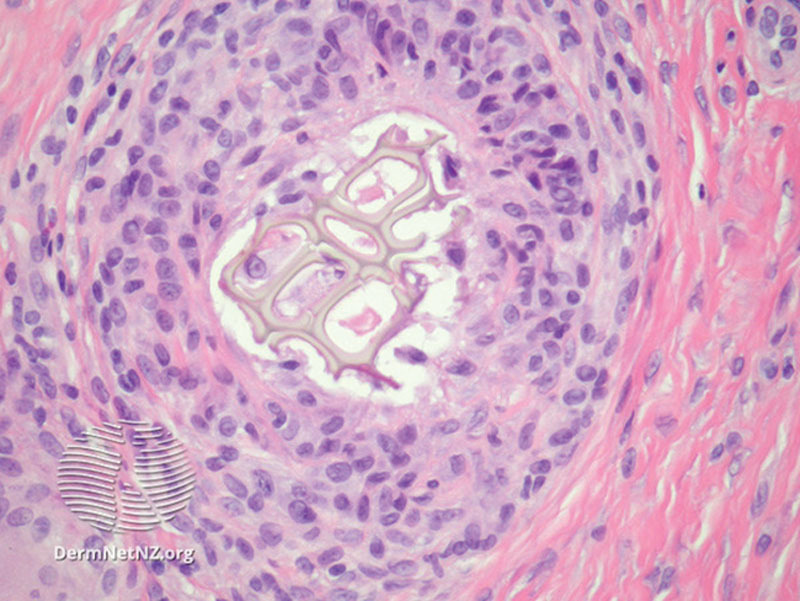
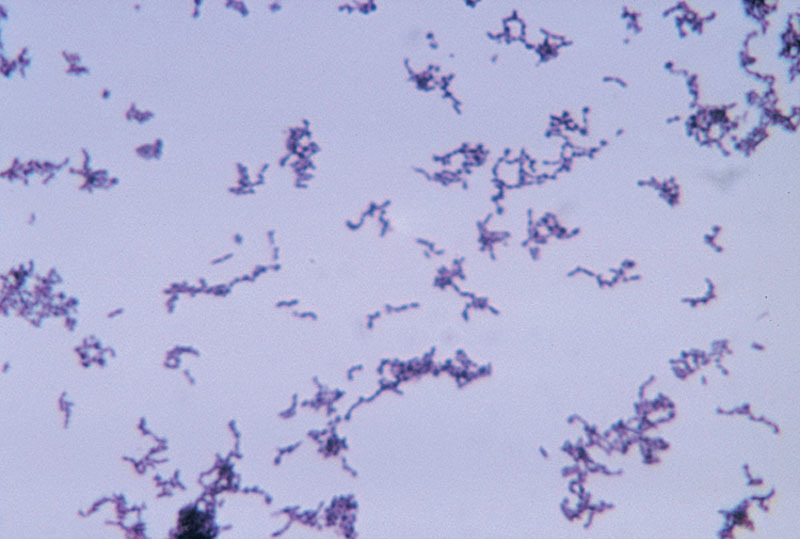
Results: BII symptoms were not shown to correlate with any particular implant type, surface, or fill. There was no significant finding as to duration of implant or location of original surgery. Chronic infection was found in 36% of cases with Propionibacterium acnes the most common finding. Histologically, synoviocyte metaplasia was found in a significantly greater incidence than a matched cohort that had no BII symptoms (P = 0.0164). Eighty-four percent of patients reported partial or complete resolution of BII symptoms on Patient-Reported Outcome Questionnaire. None of the 50 patients would consider having breast implants again.
Conclusion: The authors believe BII to be a genuine entity worthy of further study. We have identified microbiological and histological abnormalities in a significant number of patients identifying as having BII. A large proportion of these patients have reported resolution or improvement of their symptoms in patient-reported outcomes. Improved microbiology culture techniques may identify a larger proportion of chronic infection, and further investigation of immune phenotypes and toxicology may also be warranted in this group.
Copyright © 2020 The Authors. Published by Wolters Kluwer Health, Inc. on behalf of The American Society of Plastic Surgeons.
Conflict of interest statement
Disclosure: The authors have no financial interest to declare in relation to the content of this article.
Figures
References
-
- Tang SY, Israel JS, Afifi AM. Breast implant illness: symptoms, patient concerns, and the power of social media. Plast Reconstr Surg. 2017;140:765e–766e. - PubMed
-
- Dobke MK, Svahn JK, Vastine VL, et al. Characterization of microbial presence at the surface of silicone mammary implants. Ann Plast Surg. 1995;34:563–569; disscusion 570. - PubMed
-
- Bleiweiss IJ, Klein MJ, Copeland M. Breast prosthesis reaction. Am J Surg Pathol. 1996;20:505–507. - PubMed
-
- Arthur EB. Amelioration of systemic disease after removal of silicone gel-filled breast implants. J Nutr Environ Med. 2000;10:125–132.
LinkOut - more resources
Full Text Sources
Research Materials