


Molecular diversity and genetic structure of Saccharum complex accessions
- PMID: 32442233
- PMCID: PMC7244124
- DOI: 10.1371/journal.pone.0233211
Molecular diversity and genetic structure of Saccharum complex accessions
Abstract
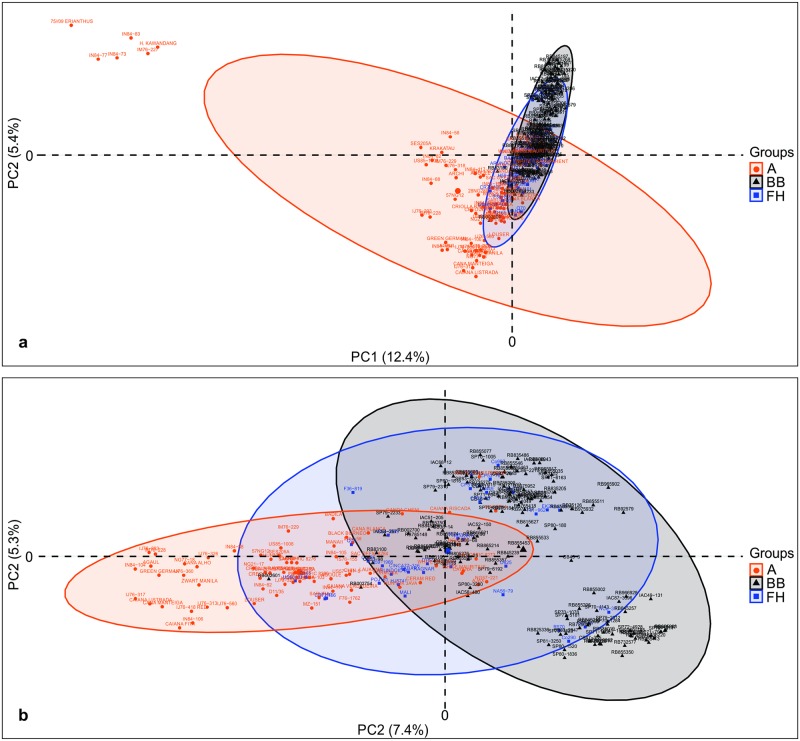
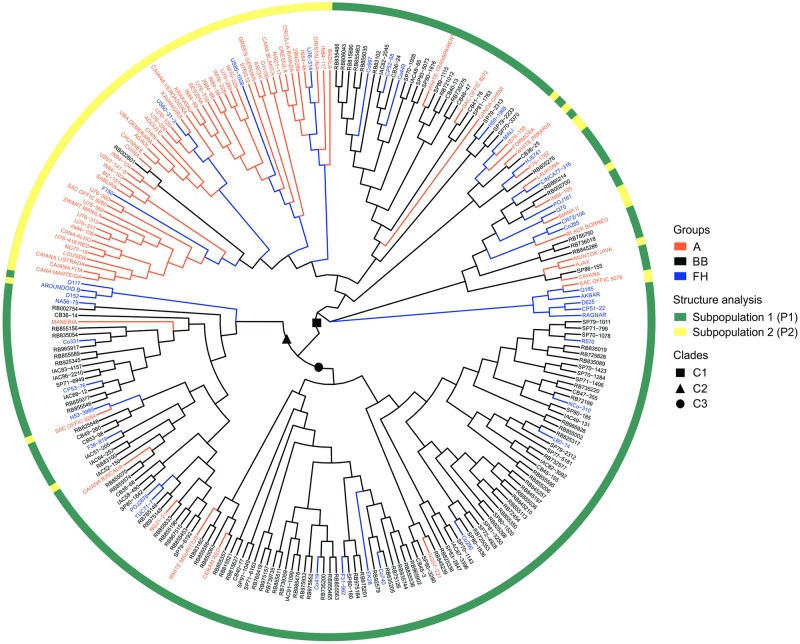
Sugarcane is an important crop for food and energy security, providing sucrose and bioethanol from sugar content and bioelectricity from lignocellulosic bagasse. In order to evaluate the diversity and genetic structure of the Brazilian Panel of Sugarcane Genotypes (BPSG), a core collection composed by 254 accessions of the Saccharum complex, eight TRAP markers anchored in sucrose and lignin metabolism genes were evaluated. A total of 584 polymorphic fragments were identified and used to investigate the genetic structure of BPSG through analysis of molecular variance (AMOVA), principal components analysis (PCA), a Bayesian method using STRUCTURE software, genetic dissimilarity and phylogenetic tree. AMOVA showed a moderate genetic differentiation between ancestors and improved accessions, 0.14, and the molecular variance was higher within populations than among populations, with values of 86%, 95% and 97% when constrasting improved with ancestors, foreign with ancestors and improved with foreign, respectively. The PCA approach suggests clustering in according with evolutionary and Brazilian breeding sugarcane history, since improved accessions from older generations were positioned closer to ancestors than improved accessions from recent generations. This result was also confirmed by STRUCTURE analysis and phylogenetic tree. The Bayesian method was able to separate ancestors of the improved accessions while the phylogenetic tree showed clusters considering the family relatedness within three major clades; the first being composed mainly by ancestors and the other two mainly by improved accessions. This work can contribute to better management of the crosses considering functional regions of the sugarcane genome.
Conflict of interest statement
The authors have declared that no competing interests exist.
Figures
References
-
- Singh RK, Singh RB, Singh SP, Sharma ML. Identification of sugarcane microsatellites associated to sugar content in sugarcane and transferability to other cereal genomes. Euphytica. 2011. July 18;182(3):335–54.
-
- Moore PH, Paterson AH, Tew T. Sugarcane: the crop, the plant, and domestication In: Moore PH, Botha FC, editors. Sugarcane: Physiology, Biochemistry, and Functional Biology. Wiley-Blackwell Publishing; 2013. pp. 1–17.
-
- Daniels J, Roach BT. Taxonomy and evolution In: Heinz DJ, editor. Sugarcane Improvement through breeding. Elsevier Science; 1987. pp. 7–84.
-
- Matsuoka S, Garcia AAF, Arizono H. Melhoramento da cana-de-açúcar In: Borém A, editor. Melhoramento de espécies cultivadas. UFV; 2005. pp. 225–274.
Publication types
MeSH terms
LinkOut - more resources
Full Text Sources
