


A biochemical definition of cure after brachytherapy for prostate cancer
- PMID: 32442822
- PMCID: PMC7442607
- DOI: 10.1016/j.radonc.2020.04.038
A biochemical definition of cure after brachytherapy for prostate cancer
Abstract
Background and purpose: To identify a PSA threshold value at an intermediate follow-up time after low dose rate (LDR) prostate brachytherapy associated with cure, defined as long-term (10-15 year) freedom from prostate cancer.
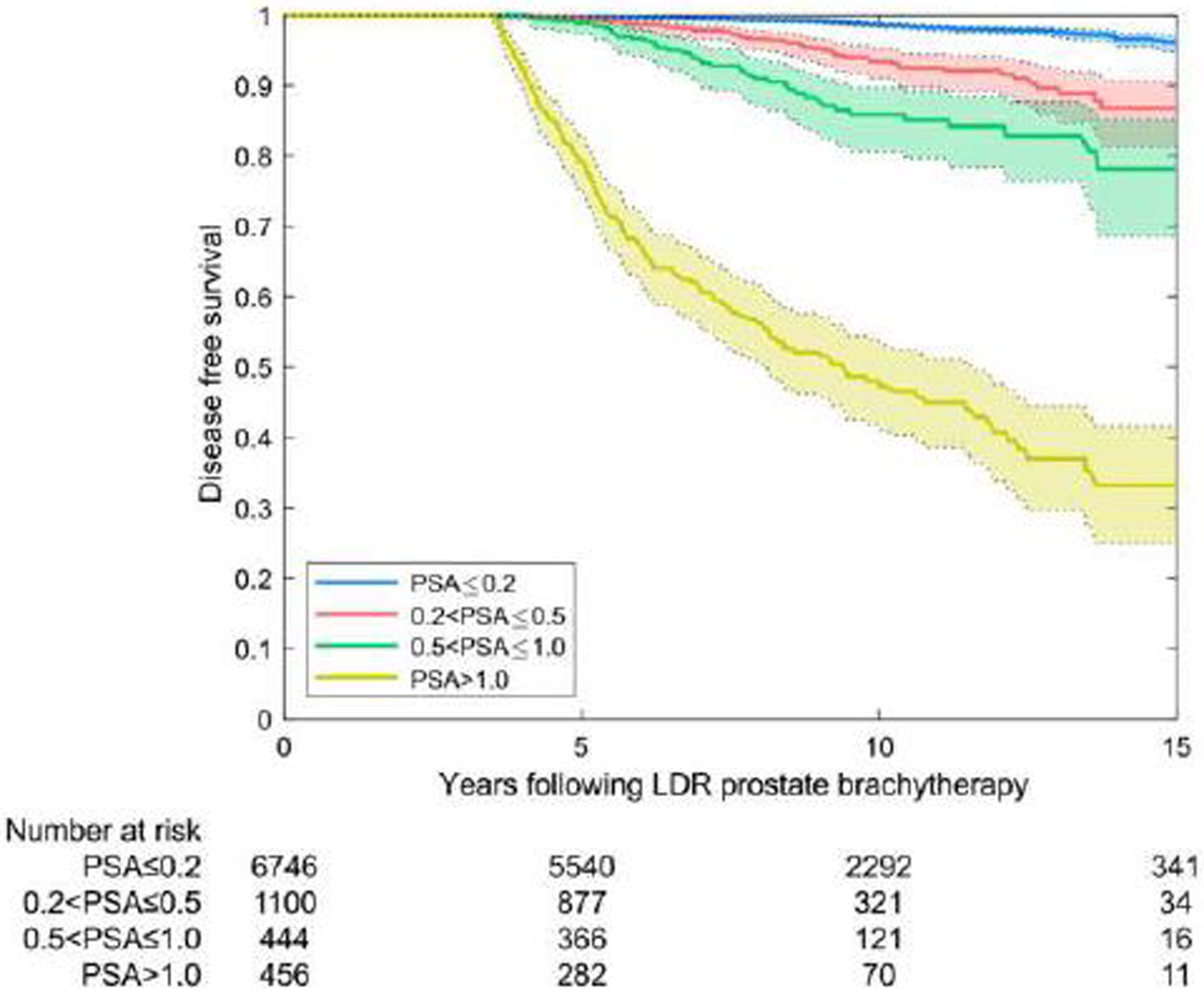
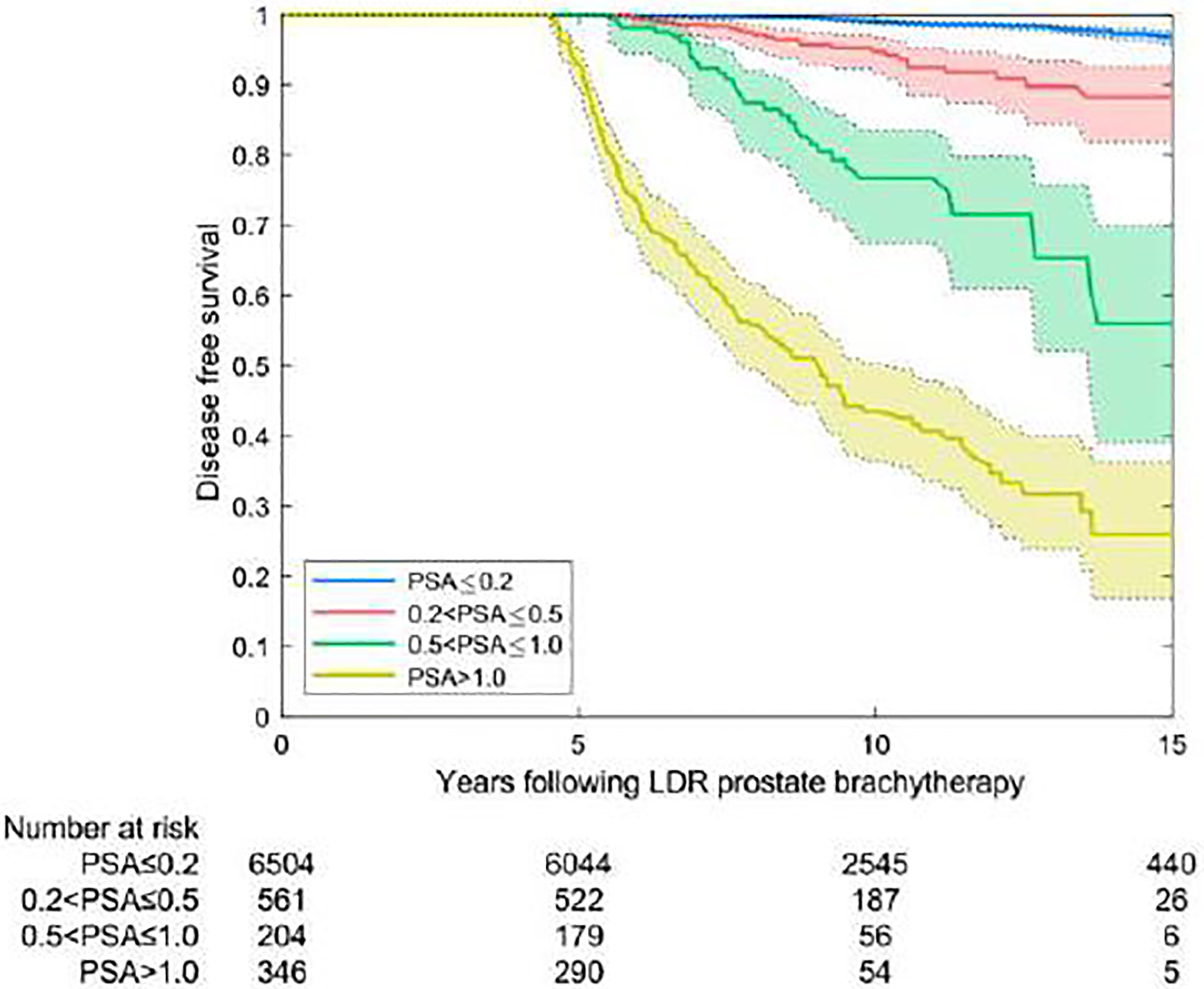
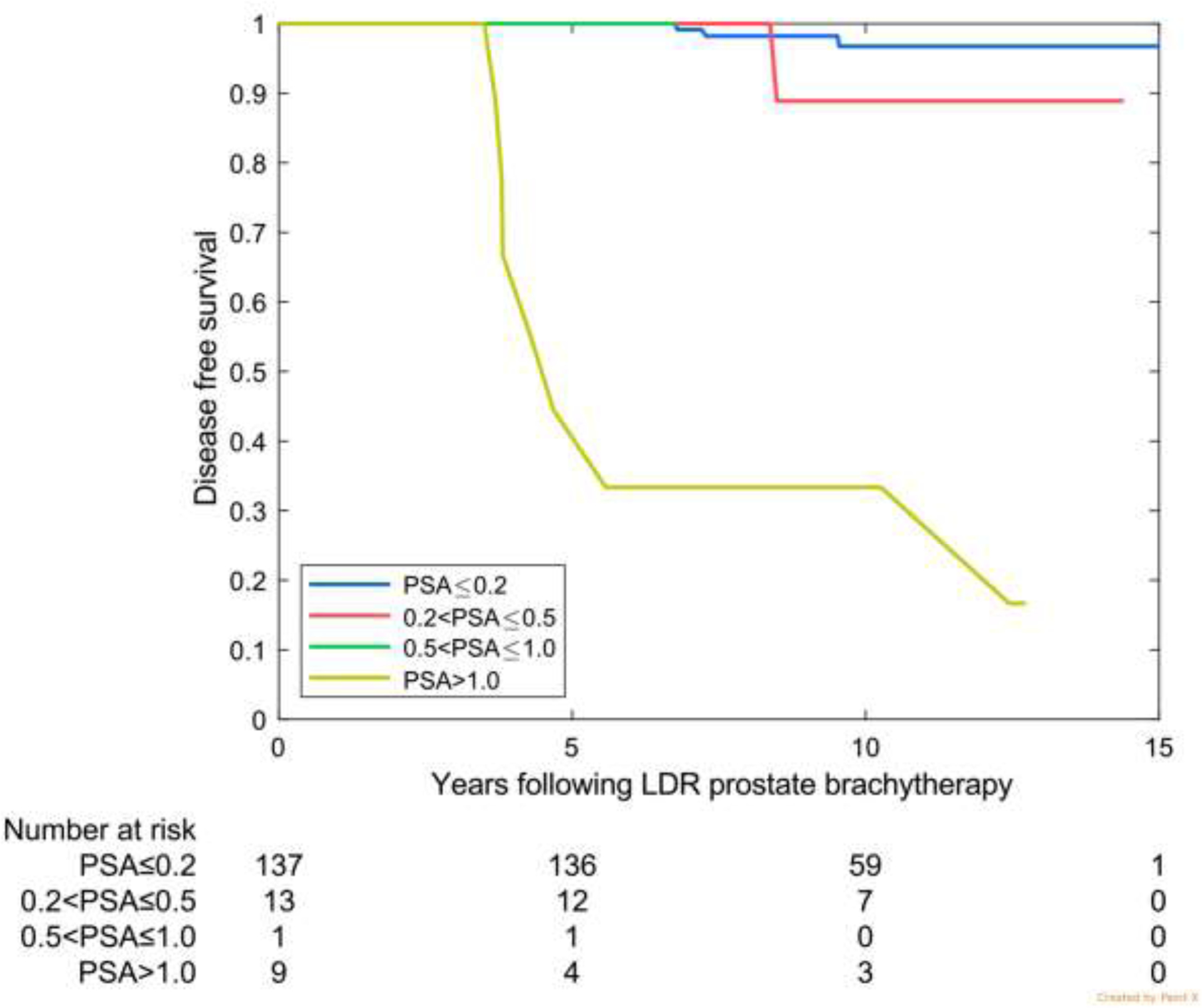
Materials and methods: Data from 7 institutions for 14,220 patients with localized prostate cancer treated with LDR brachytherapy, either alone (8552) or with external beam radiotherapy (n = 1175), androgen deprivation (n = 3165), or both (n = 1328), were analyzed. Risk distribution was 42.4% favorable, 49.2% intermediate, and 8.4% high-risk. Patients with clinical failure before 3.5 years were excluded. Kaplan-Meier analysis was used with clinical failure (local, distant, regional or biochemical triggering salvage) as an endpoint for each of four PSA categories: PSA ≤ 0.2, >0.2 to ≤0.5, >0.5 to ≤1.0, and >1.0 ng/mL. PSA levels at 4 years (±6 months) in 8746 patients without clinical failure were correlated with disease status at 10-15 years.
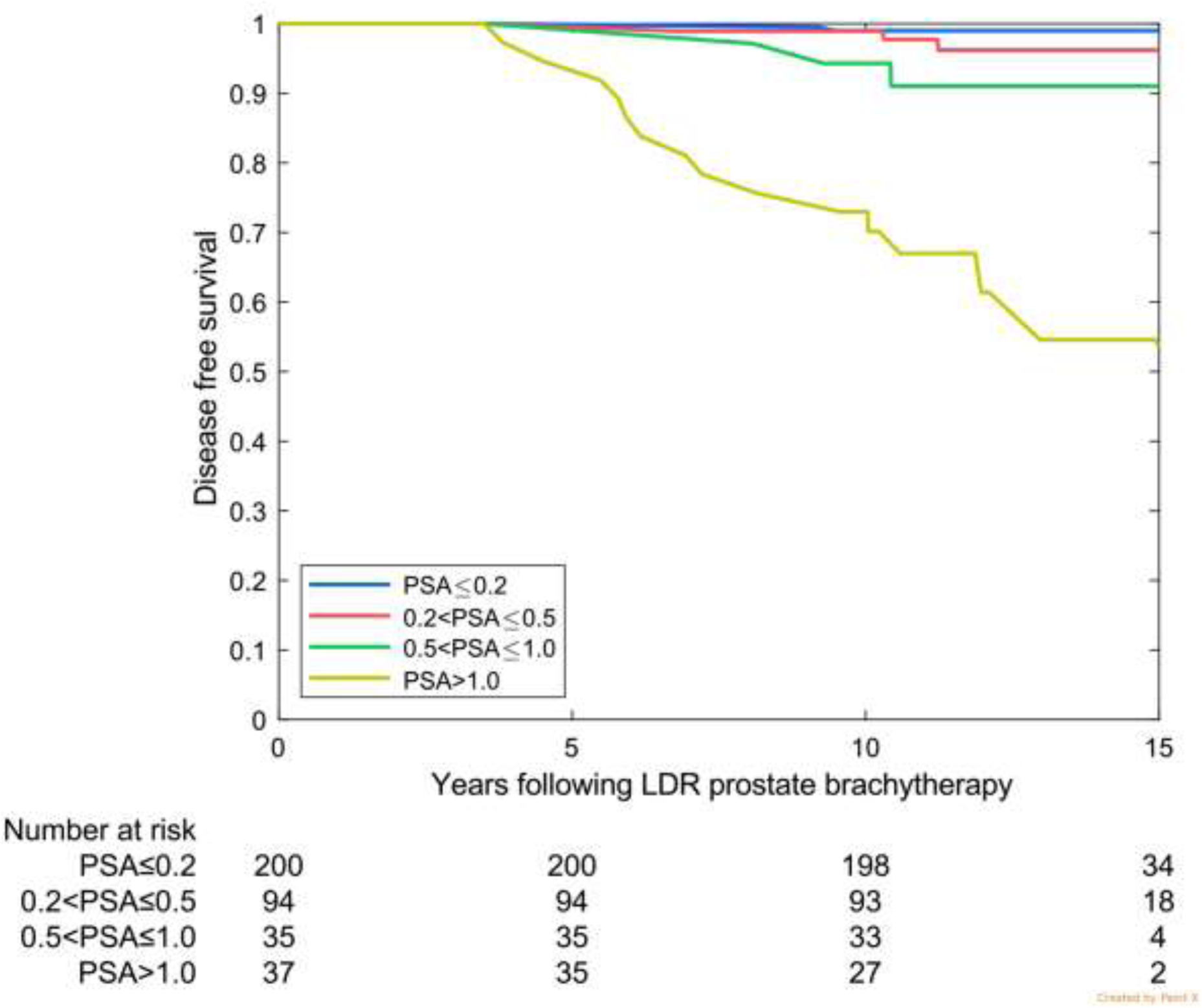
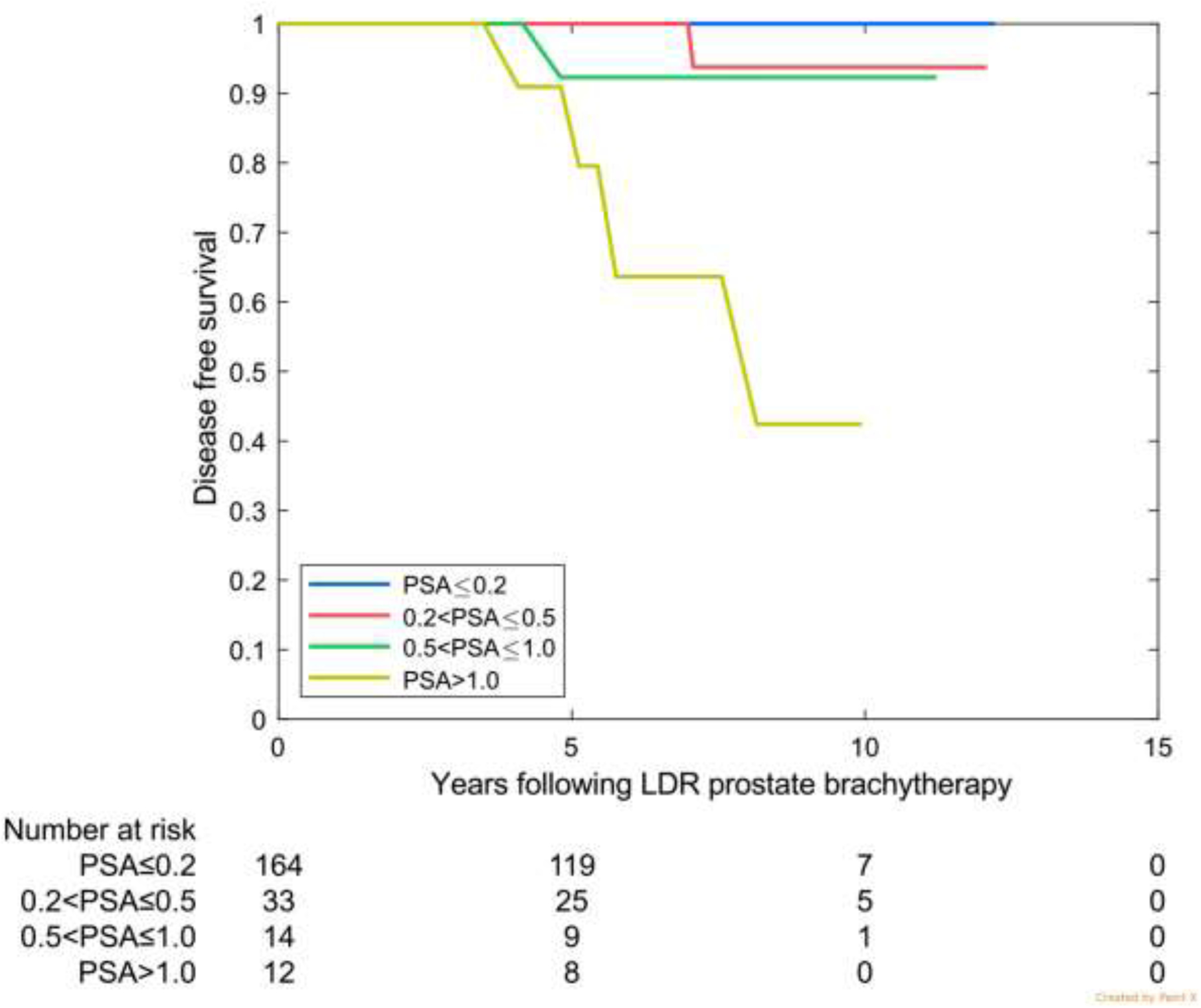
Results: For the 77.1% of patients with 4-year PSA ≤ 0.2, the freedom-from-recurrence (FFR) rates were 98.7% (95% CI 98.3-99.0) at 10 years and 96.1% (95% CI 94.8-97.2) at 15 years. Three independent validation cohorts confirmed 97-99% 10-year FFR rates with 4-year PSA ≤ 0.2. Successive PSA categories were associated with diminished disease-free rates at 10 and 15 years. PSA category was strongly associated with treatment success (p < 0.0005).
Conclusions: Since 98.7% of patients with PSA ≤ 0.2 ng/mL at 4 years after LDR prostate brachytherapy were disease-free beyond 10 years, we suggest adopting this biochemical definition of cure for patients with ≥4 years' follow-up after LDR brachytherapy.
Keywords: Adenocarcinoma of prostate; Brachytherapy; Low dose rate brachytherapy; PSA definition of cure; Prostate specific antigen.
Copyright © 2020 Elsevier B.V. All rights reserved.
Figures
Comment in
-
Re: A Biochemical Definition of Cure After Brachytherapy for Prostate Cancer.Eur Urol. 2021 Dec;80(6):762-764. doi: 10.1016/j.eururo.2021.08.026. Epub 2021 Sep 14. Eur Urol. 2021. PMID: 34531105 No abstract available.
References
-
- Consensus statement: guidelines for PSA following radiation therapy. American Society for Therapeutic Radiology and Oncology Consensus Panel. Int J Radiat Oncol Biol Phys 1997. March 15;37(5):1035–41. - PubMed
-
- Roach M 3rd, Hanks G, Thames H Jr, et al. Defining biochemical failure following radiotherapy with or without hormonal therapy in men with clinically localized prostate cancer: recommendations of the RTOG-ASTRO Phoenix Consensus Conference. Int J Radiat Oncol Biol Phys 2006. July 15;65(4):965–974. - PubMed
-
- Thames H, Kuban D, Levy L, et al. Comparison of alternative biochemical failure definitions based on clinical outcome in 4839 prostate cancer patients treated by external beam radiotherapy between 1986 and 1995. Int J Radiat Oncol Biol Phys 2003. November 15;57(4):929–43. - PubMed
-
- Frank SJ, Pugh TJ, Blanchard P, et al. Prospective phase 2 trial of permanent seed implantation prostate brachytherapy for intermediate-risk localized prostate cancer: efficacy, toxicity, and quality of life outcomes. Int J Radiat Oncol Biol Phys 2018. February 1;100(2):374–382. - PubMed
-
- Morris WJ, Tyldesley S, Rodda S, et al. Androgen Suppression Combined with Elective Nodal and Dose Escalated Radiation Therapy (the ASCENDE-RT Trial): An Analysis of Survival Endpoints for a Randomized Trial Comparing a Low-Dose-Rate Brachytherapy Boost to a Dose-Escalated External Beam Boost for High- and Intermediate-risk Prostate Cancer. Int J Radiat Oncol Biol Phys 2017. June 1;98(2):275–285. - PubMed
Publication types
MeSH terms
Substances
Grants and funding
LinkOut - more resources
Full Text Sources
Medical
Research Materials
Miscellaneous
