Efficacy and safety of convalescent plasma for severe COVID-19 based on evidence in other severe respiratory viral infections: a systematic review and meta-analysis
- PMID: 32444482
- PMCID: PMC7828893
- DOI: 10.1503/cmaj.200642
Efficacy and safety of convalescent plasma for severe COVID-19 based on evidence in other severe respiratory viral infections: a systematic review and meta-analysis
Abstract
Background: The safety and efficacy of convalescent plasma in severe coronavirus disease 2019 (COVID-19) remain uncertain. To support a guideline on COVID-19 management, we conducted a systematic review and meta-analysis of convalescent plasma in COVID-19 and other severe respiratory viral infections.
Methods: In March 2020, we searched international and Chinese biomedical literature databases, clinical trial registries and prepublication sources for randomized controlled trials (RCTs) and nonrandomized studies comparing patients receiving and not receiving convalescent plasma. We included patients with acute coronavirus, influenza and Ebola virus infections. We conducted a meta-analysis using random-effects models and assessed the quality of evidence using the Grading of Recommendations Assessment, Development, and Evaluation (GRADE) approach.
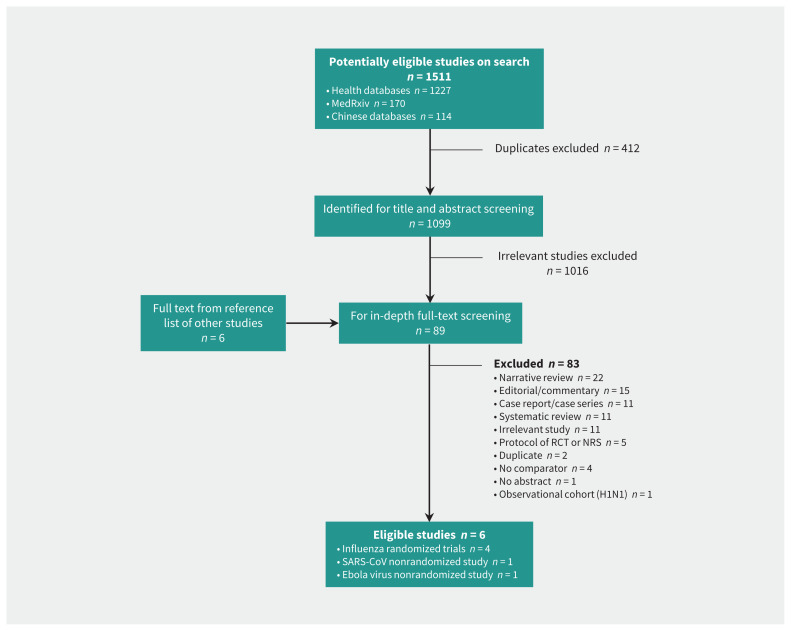
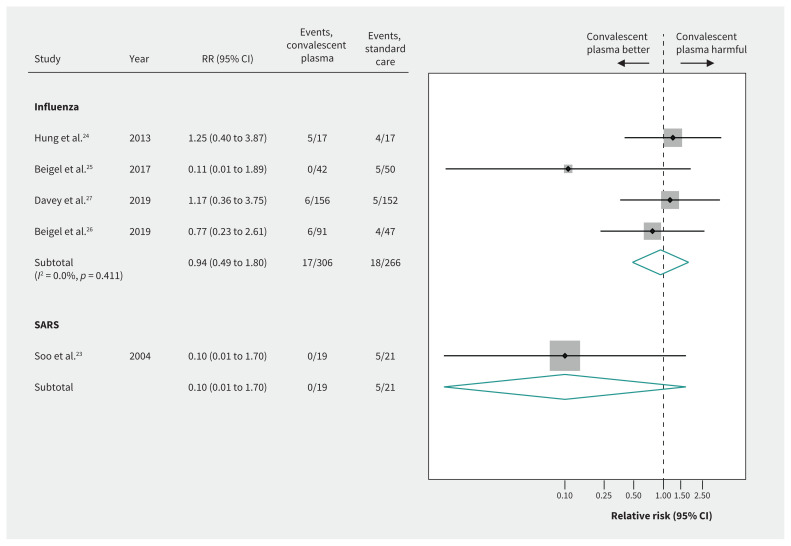
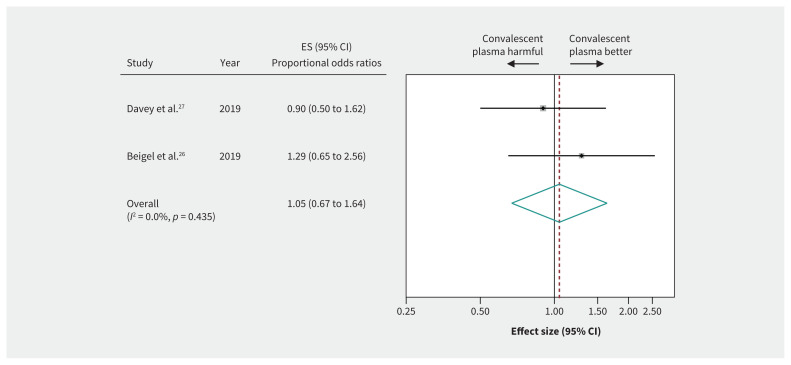
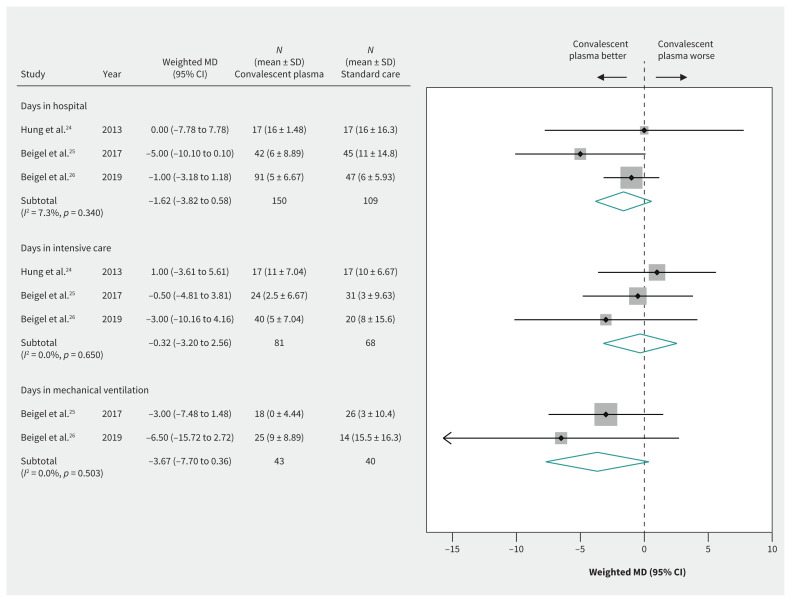
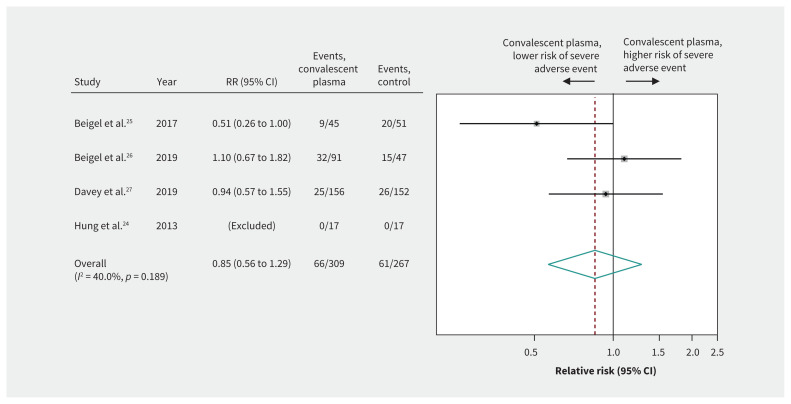
Results: Of 1099 unique records, 6 studies were eligible, and none of these included patients with COVID-19. One nonrandomized study (n = 40) on convalescent plasma in severe acute respiratory syndrome coronavirus (SARS-CoV) provided uninformative results regarding mortality (relative risk [RR] 0.10, 95% confidence interval [CI] CI 0.01 to 1.70). Pooled estimates from 4 RCTs on influenza (n = 572) showed no convincing effects on deaths (4 RCTs, RR 0.94, 95% CI 0.49 to 1.81), complete recovery (2 RCTs, odds ratio 1.04, 95% CI 0.69 to 1.64) or length of stay (3 RCTs, mean difference -1.62, 95% CI -3.82 to 0.58, d). The quality of evidence was very low for all efficacy outcomes. Convalescent plasma caused few or no serious adverse events in influenza RCTs (RR 0.85, 95% CI 0.56 to 1.29, low-quality evidence).
Interpretation: Studies of non-COVID-19 severe respiratory viral infections provide indirect, very low-quality evidence that raises the possibility that convalescent plasma has minimal or no benefit in the treatment of COVID-19 and low-quality evidence that it does not cause serious adverse events.
© 2020 Joule Inc. or its licensors.
Conflict of interest statement
Competing interests: Mark Loeb has received personal fees and nonfinancial support from Sanofi, nonfinancial support from the World Health Organization, grant funding and personal fees from Seqirus, and personal fees from Pfizer, Medicago and the National Institutes of Health. Philippe Bégin is the co–principal investigator of a multicentre randomized controlled trial investigating the use of convalescent plasma in coronavirus disease 2019 (COVID-19). Philippe Bégin reports personal fees from Novartis, Pfizer, Sanofi, ALK and Aralez, as well as grants from DBV Technologies, Regeneron and Sanofi outside the submitted work. No other competing interests were declared.
Figures
Comment in
- CMAJ. 192:E536.
References
-
- Coronavirus disease (COVID-2019) situation reports. Geneva: World Health Organization; 2020. Available: www.who.int/emergencies/diseases/novel-coronavirus-2019/situation-reports (accessed 2020 Apr. 27).
Publication types
MeSH terms
LinkOut - more resources
Full Text Sources
Miscellaneous