


A virtual care program for outpatients diagnosed with COVID-19: a feasibility study
- PMID: 32447283
- PMCID: PMC7252690
- DOI: 10.9778/cmajo.20200069
A virtual care program for outpatients diagnosed with COVID-19: a feasibility study
Abstract
Background: In patients who are discharged home to self-isolate while coronavirus disease 2019 (COVID-19) test results are pending, there is no formal method for physician assessments or counselling to occur if the result returns positive. Our aim was to develop and test the feasibility of a virtual care program for self-isolating outpatients diagnosed with COVID-19.
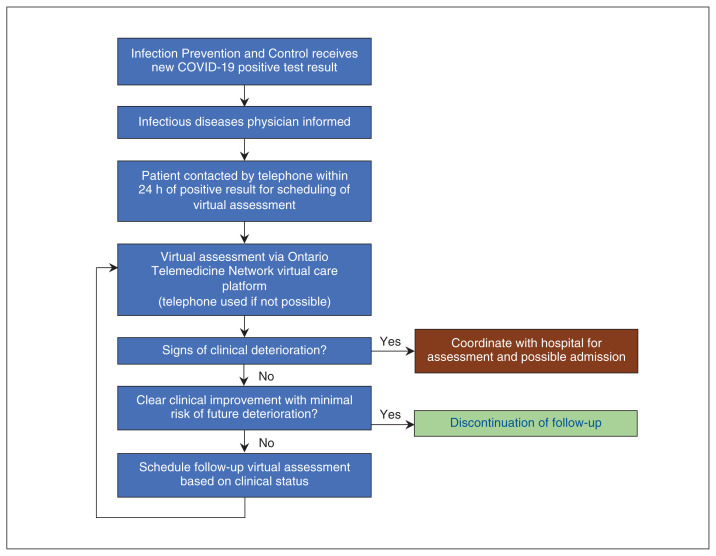
Methods: In preparation for this gap in health care, the COVID-19 Expansion to Outpatients (COVIDEO) program was developed at the Sunnybrook Health Sciences Centre, Toronto, Ontario, to provide ongoing care for outpatients diagnosed with COVID-19. As part of a feasibility study, we describe our experiences with the first 50 patients managed using this program from its inception (Mar. 1, 2020) until Mar. 27, 2020.
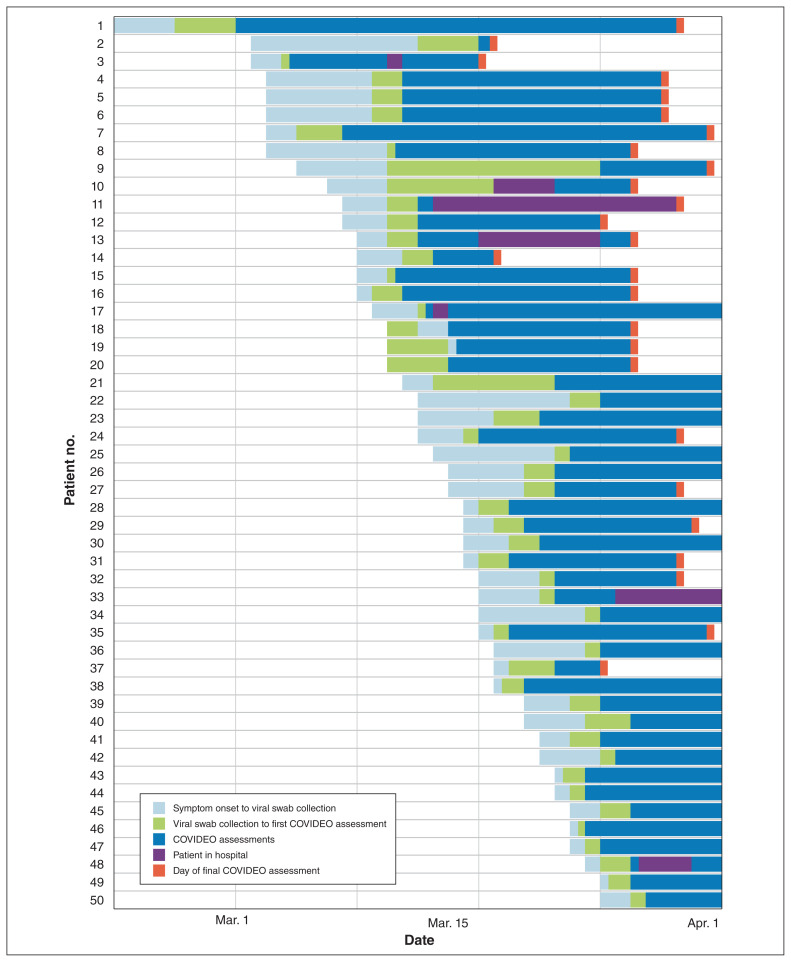
Results: All 50 people who tested positive for COVID-19 at the Sunnybrook Health Sciences Centre and were discharged home to self-isolation during the study period were assessed through the COVIDEO program. Thirty-two patients (64%) were assessed via the Ontario Telemedicine Network virtual care platform, and the remainder by telephone. The median time from viral swab collection to first COVIDEO program assessment was 2 (interquartile range [IQR] 1-2) days. Among the 26 patients for whom further follow-up care through the COVIDEO program was discontinued by the end of March 2020, the median duration of virtual care was 12.5 (IQR 8.75-16) days. During the study period, 6 patients required transfer to hospital for assessment, of whom 4 required admission.
Interpretation: We have shown that a virtual care program can be used in the management of outpatients diagnosed with COVID-19. Further studies evaluating its sustainability and impact on health outcomes are underway.
Copyright 2020, Joule Inc. or its licensors.
Conflict of interest statement
Competing interests: None declared.
Figures
References
-
- Coronavirus disease 2019 (COVID-19): situation report — 114. Geneva: World Health Organization; [accessed 2020 May 13]. updated 2020 May 13. Available https://www.who.int/docs/default-source/coronaviruse/situation-reports/2....
-
- Novel Coronavirus Pneumonia Emergency Response Epidemiology Team. The epidemiological characteristics of an outbreak of 2019 novel coronavirus diseases (COVID-19) in China [article in Chinese] Zhonghua Liu Xing Bing Xue Za Zhi. 2020;41:145–51.
-
- Brown EM. The Ontario Telemedicine Network: a case report. Telemed J E Health. 2013;19:373–6. - PubMed
-
- Greenhalgh T, Koh GCH, Car J. Covid-19: a remote assessment in primary care. BMJ. 2020;368:m1182. - PubMed
MeSH terms
LinkOut - more resources
Full Text Sources
Medical
Miscellaneous
