


Identification of phytochemical inhibitors against main protease of COVID-19 using molecular modeling approaches
- PMID: 32448034
- PMCID: PMC7284142
- DOI: 10.1080/07391102.2020.1772112
Identification of phytochemical inhibitors against main protease of COVID-19 using molecular modeling approaches
Abstract
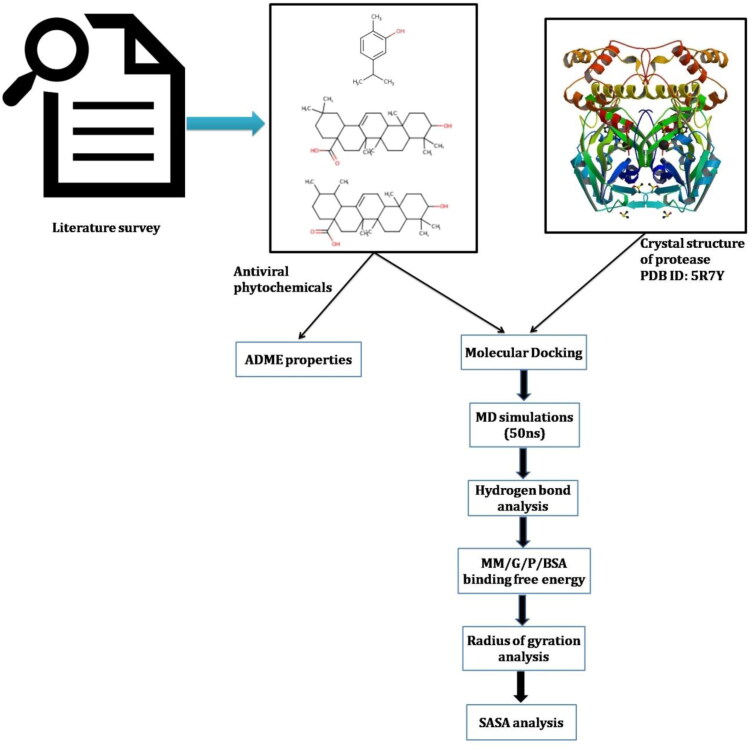
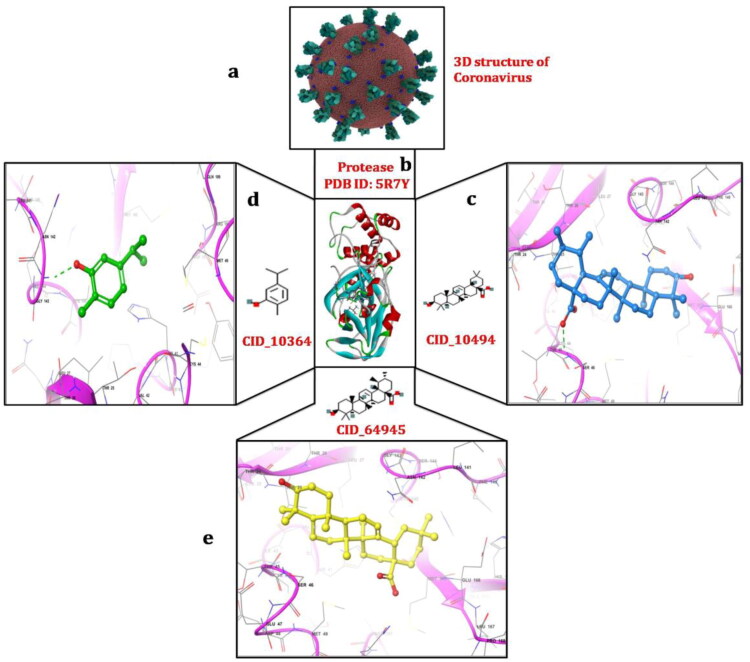
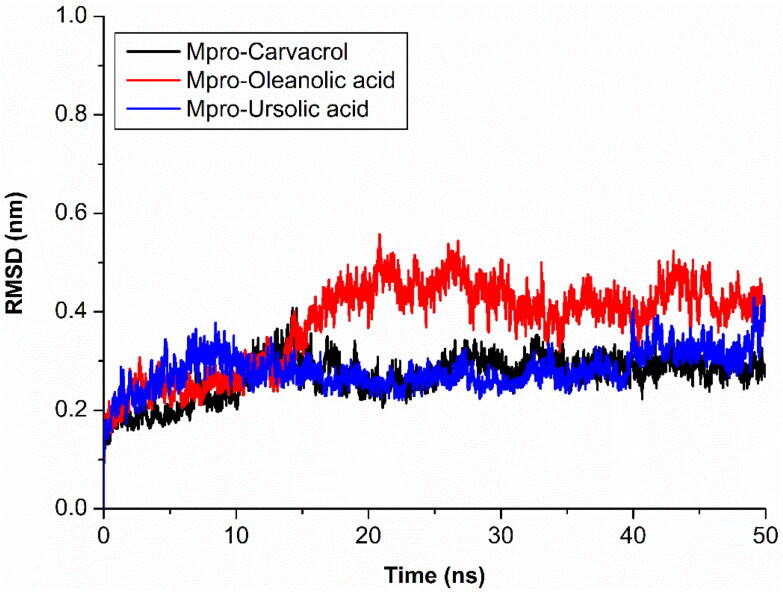
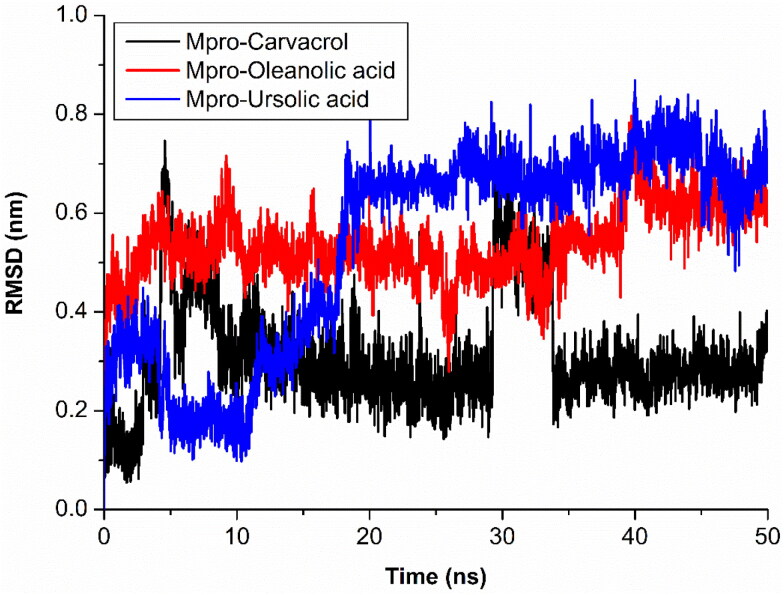
Severe acute respiratory syndrome coronavirus-2 (SARS-CoV-2) is a novel corona virus that causes corona virus disease 2019 (COVID-19). The COVID-19 rapidly spread across the nations with high mortality rate even as very little is known to contain the virus at present. In the current study, we report novel natural metabolites namely, ursolic acid, carvacrol and oleanolic acid as the potential inhibitors against main protease (Mpro) of COVID-19 by using integrated molecular modeling approaches. From a combination of molecular docking and molecular dynamic (MD) simulations, we found three ligands bound to protease during 50 ns of MD simulations. Furthermore, the molecular mechanic/generalized/Born/Poisson-Boltzmann surface area (MM/G/P/BSA) free energy calculations showed that these chemical molecules have stable and favourable energies causing strong binding with binding site of Mpro protein. All these three molecules, namely, ursolic acid, carvacrol and oleanolic acid, have passed the ADME (Absorption, Distribution, Metabolism, and Excretion) property as well as Lipinski's rule of five. The study provides a basic foundation and suggests that the three phytochemicals, viz. ursolic acid, carvacrol and oleanolic acid could serve as potential inhibitors in regulating the Mpro protein's function and controlling viral replication. Communicated by Ramaswamy H. Sarma.
Keywords: COVID-19; carvacrol; oleanolic acid; protease; ursolic acid.
Figures
References
-
- Abdelli I., Hassani F., Brikci S. B. & Ghalem S. (2020). In silico study the inhibition of Angiotensin converting enzyme 2 receptor of COVID-19 by Ammoidesverticillata components harvested from western Algeria. Journal of Biomolecular Structure and Dynamics. 10.1080/07391102.2020.1763199 - DOI - PMC - PubMed
-
- Aldeghi M., Bodkin M. J., Knapp S., & Biggin P. C. (2017). Statistical analysis onthe performance of molecular mechanics poissonboltzmann surface area versus absolute binding free energy calculations: Bromodomains as a case study. Journal of Chemical Information and Modeling, 57(9), 2203–2221. 10.1021/acs.jcim.7b00347 - DOI - PMC - PubMed
MeSH terms
Substances
LinkOut - more resources
Full Text Sources
Other Literature Sources
Miscellaneous