


Use of the GRADE approach in health policymaking and evaluation: a scoping review of nutrition and physical activity policies
- PMID: 32448231
- PMCID: PMC7245872
- DOI: 10.1186/s13012-020-00984-2
Use of the GRADE approach in health policymaking and evaluation: a scoping review of nutrition and physical activity policies
Abstract
Background: Nutrition and physical activity policies have the potential to influence lifestyle patterns and reduce the burden of non-communicable diseases. In the world of health-related guidelines, GRADE (Grading of Recommendations, Assessment, Development and Evaluation) is the most widely used approach for assessing the certainty of evidence and determining the strength of recommendations. Thus, it is relevant to explore its usefulness also in the process of nutrition and physical activity policymaking and evaluation. The purpose of this scoping review was (i) to generate an exemplary overview of documents using the GRADE approach in the process of nutrition and physical activity policymaking and evaluation, (ii) to find out how the GRADE approach has been applied, and (iii) to explore which facilitators of and barriers to the use of GRADE have been described on the basis of the identified documents. The overarching aim of this work is to work towards improving the process of evidence-informed policymaking in the areas of dietary behavior, physical activity, and sedentary behavior.
Methods: A scoping review was conducted according to current reporting standards. MEDLINE via Ovid, the Cochrane Library, and Web of Science were systematically searched up until 4 July 2019. Documents describing a body of evidence which was assessed for the development or evaluation of a policy, including documents labeled as "guidelines," or systematic reviews used to inform policymaking were included.
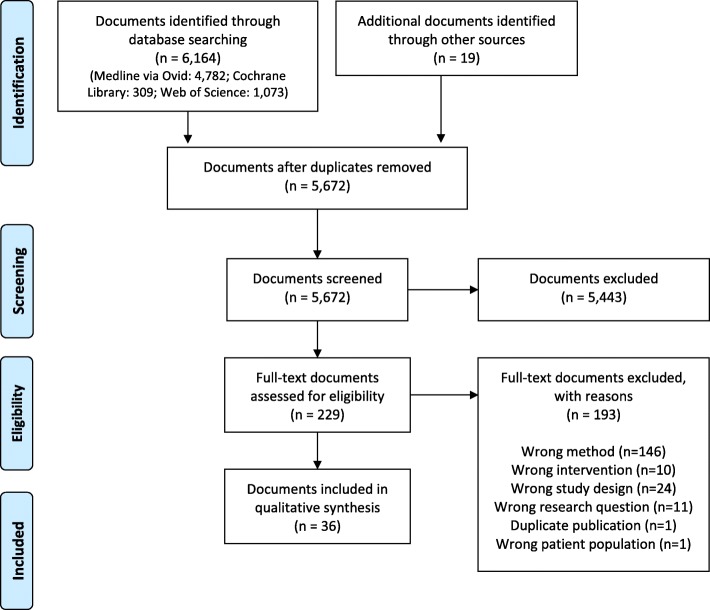
Results: Thirty-six documents were included. Overall, 313 GRADE certainty of evidence ratings were identified in systematic reviews and guidelines; the strength of recommendations/policies was assessed in four documents, and six documents mentioned facilitators or barriers for the use of GRADE. The major reported barrier was the initial low starting level of a body of evidence from non-randomized studies when assessing the certainty of evidence.
Conclusion: This scoping review found that the GRADE approach has been used for policy evaluations, in the evaluation of the effectiveness of policy-relevant interventions (policymaking), as well as in the development of guidelines intended to guide policymaking. Several areas for future research were identified to explore the use of GRADE in health policymaking and evaluation.
Keywords: Evidence-based; GRADE; Health policymaking; Nutrition; Physical activity; Policy Evaluation Network; Policy evaluation.
Conflict of interest statement
JZ: No conflict of interest
LS: Member of GRADE Working Group
AM: Member of GRADE Working Group
JMSt: Developer of the WHO-INTEGRATE EtD framework
CS: No conflict of interest
JMS: No conflict of interest
SF: No conflict of interest
WA: No conflict of interest
DKG: Member of GRADE Working Group
HJS: Co-chair of the GRADE working group; Director, McMaster GRADE Centre
JJM: Member of GRADE Working Group; Director, Freiburg GRADE Center
Figures
References
-
- Stanaway JD, Afshin A, Gakidou E, Lim SS, Abate D, Abate KH, et al. Global, regional, and national comparative risk assessment of 84 behavioural, environmental and occupational, and metabolic risks or clusters of risks for 195 countries and territories, 1990–2017: a systematic analysis for the Global Burden of Disease Study 2017. Lancet. 2018;392(10159):1923–1994. - PMC - PubMed
-
- Ezzati M, Riboli E. Behavioral and dietary risk factors for noncommunicable diseases. N Engl J Med. 2013;369(10):954–964. - PubMed
-
- Woods C, Mutrie N. Putting Physical Activity on the Policy Agenda. 2012. pp. 92–104.
Publication types
MeSH terms
LinkOut - more resources
Full Text Sources
Medical
