


Ethnomedicinal knowledge of a marginal hill community of Central Himalaya: diversity, usage pattern, and conservation concerns
- PMID: 32448334
- PMCID: PMC7245762
- DOI: 10.1186/s13002-020-00381-5
Ethnomedicinal knowledge of a marginal hill community of Central Himalaya: diversity, usage pattern, and conservation concerns
Abstract
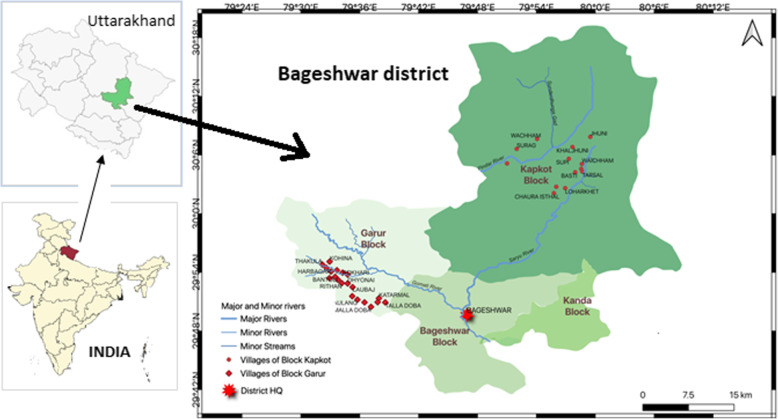
Background: Indigenous communities use wild plants to cure human ailments since ancient times; such knowledge has significant potential for formulating new drugs and administering future health care. Considering this, the present study was undertaken to assess use value, diversity, and conservation concerns of medicinal plants used in traditional herbal care system of a marginal hill community in Bageshwar district of Uttarakhand in the Central Himalayan region of India.
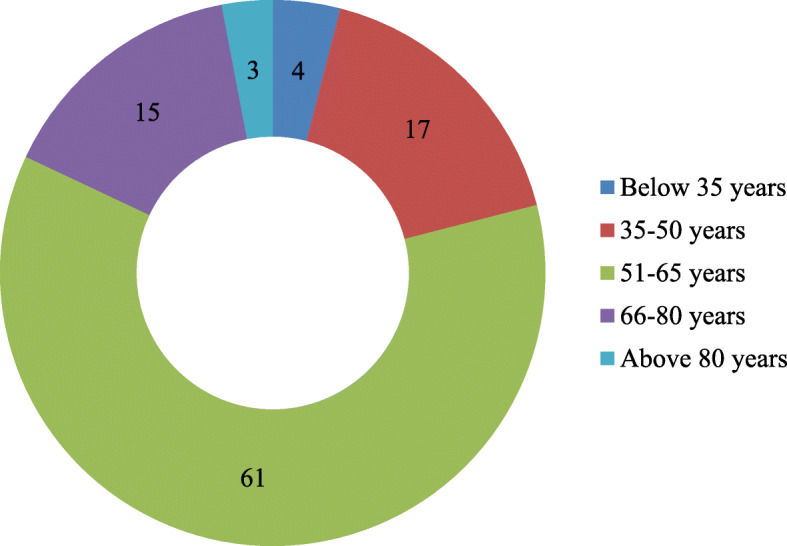
Methodology: Extensive surveys were made in 73 villages to gather information on the ethnomedicinal use of plant species used in the traditional herbal healing system. A total of 100 respondents were identified (30 herbal healers called Vaidyas and 70 non-healers/natives) and interviewed using semi-structured questionnaires, target interviews, and group discussion. Some important indices such as the use-value index (UV), relative frequency citation (RFC), cultural importance index (CI), and informant consensus factor (Fic) were calculated for the medicinal plants included in the present study.
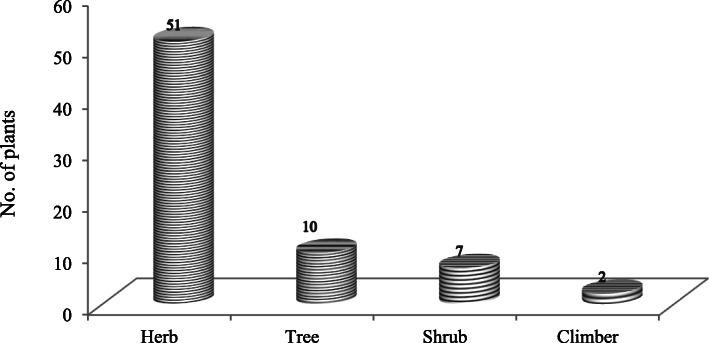
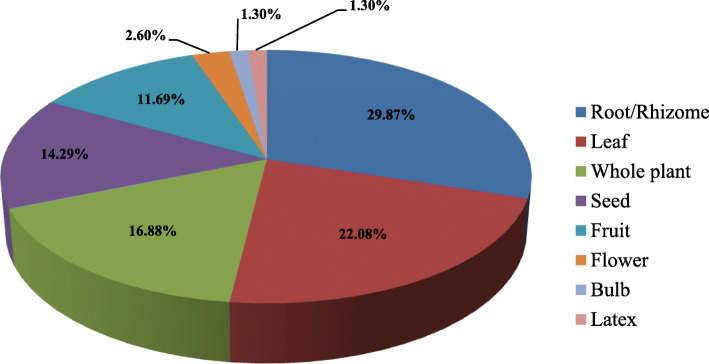
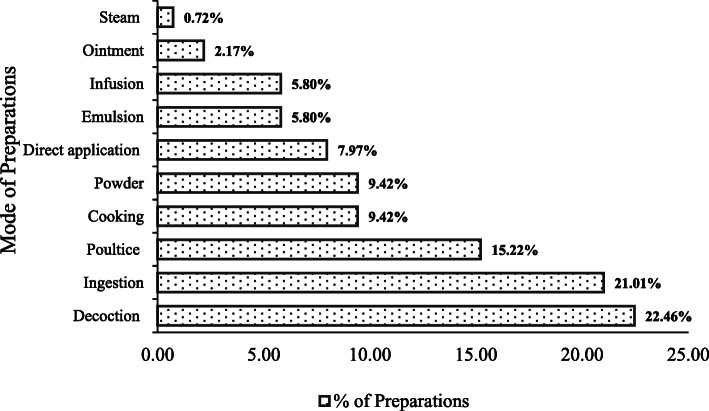
Result: It was recorded that the community uses a total of 70 species with 64 genera and 35 families for curing various ailments. Family Lamiaceae recorded the maximum number of medicinal plants. Twenty-one species used most extensively in the traditional health care system. The major parts of the identified plants used for the treatment of various ailments were root/rhizome and leaf. The most common methods used for the preparation of these plants were decoction and infusion. Ocimum basilicum L., Cannabis sativa L., Citrus aurantifolia (Christm) Sw., Curcuma longa L., and Setaria italica L. had the highest rate of use report. RFC value ranged between 0.03 and 0.91 with highest values for Setaria italica, Zingiber officinale, Ocimum basilicum, and Raphanus sativus. The traditional knowledge is passed verbally to generations and needs to be preserved for the future bio-prospecting of plants that could be a potential cure to any future disease.
Conclusion: In recent years, the community has access to modern hospitals and medicinal facilities, although a considerable number still prefer medicinal plants for curing select ailments. It is suggested that these ethnomedicinal species need to be screened and evaluated further for their effectiveness for pharmacological activity. Also, significant efforts are required to conserve traditional knowledge and natural habitats of wild medicinal plants.
Keywords: Ailments; Bageshwar; Ethnomedicinal plants; Indigenous people; Public health; Traditional knowledge; Uttarakhand.
Conflict of interest statement
The authors declare that they have no competing interests.
Figures
References
-
- Kala CP. Medicinal plants conservation and enterprise development. Med Plants. 2009;1(2):79–95.
-
- L.K Rai LK, Prasad P, Sharma E. Conservation threats to some important medicinal plants of Sikkim Himalaya. Biol Conser. 2000; 93(1):27-33.
-
- Kala CP, Dhyani PP, Sajwan BS. Developing the medicinal plants sector in northern India: challenges and opportunities. J Ethnobiol Ethnomed. 2006;2(1):32.
-
- Caniago Izefri, Stephen F. Siebert. Medicinal plant ecology, knowledge and conservation in Kalimantan, Indonesia. Economic Botany. 1998;52(3):229–250.
-
- Kuniyal CP, Bisht VK, Negi JS, Bhatt VP, Bisht DS, Butola JS, Sundriyal RC, Singh SK. Progress and prospect in the integrated development of medicinal and aromatic plants (MAPs) sector in Uttarakhand. Western Himalaya. Environ Develop Sustaina. 2015;17(5):1141–1162.
MeSH terms
Grants and funding
LinkOut - more resources
Full Text Sources
