


Studies on heterologous protection between Japanese type 1 and type 2 porcine reproductive and respiratory syndrome virus isolates
- PMID: 32448816
- PMCID: PMC7399305
- DOI: 10.1292/jvms.20-0122
Studies on heterologous protection between Japanese type 1 and type 2 porcine reproductive and respiratory syndrome virus isolates
Abstract
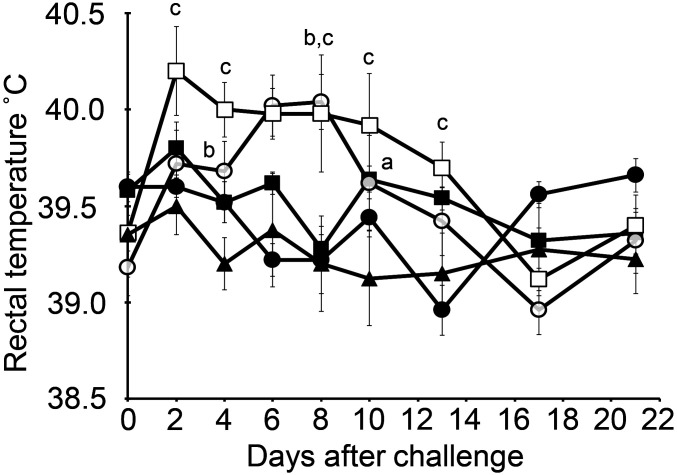
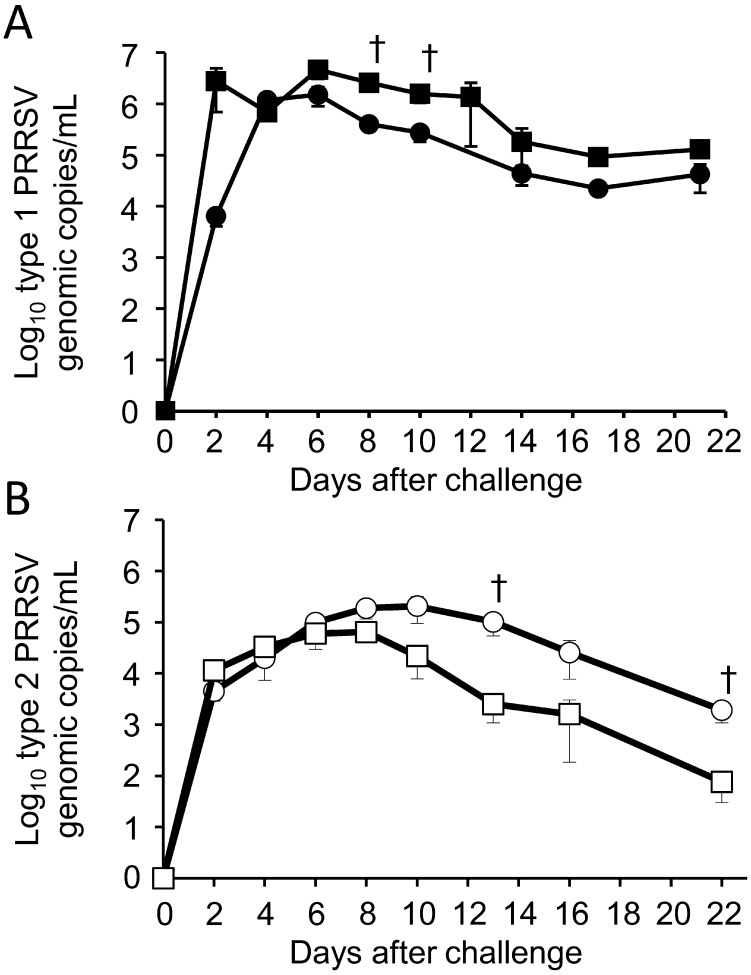
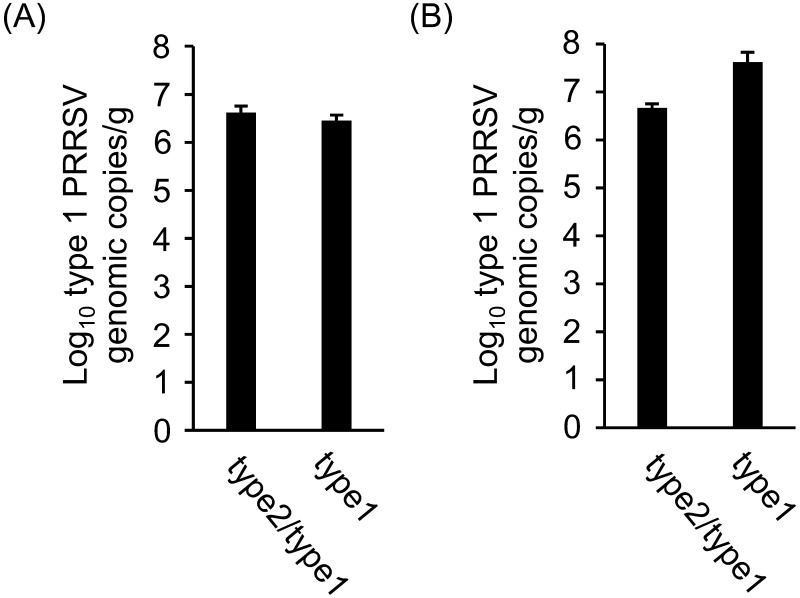
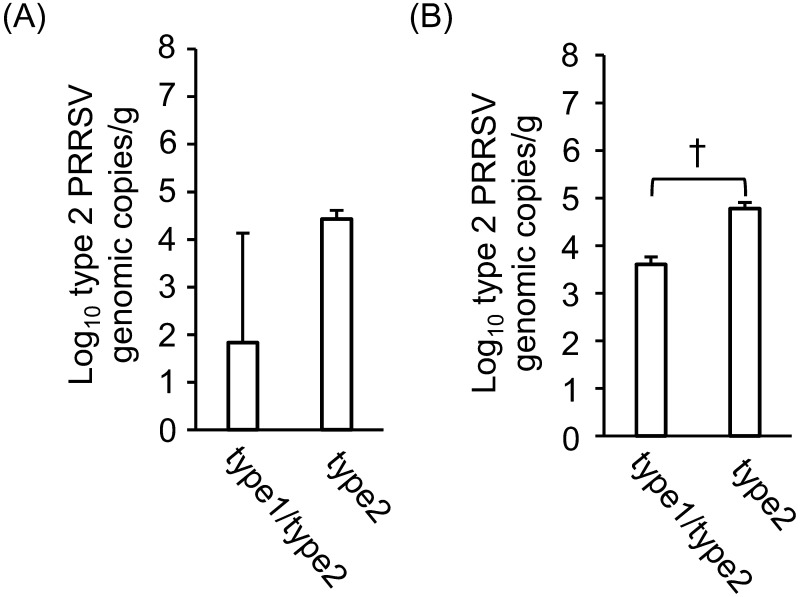
The objective of the present study was to evaluate the cross-protective immunity between type 1 and type 2 porcine reproductive and respiratory syndrome virus (PRRSV) isolates in growing pigs. Japanese type 1 PRRSV, first isolated from a pig with respiratory disorders in a farm in 2009, exhibits unique genetic characteristics. The pathogenicity of a Japanese standard strain of type 2 PRRSV, EDRD1, in pigs immunized by the type 1 PRRSV isolate, Jpn EU 4-37 was determined by evaluating clinical signs, viremia, antibody response, and pathological lesions. Similarly, we evaluated the pathogenicity of Jpn EU 4-37 in pigs immunized by EDRD1 and compared the cross-protective immunity between these isolates. The EDRD1 challenge after Jpn EU 4-37 inoculation reduced viral clearance and shedding in pigs, compared to those treated with the EDRD1 single infection. On the other hand, the pathogenicity of Jpn EU 4-37 after EDRD1 infection did not differ significantly compared to non-immunized pigs treated with Jpn EU 4-37. Therefore, exposure to Jpn EU 4-37 could not induce enough immunity to reduce the viremia against subsequent infection by type 2 PRRSV. However, the immunity induced by Jpn EU 4-37 infection may play a role in reducing viremia caused by type 2 PRRSV. Moreover, the immunity induced by the EDRD1 and other genetically related viruses, which are broadly distributed in Japan, may not contribute to cross-protection against Jpn EU 4-37 as an emerging virus.
Keywords: Immunity; pig; porcine reproductive and respiratory syndrome virus.
Conflict of interest statement
We declare no commercial or associated interests that would represent a conflict of interest in connection with the work submitted.
Figures

References
-
- Cavanagh D.1997. Nidovirales: a new order comprising Coronaviridae and Arteriviridae. Arch. Virol. 142: 629–633. - PubMed
-
- Díaz I., Darwich L., Pappaterra G., Pujols J., Mateu E.2006. Different European-type vaccines against porcine reproductive and respiratory syndrome virus have different immunological properties and confer different protection to pigs. Virology 351: 249–259. doi: 10.1016/j.virol.2006.03.046 - DOI - PubMed
-
- Halbur P. G., Paul P. S., Meng X. J., Lum M. A., Andrews J. J., Rathje J. A.1996. Comparative pathogenicity of nine US porcine reproductive and respiratory syndrome virus (PRRSV) isolates in a five-week-old cesarean-derived, colostrum-deprived pig model. J. Vet. Diagn. Invest. 8: 11–20. doi: 10.1177/104063879600800103 - DOI - PubMed
-
- Han K., Seo H. W., Park C., Chae C.2014. Vaccination of sows against type 2 Porcine Reproductive and Respiratory Syndrome Virus (PRRSV) before artificial insemination protects against type 2 PRRSV challenge but does not protect against type 1 PRRSV challenge in late gestation. Vet. Res. (Faisalabad) 45: 12. doi: 10.1186/1297-9716-45-12 - DOI - PMC - PubMed
-
- Han K., Seo H. W., Park C., Oh Y., Kang I., Han H. J., Kim S. H., Chae C.2013. Comparative pathogenicity of three Korean and one Lelystad type 1 porcine reproductive and respiratory syndrome virus (pan-European subtype 1) isolates in experimentally infected pigs. J. Comp. Pathol. 149: 331–340. doi: 10.1016/j.jcpa.2013.03.001 - DOI - PubMed
