A Rat Model of Polycystic Ovary Syndrome with Insulin Resistance Induced by Letrozole Combined with High Fat Diet
- PMID: 32448863
- PMCID: PMC7268891
- DOI: 10.12659/MSM.922136
A Rat Model of Polycystic Ovary Syndrome with Insulin Resistance Induced by Letrozole Combined with High Fat Diet
Abstract
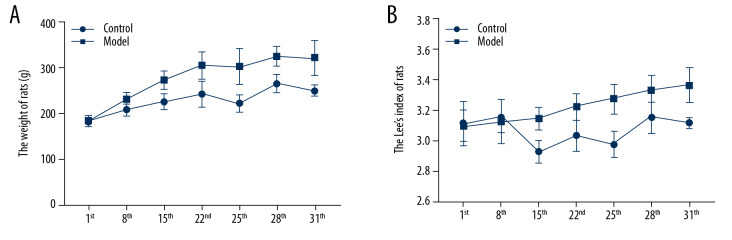
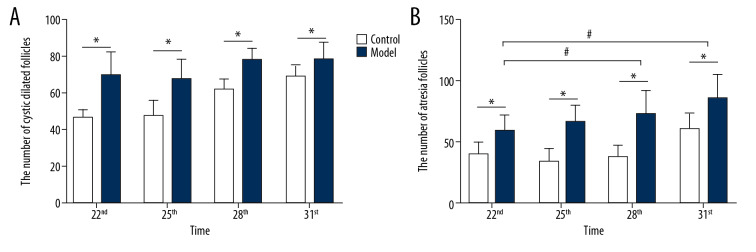
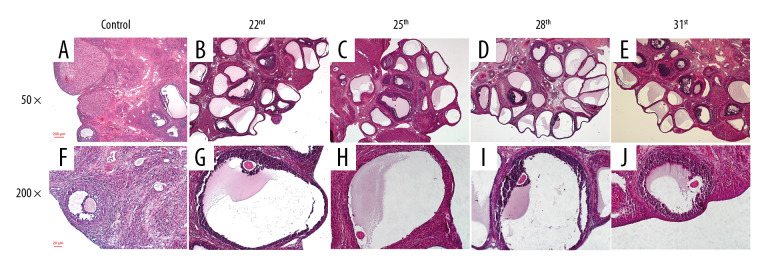
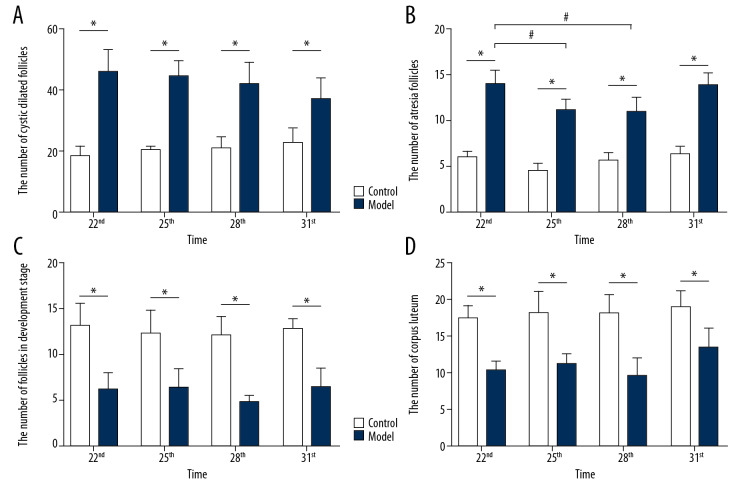
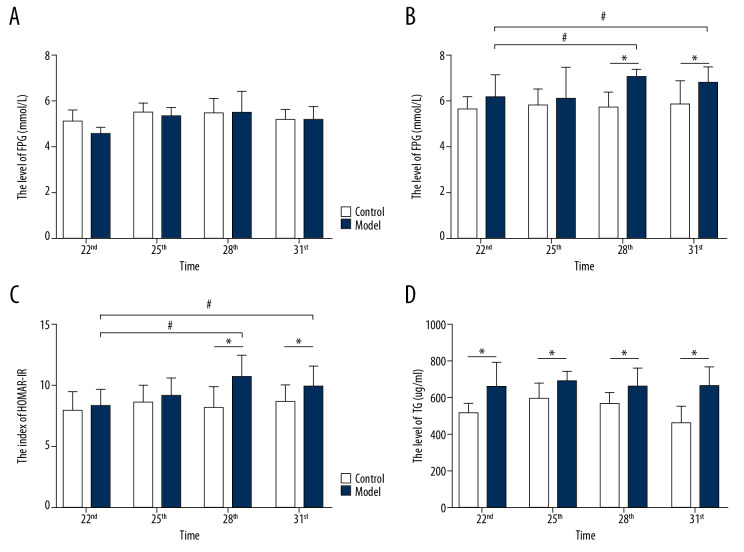
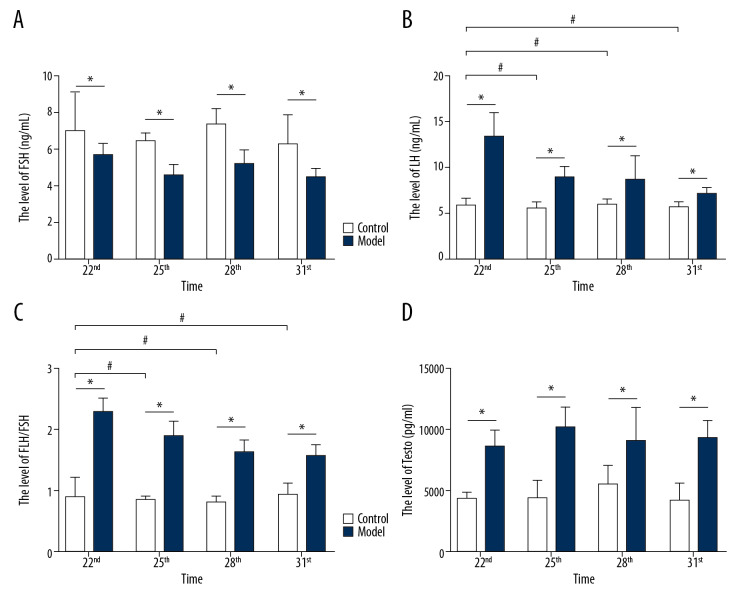
BACKGROUND Clinically, most patients of polycystic ovary syndrome (PCOS) also have insulin resistance (IR). The methods for establishing PCOS-IR animal model include using dehydroepiandrosterone (DHEA) and sodium prasterone sulfate subcutaneous injection, testosterone propionate combined with high-fat diet, and so on. This study aimed to establish an animal model of PCOS-IR using letrozole combined with a high fat diet. MATERIAL AND METHODS Study rats received 0.5% carboxymethylcellulose solution (CMC) or letrozole solution (1 mg/kg/day), with normal diet as control group and a high fat diet as the model group, for 21, 24, 27, and 30 days. The body weight and length were measured weekly. On Day 22, 25, 28 and 31, the weight, and the short and long diameters of the rat ovaries were measured, and blood samples were collected for the measurement of fasting plasma glucose (FPG), fasting insulin (FINS), triglyceride (TG), luteinizing hormone (LH), follicle stimulating hormone (FSH), and testosterone (T). Ovarian tissue was collected for paraffin sectioning and hematoxylin and eosin (H&E) staining. RESULTS In model groups, rats' weight was significantly increased (P<0.05). On Day 28 and 31, the weight, Lee's index, and ovarian volume significantly increased compared with Day 22 (P<0.05). There were more dense transparent saclike follicles on the ovary surface under the microscope in model groups. Levels of LH/FSH, T, and TG were substantially increased (P<0.05), but levels of FINS and HOMA-IR were significantly increased (P<0.05) on Day 28 and 31 in the model groups. CONCLUSIONS This study implied that letrozole combined with a high fat diet for 27 days could induce the PCOS-IR rat model which has the characteristics of ovarian polycystic changes and endocrine and metabolic disorders.
Conflict of interest statement
None.
Figures
References
-
- Cassar S, Misso ML, Hopkins W, et al. Insulin resistance in polycystic ovary syndrome: A systematic review and meta-analysis of euglycaemic-hyperinsulinaemic clamp studies. Hum Reprod. 2016;31(11):2619–31. - PubMed
-
- Ning N, Balen A, Brezina PR, et al. How to recognize PCOS: Results of a web-based survey at IVF-worldwide.com. Reprod Biomed Online. 2013;26(5):500–5. - PubMed
-
- Jeanes YM, Reeves S. Metabolic consequences of obesity and insulin resistance in polycystic ovary syndrome: Diagnostic and methodological challenges. Nutr Res Rev. 2017;30(1):97–105. - PubMed
-
- Tosi F, Di Sarra D, Kaufman JM, et al. Total body fat and central fat mass independently predict insulin resistance but not hyperandrogenemia in women with polycystic ovary syndrome. J Clin Endocrinol Metab. 2015;100(2):661–69. - PubMed
MeSH terms
Substances
LinkOut - more resources
Full Text Sources
Medical
Miscellaneous