


Enhanced platelet inhibition treatment improves hypoxemia in patients with severe Covid-19 and hypercoagulability. A case control, proof of concept study
- PMID: 32450344
- PMCID: PMC7244436
- DOI: 10.1016/j.phrs.2020.104950
Enhanced platelet inhibition treatment improves hypoxemia in patients with severe Covid-19 and hypercoagulability. A case control, proof of concept study
Abstract
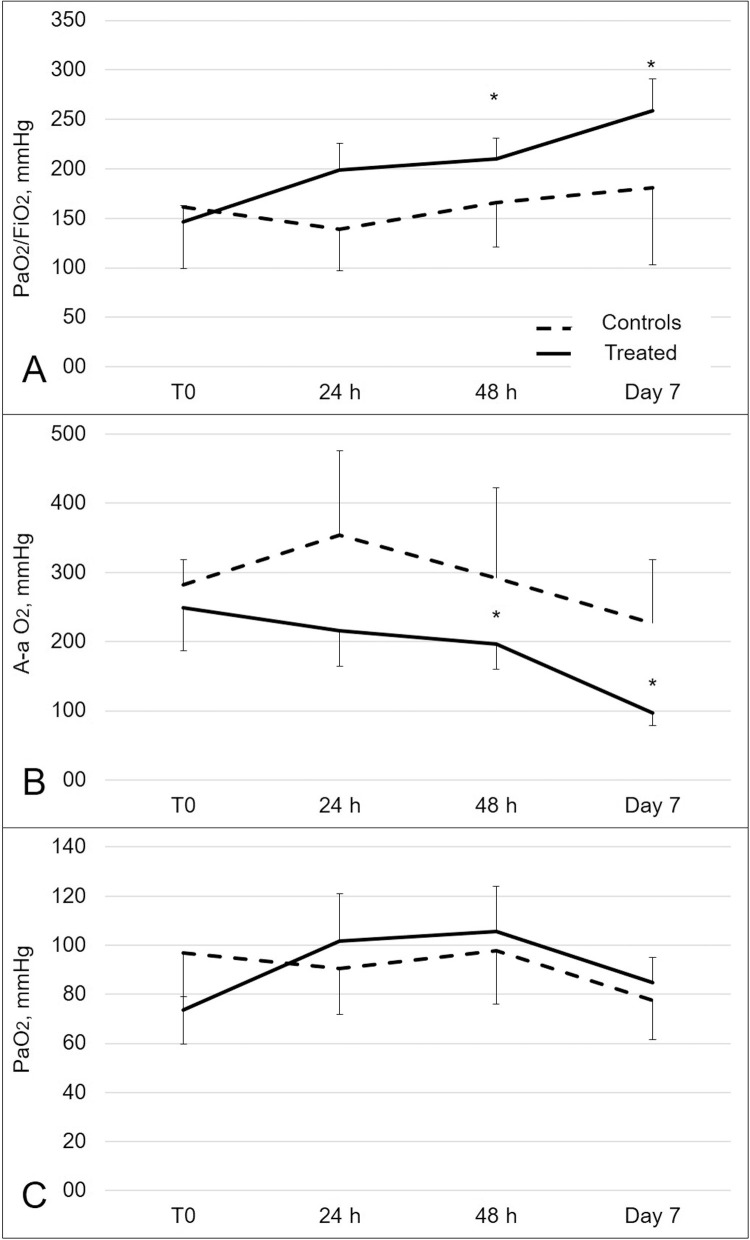
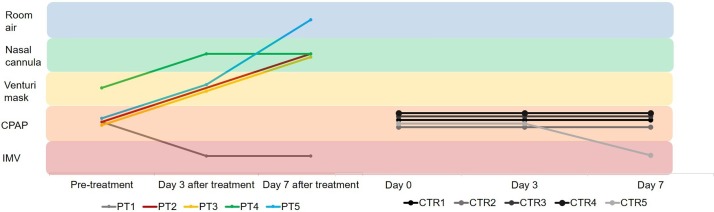
Patients affected by severe coronavirus induced disease-2019 (Covid-19) often experience hypoxemia due to alveolar involvement and endothelial dysfunction, which leads to the formation of micro thrombi in the pulmonary capillary vessels. Both hypoxemia and a prothrombotic diathesis have been associated with more severe disease and increased risk of death. To date, specific indications to treat this condition are lacking. This was a single center, investigator initiated, compassionate use, proof of concept, case control, phase IIb study (NCT04368377) conducted in the Intermediate Respiratory Care Unit of L. Sacco University Hospital in Milano, Italy. Our objective was to explore the effects of the administration of anti-platelet therapy on arterial oxygenation and clinical outcomes in patients with severe Covid-19 with hypercoagulability. We enrolled five consecutive patients with laboratory confirmed SARS-CoV-2 infection, severe respiratory failure requiring helmet continuous positive airway pressure (CPAP), bilateral pulmonary infiltrates and a pro-thrombotic state identified as a D-dimer > 3 times the upper limit of normal. Five patients matched for age, D-dimer value and SOFA score formed the control group. Beyond standard of care, treated patients received 25 μg/Kg/body weight tirofiban as bolus infusion, followed by a continuous infusion of 0.15 μg/Kg/body weight per minute for 48 hours. Before tirofiban, patients received acetylsalicylic acid 250 mg infusion and oral clopidogrel 300 mg; both were continued at a dose of 75 mg daily for 30 days. Fondaparinux2.5 mg/day sub-cutaneous was given for the duration of the hospital stay. All controls were receiving prophylactic or therapeutic dose heparin, according to local standard operating procedures. Treated patients consistently experienced a mean (SD) reduction in A-a O2 gradient of -32.6 mmHg (61.9, P = 0.154), -52.4 mmHg (59.4, P = 0.016) and -151.1 mmHg (56.6, P = 0.011; P = 0.047 vs. controls) at 24, 48 hours and 7 days after treatment. PaO2/FiO2 ratio increased by 52 mmHg (50, P = 0.172), 64 mmHg (47, P = 0.040) and 112 mmHg (51, P = 0.036) after 24, 48 hours and 7 days, respectively. All patients but one were successfully weaned from CPAP after 3 days. This was not true for the control group. No major adverse events were observed. Antiplatelet therapy might be effective in improving the ventilation/perfusion ratio in Covid-19 patients with severe respiratory failure. The effects might be sustained by the prevention and interference on forming clots in lung capillary vessels and by modulating megakaryocytes' function and platelet adhesion. Randomized clinical trials are urgently needed to confirm these results.
Keywords: Antiplatelet; Coagulation; Coronavirus; Covid-19; D-dimer; Respiratory failure.
Copyright © 2020 Elsevier Ltd. All rights reserved.
Figures

References
-
- World Health Organization . 2020. WHO Novel Coronavirus (2019-nCoV) SITUATION REPORT - 107.https://www.who.int/docs/default-source/coronaviruse/situation-reports/2... Last accessed 06 May 2020 April.
Publication types
MeSH terms
Substances
LinkOut - more resources
Full Text Sources
Other Literature Sources
Medical
Miscellaneous
