


ApoE and apoC-III-defined HDL subtypes: a descriptive study of their lecithin cholesterol acyl transferase and cholesteryl ester transfer protein content and activity
- PMID: 32450892
- PMCID: PMC7249299
- DOI: 10.1186/s12944-020-01291-x
ApoE and apoC-III-defined HDL subtypes: a descriptive study of their lecithin cholesterol acyl transferase and cholesteryl ester transfer protein content and activity
Abstract
Background: The functionality of high-density lipoproteins (HDL) is a better cardiovascular risk predictor than HDL concentrations. One of the key elements of HDL functionality is its apolipoprotein composition. Lecithin-cholesterol acyl transferase (LCAT) and cholesterol-ester transfer protein (CETP) are enzymes involved in HDL-mediated reverse cholesterol transport. This study assessed the concentration and activity of LCAT and CETP in HDL subspecies defined by their content of apolipoproteins E (apoE) and C-III (apoC-III) in humans.
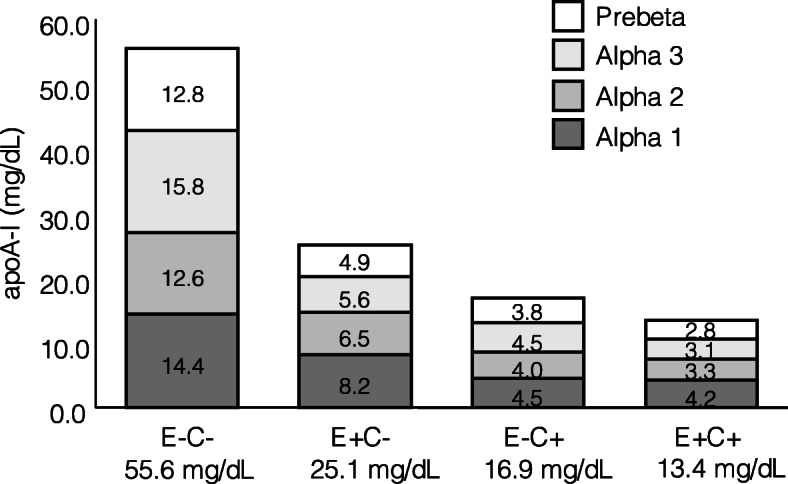
Methods: Eighteen adults (ten women and eight men, mean age 55.6, BMI 26.9 Kg/m2, HbA1c 5.4%) were studied. HDL from each participant were isolated and divided into four subspecies containing respectively: No apoE and no apoC-III (E-C-), apoE but not apoC-III (E + C-), apoC-III but no apoE (E-C+) and both apoE and apoC-III (E + C+). The concentration and enzymatic activity of LCAT and CETP were measured within each HDL subspecies using immunoenzymatic and fluorometric methods. Additionally, the size distribution of HDL in each apolipoprotein-defined fraction was determined using non-denaturing electrophoresis and anti-apoA-I western blotting.
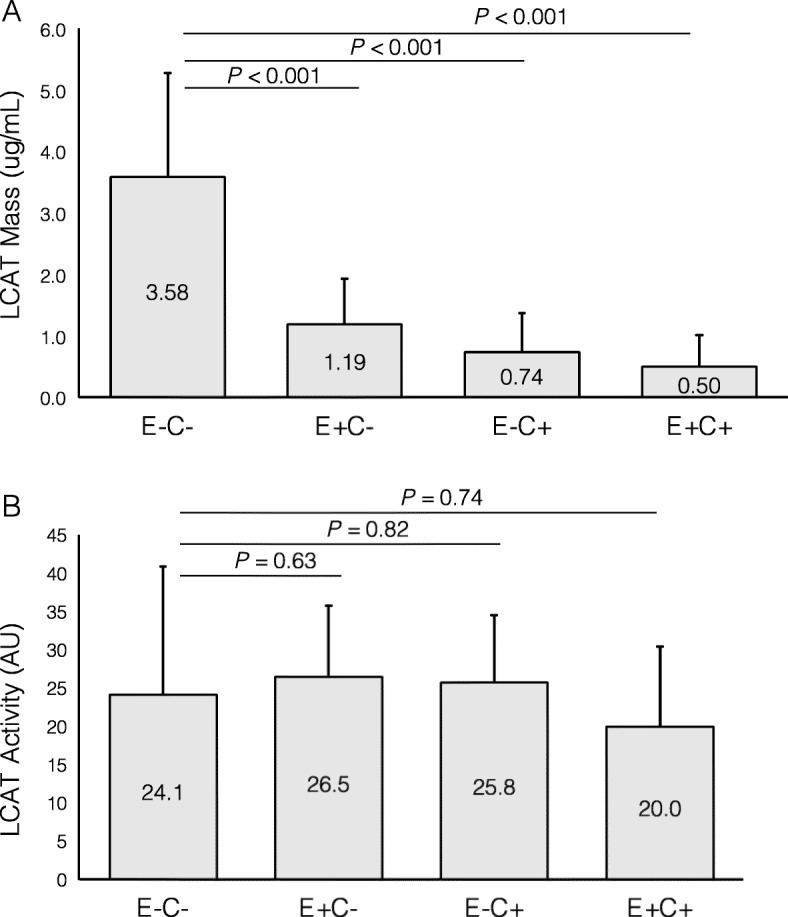
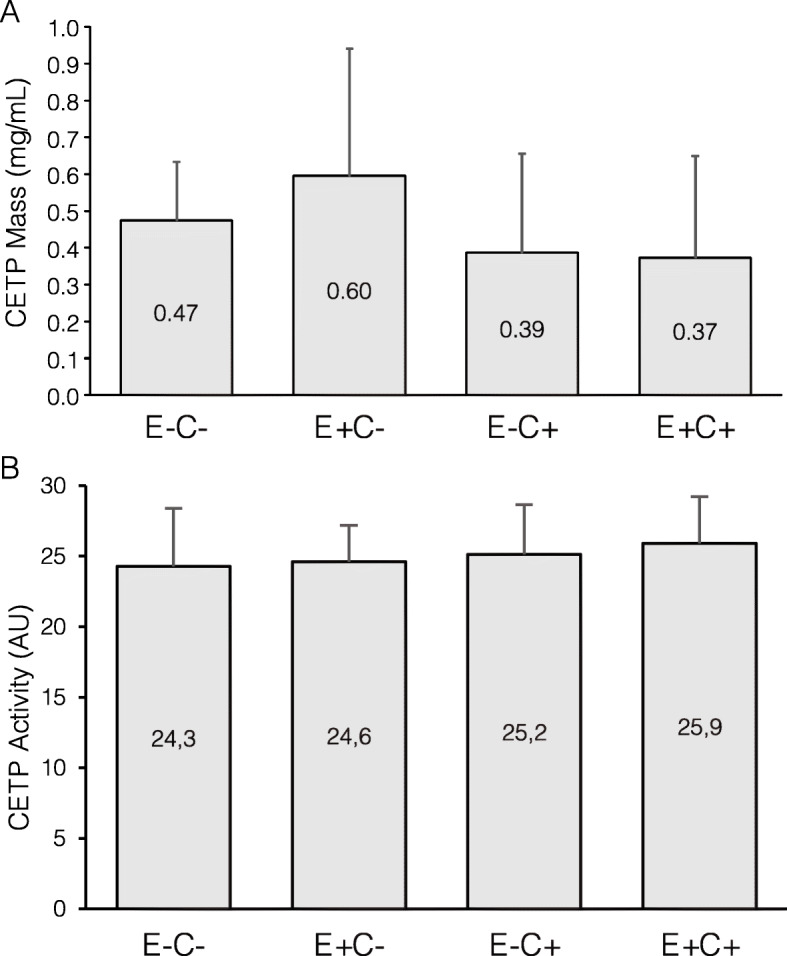
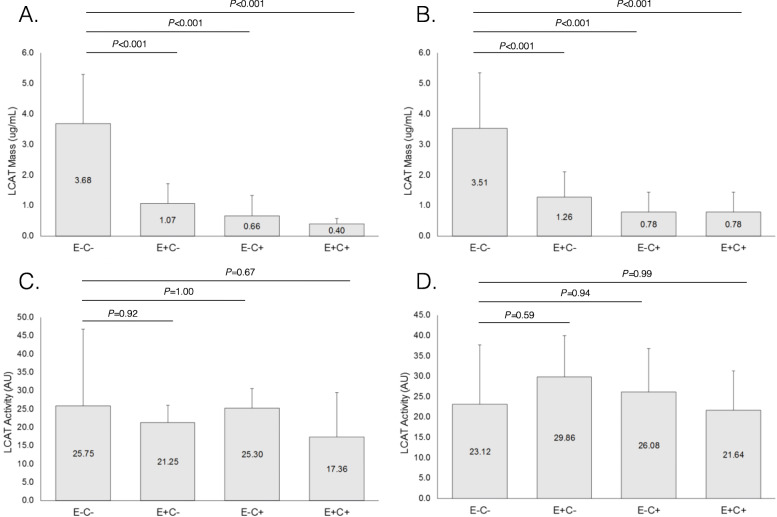
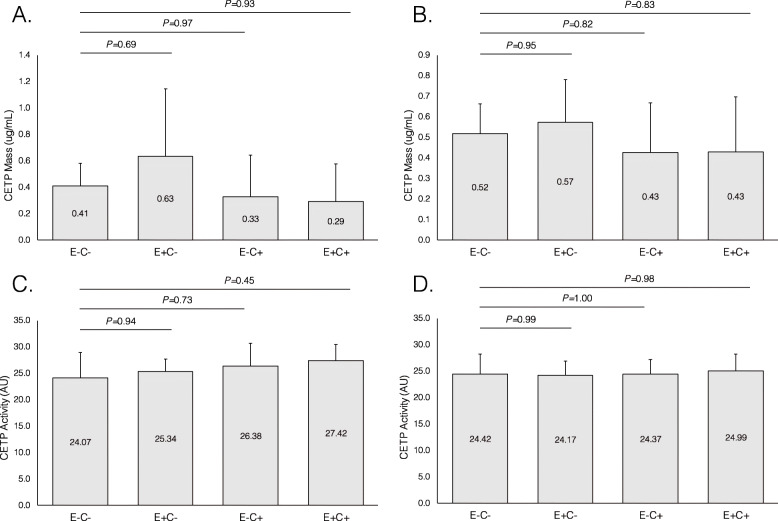
Results: HDL without apoE or apoC-III was the predominant HDL subtype. The size distribution of HDL was very similar in all the four apolipoprotein-defined subtypes. LCAT was most abundant in E-C- HDL (3.58 mg/mL, 59.6% of plasma LCAT mass), while HDL with apoE or apoC-III had much less LCAT (19.8, 12.2 and 8.37% of plasma LCAT respectively for E + C-, E-C+ and E + C+). LCAT mass was lower in E + C- HDL relative to E-C- HDL, but LCAT activity was similar in both fractions, signaling a greater activity-to-mass ratio associated with the presence of apoE. Both CETP mass and CETP activity showed only slight variations across HDL subspecies. There was an inverse correlation between plasma LCAT activity and concentrations of both E-C+ pre-beta HDL (r = - 0.55, P = 0.017) and E-C- alpha 1 HDL (r = - 0.49, P = 0.041). Conversely, there was a direct correlation between plasma CETP activity and concentrations of E-C+ alpha 1 HDL (r = 0.52, P = 0.025).
Conclusions: The presence of apoE in small HDL is correlated with increased LCAT activity and esterification of plasma cholesterol. These results favor an interpretation that LCAT and apoE interact to enhance anti-atherogenic pathways of HDL.
Keywords: Apolipoprotein C-III; Apolipoprotein E; Cholesterol ester transfer protein; HDL; Lecithin cholesterol acyltransferase; Reverse cholesterol transport.
Conflict of interest statement
The authors declare that they have no competing interests.
Figures
References
-
- Rosenson RS, Brewer HB, Jr, Barter PJ, Björkegren JLM, Chapman MJ, Gaudet D, et al. HDL and atherosclerotic cardiovascular disease: genetic insights into complex biology. Nat Rev Cardiol. 2018;15:9–19. - PubMed
-
- Vitali C, Khetarpal SA, Rader DJ. HDL cholesterol metabolism and the risk of CHD: new insights from human genetics. Curr Cardiol Rep. 2017;19:132. - PubMed
-
- Nicholls SJ, Nelson AJ. HDL and cardiovascular disease. Pathology. 2019;51:142–147. - PubMed
-
- Shahid M, Sun RL, Liu Y, Bao JL, Huang CX, Liao Y, et al. Is high high-density lipoprotein cholesterol beneficial for premature coronary heart disease? A meta-analysis. Eur J Prev Cardiol. 2016;23:704–713. - PubMed
-
- Barter P, Caulfield M, Eriksson M, Grundy S, Kastelein J, Komajda M, et al. Effects of Torcetrapib in patients at high risk for coronary events. N Engl J Med. 2007;357:2109–2122. - PubMed
MeSH terms
Substances
LinkOut - more resources
Full Text Sources
Medical
Miscellaneous
