


Molecular mechanisms of dendritic cell migration in immunity and cancer
- PMID: 32451606
- PMCID: PMC7395046
- DOI: 10.1007/s00430-020-00680-4
Molecular mechanisms of dendritic cell migration in immunity and cancer
Abstract
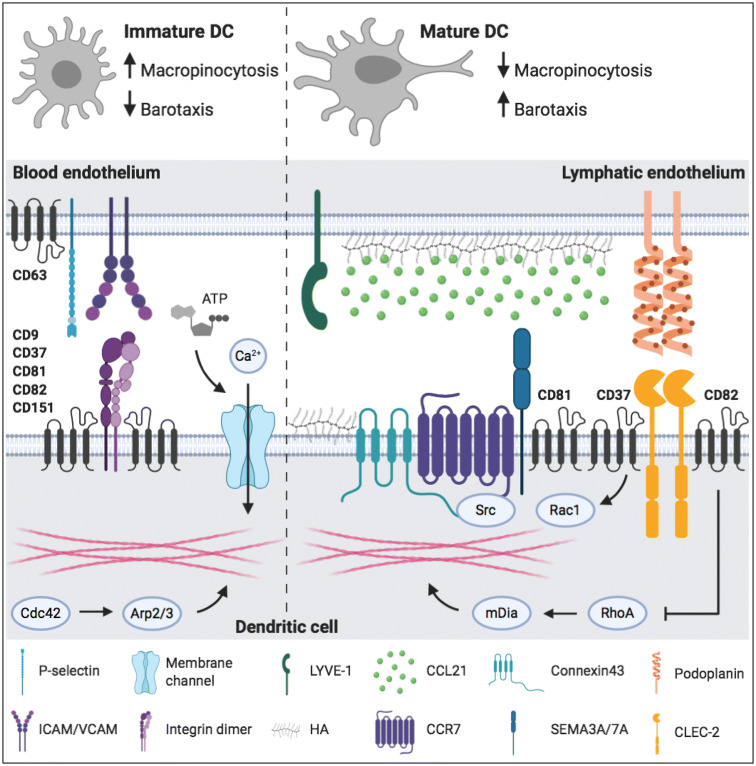
Dendritic cells (DCs) are a heterogeneous population of antigen-presenting cells that act to bridge innate and adaptive immunity. DCs are critical in mounting effective immune responses to tissue damage, pathogens and cancer. Immature DCs continuously sample tissues and engulf antigens via endocytic pathways such as phagocytosis or macropinocytosis, which result in DC activation. Activated DCs undergo a maturation process by downregulating endocytosis and upregulating surface proteins controlling migration to lymphoid tissues where DC-mediated antigen presentation initiates adaptive immune responses. To traffic to lymphoid tissues, DCs must adapt their motility mechanisms to migrate within a wide variety of tissue types and cross barriers to enter lymphatics. All steps of DC migration involve cell-cell or cell-substrate interactions. This review discusses DC migration mechanisms in immunity and cancer with a focus on the role of cytoskeletal processes and cell surface proteins, including integrins, lectins and tetraspanins. Understanding the adapting molecular mechanisms controlling DC migration in immunity provides the basis for therapeutic interventions to dampen immune activation in autoimmunity, or to improve anti-tumour immune responses.
Keywords: Actin cytoskeleton; Cell migration; Dendritic cell; Integrin; Lectin; Tetraspanin.
Conflict of interest statement
The authors declare they have no conflict of interest.
Figures
References
-
- Nobel Media AB 2014 (2011) Ralph M. Steinman—facts. In: Nobelprize.org
Publication types
MeSH terms
Substances
Grants and funding
LinkOut - more resources
Full Text Sources
Other Literature Sources
Medical
