


Systematic assessment of venous thromboembolism in COVID-19 patients receiving thromboprophylaxis: incidence and role of D-dimer as predictive factors
- PMID: 32451823
- PMCID: PMC7246965
- DOI: 10.1007/s11239-020-02146-z
Systematic assessment of venous thromboembolism in COVID-19 patients receiving thromboprophylaxis: incidence and role of D-dimer as predictive factors
Abstract
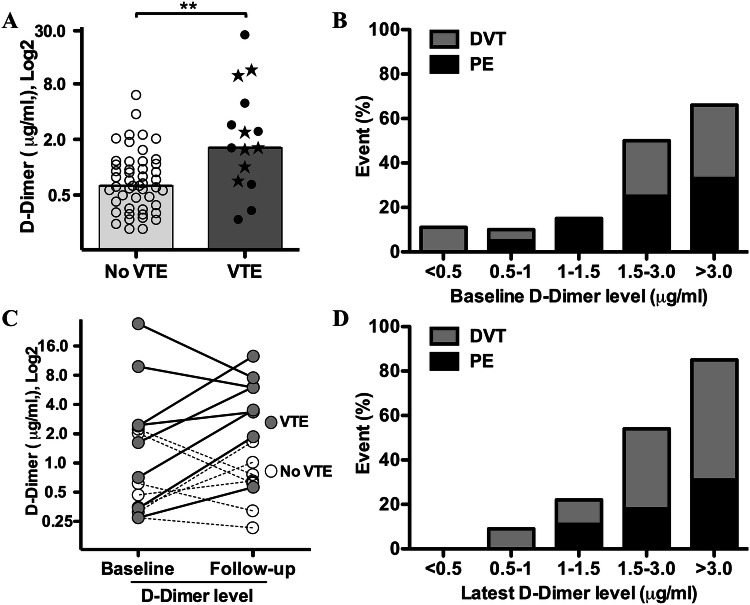
Coagulopathy in COVID-19 is a burning issue and strategies to prevent thromboembolic events are debated and highly heterogeneous. The objective was to determine incidence and risk factors of venous thromboembolism (VTE) in COVID-19 inpatients receiving thromboprophylaxis. In this retrospective French cohort study, patients hospitalized in medical wards non-ICU with confirmed COVID-19 and adequate thromboprophylaxis were included. A systematic low limb venous duplex ultrasonography was performed at hospital discharge or earlier if deep venous thrombosis (DVT) was clinically suspected. Chest angio-CT scan was performed when pulmonary embolism (PE) was suspected. Of 71 patients, 16 developed VTE (22.5%) and 7 PE (10%) despite adequate thromboprophylaxis. D-dimers at baseline were significantly higher in patients with DVT (p < 0.001). Demographics, comorbidities, disease manifestations, severity score, and other biological parameters, including inflammatory markers, were similar in patients with and without VTE. The negative predictive value of a baseline D-dimer level < 1.0 µg/ml was 90% for VTE and 98% for PE. The positive predictive value for VTE was 44% and 67% for D-dimer level ≥ 1.0 µg/ml and ≥ 3 µg/ml, respectively. The association between D-dimer level and VTE risk increased by taking into account the latest available D-dimer level prior to venous duplex ultrasonography for the patients with monitoring of D-dimer. Despite thromboprophylaxis, the risk of VTE is high in COVID-19 non-ICU inpatients. Increased D-dimer concentrations of more than 1.0 μg/ml predict the risk of venous thromboembolism. D-dimer level-guided aggressive thromboprophylaxis regimens using higher doses of heparin should be evaluated in prospective studies.
Keywords: COVID-19; D-dimer; Pulmonary embolism; Venous thromboembolism.
Conflict of interest statement
The authors declare that they have no conflicts of interest.
Figures
References
Publication types
MeSH terms
Substances
LinkOut - more resources
Full Text Sources
Other Literature Sources
Medical
