


Systematic review with meta-analysis: prevalence of prior and concurrent Barrett's oesophagus in oesophageal adenocarcinoma patients
- PMID: 32452599
- PMCID: PMC7293564
- DOI: 10.1111/apt.15760
Systematic review with meta-analysis: prevalence of prior and concurrent Barrett's oesophagus in oesophageal adenocarcinoma patients
Abstract
Background: The proportions of patients with oesophageal adenocarcinoma (OAC) diagnosed by Barrett's oesophagus surveillance or with pre-existing Barrett's oesophagus are unclear.
Aim: To estimate the prevalence of prior and concurrent Barrett's oesophagus diagnosis among patients with OAC or oesophagogastric junction adenocarcinomas (OGJAC).
Methods: We searched PubMed and Embase to identify studies published 1966-1/8/2020 that examined the prevalence of prior (≥6 months) or concurrent Barrett's diagnosis (at cancer diagnosis) among OAC and OGJAC patients. Random effects models estimated overall and stratified pooled prevalence rates.
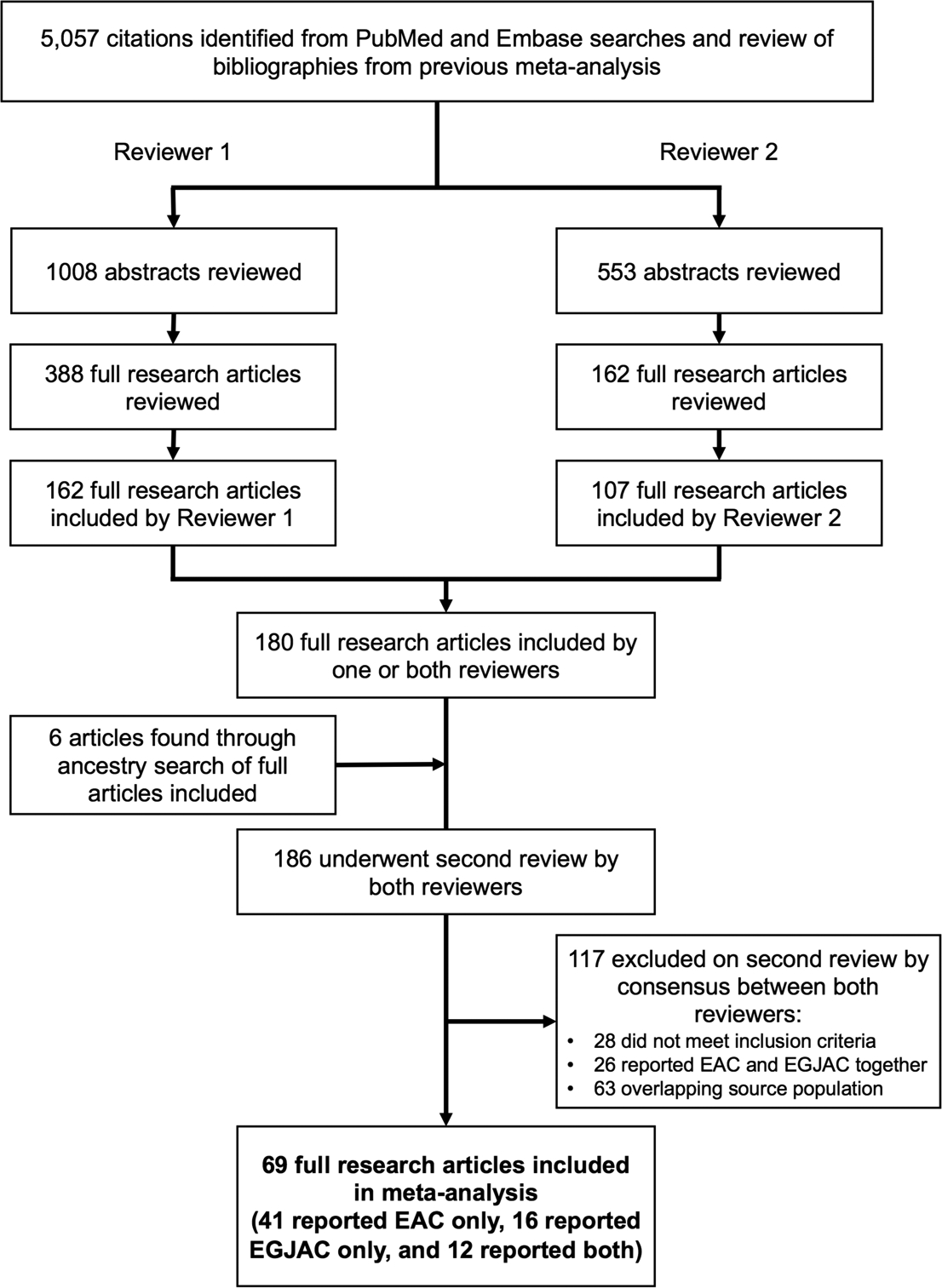
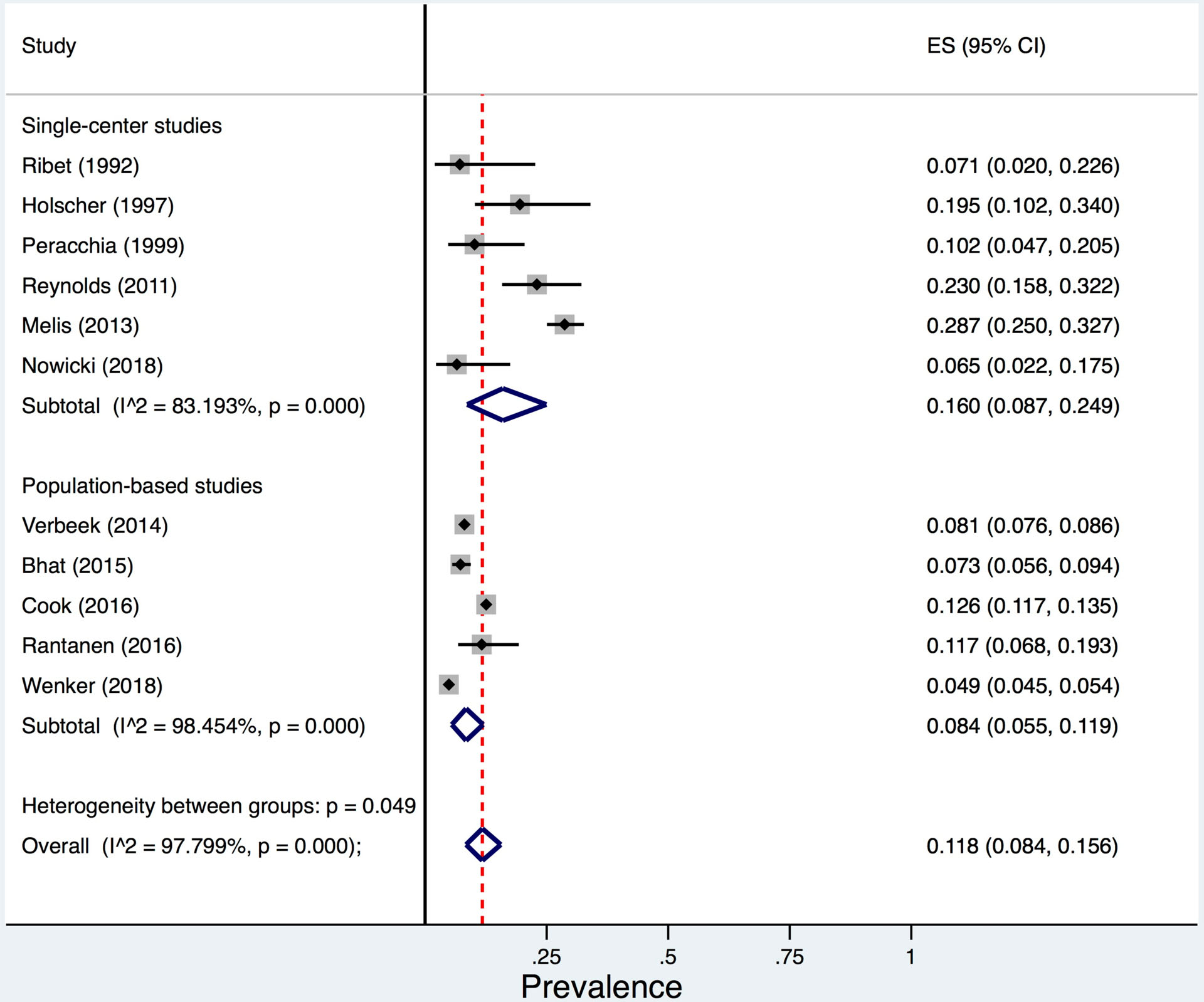
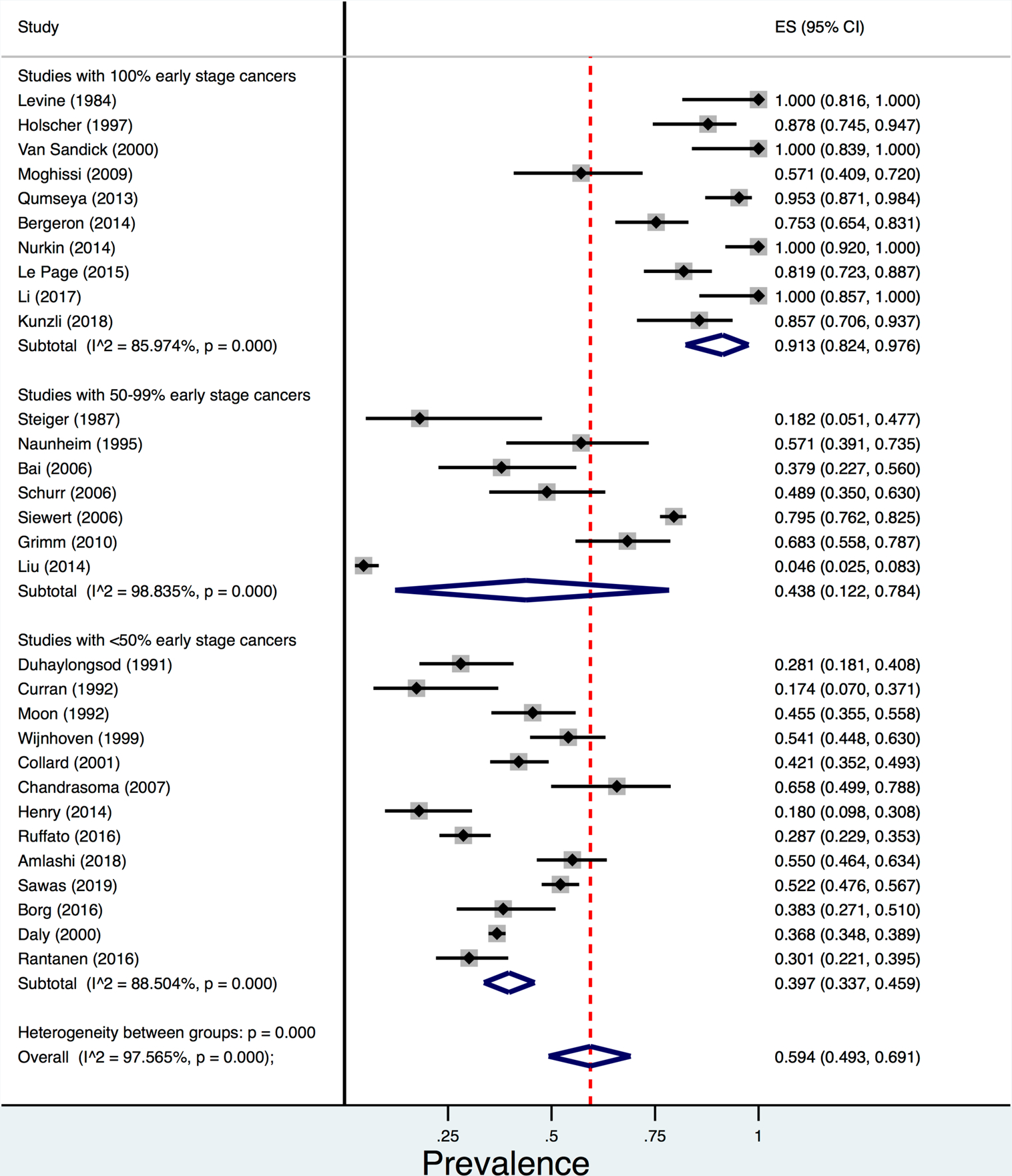
Results: A total of 69 studies, including 33 002 OAC patients (53 studies) and 2712 patients with OGJAC (28 studies) were included. The pooled prevalence of prior Barrett's oesophagus diagnosis in OAC was 11.8% (95% confidence interval [CI] 8.4%-15.6%). The prevalence of prior Barrett's oesophagus diagnosis was higher in single-centre resection studies (16.0%, 95% CI 8.7%-24.9%) than population-based cancer registry studies (8.4%, 95% CI 5.5%-11.9%). The prevalence of concurrent Barrett's oesophagus in OAC was 56.6% (95% CI 48.5%-64.6%). Studies with 100% early stage OAC had higher prevalence of concurrent Barrett's oesophagus (91.3%, 95% CI 82.4%-97.6%) than studies with <50% early OAC (39.7%, 95% CI 33.7%-45.9%). In OGJAC, the prevalence of prior and concurrent Barrett's oesophagus was 23.2% (95% CI 7.5%-44.0%) and 26.3% (95% CI 17.8%-35.7%), respectively.
Conclusions: Most patients with OAC have Barrett's oesophagus. Our meta-analysis found ~12% of OAC patients had prior Barrett's diagnosis, but concurrent Barrett's oesophagus was found in ~57% at the time of OAC diagnosis. This represents a considerable missed opportunity for Barrett's oesophagus screening.
© 2020 John Wiley & Sons Ltd.
Conflict of interest statement
Figures

References
-
- Hvid-Jensen F, Pedersen L, Drewes AM, et al. Incidence of adenocarcinoma among patients with Barrett’s esophagus. N Engl J Med. 2011;365(15):1375–83. - PubMed
-
- Thrift AP. The epidemic of oesophageal carcinoma: Where are we now? Cancer epidemiology. 2016;41:88–95. - PubMed
-
- Thrift AP, Whiteman DC. The incidence of esophageal adenocarcinoma continues to rise: analysis of period and birth cohort effects on recent trends. Annals of oncology : official journal of the European Society for Medical Oncology. 2012;23(12):3155–62. - PubMed
-
- Rastogi A, Puli S, El-Serag HB, et al. Incidence of esophageal adenocarcinoma in patients with Barrett’s esophagus and high-grade dysplasia: a meta-analysis. Gastrointestinal endoscopy. 2008;67(3):394–8. - PubMed
-
- Singh S, Manickam P, Amin AV, et al. Incidence of esophageal adenocarcinoma in Barrett’s esophagus with low-grade dysplasia: a systematic review and meta-analysis. Gastrointestinal endoscopy. 2014;79(6):897–909.e4; quiz 83.e1, 83.e3. - PubMed
Publication types
MeSH terms
Supplementary concepts
Grants and funding
LinkOut - more resources
Full Text Sources
Medical