


Safety and Efficacy of a Disposable Vaginal Device for Stress Urinary Incontinence
- PMID: 32453209
- PMCID: PMC7720247
- DOI: 10.1097/SPV.0000000000000861
Safety and Efficacy of a Disposable Vaginal Device for Stress Urinary Incontinence
Abstract
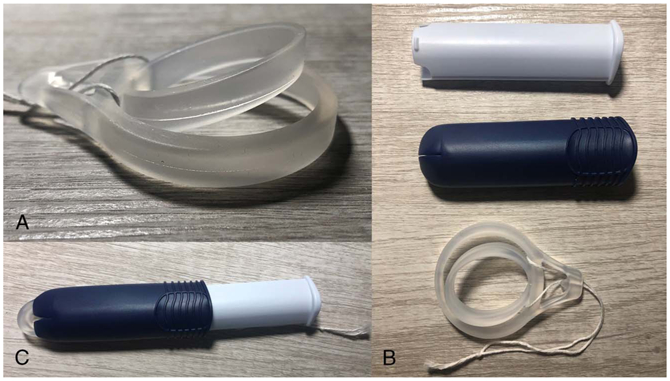
Objective: The aim of this study was to evaluate the efficacy and safety of an over-the-counter device for the treatment of stress urinary incontinence (SUI) in females.
Methods: A multicenter, interventional, single-arm study involving 5 different sites was conducted including women diagnosed with symptomatic SUI using a self-inserted pessary device. A 1-week baseline period was followed by a 2-week period of wearing the device. The main outcome of our study was to determine if the device was able to reduce at least 50% the number of leakage events and pad weight.
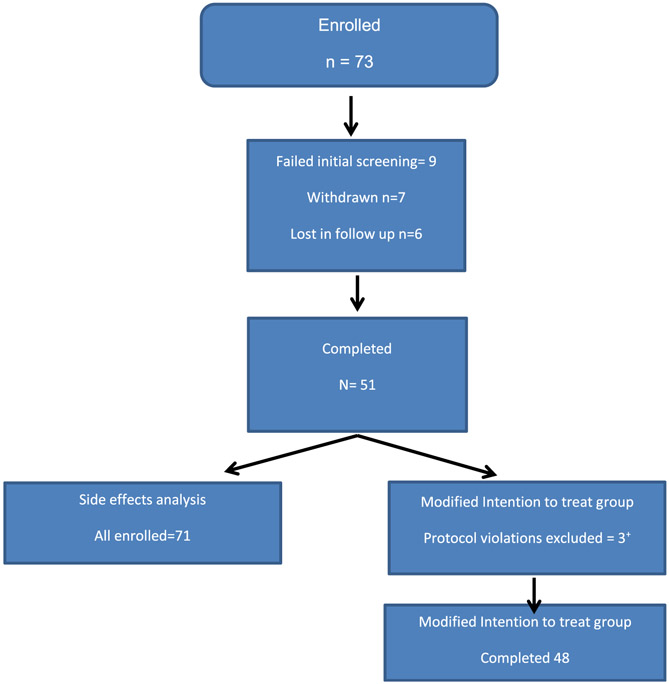
Results: Across all study sites, 73 subjects were enrolled and 51 completed the study. Efficacy analyses were conducted on the modified intent-to-treat population (n = 48), whereas the safety analysis was conducted on all consented participants. The average pad weight gain was 0.9 g/h at baseline and 0.5 g/h during the treatment phase. The number of leakage episodes per day decreased from 2 at baseline to 0.9 during the treatment phase (P < 0.0001). Seventy-one percent of the study population experienced a more than 50% reduction in leakage volume, leakage episodes, or both. The quality of life scores improved from baseline to posttreatment phase by 4.35 points on average (P < 0.0001). A total of 40 adverse events were recorded, and only 4 subjects withdrew due to adverse events.
Conclusions: The self-deployable pessary device evaluated in this study is an alternative option for women seeking an over-the-counter method to manage symptoms of SUI. Further studies are required to determine the long-term effects and compliance using the device.
Trial registration: ClinicalTrials.gov NCT03323723.
Copyright © 2020 American Urogynecologic Society. All rights reserved.
Figures
References
-
- Minassian VA, Drutz HP, Al-Badr A. Urinary incontinence as a worldwide problem. Int J Gynaecol Obstet 2003;82:327–338. - PubMed
-
- Ziv E, Stanton SL, Abarbanel J. Efficacy and safety of a novel disposable intravaginal device for treating stress urinary incontinence. Am J Obstet Gynecol 2008;198:594.e1–594.e7. - PubMed
-
- Lim R, Liong ML, Lim KK, et al. The minimum clinically important difference of the international consultation on incontinence questionnaires (ICIQ-UI SF and ICIQ-LUTSqol). Urology 2019;133:91–95. - PubMed
-
- Committee on Practice Bulletins—Gynecology and the American Urogynecologic Society. ACOG Practice bulletin no. 155 summary: urinary incontinence in women. Obstet Gynecol 2015;126:1120–1122. - PubMed
Publication types
MeSH terms
Associated data
Grants and funding
LinkOut - more resources
Full Text Sources
Medical
