


Regulation of Iron Homeostasis and Related Diseases
- PMID: 32454791
- PMCID: PMC7212278
- DOI: 10.1155/2020/6062094
Regulation of Iron Homeostasis and Related Diseases
Abstract
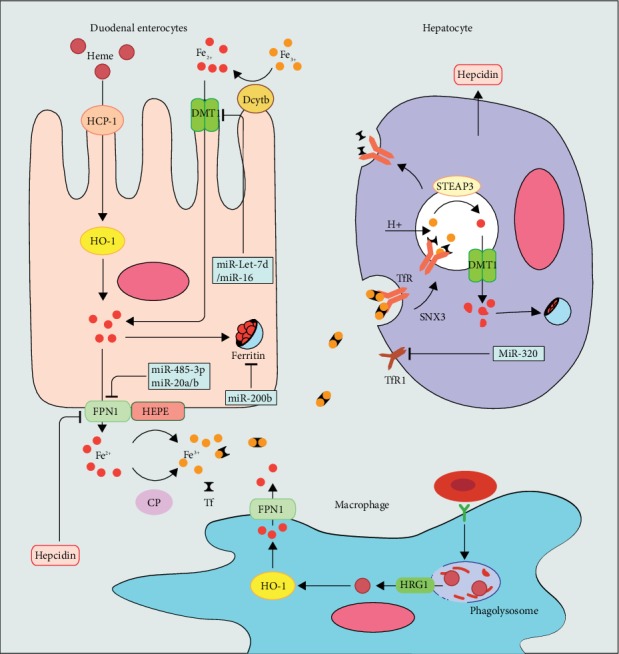
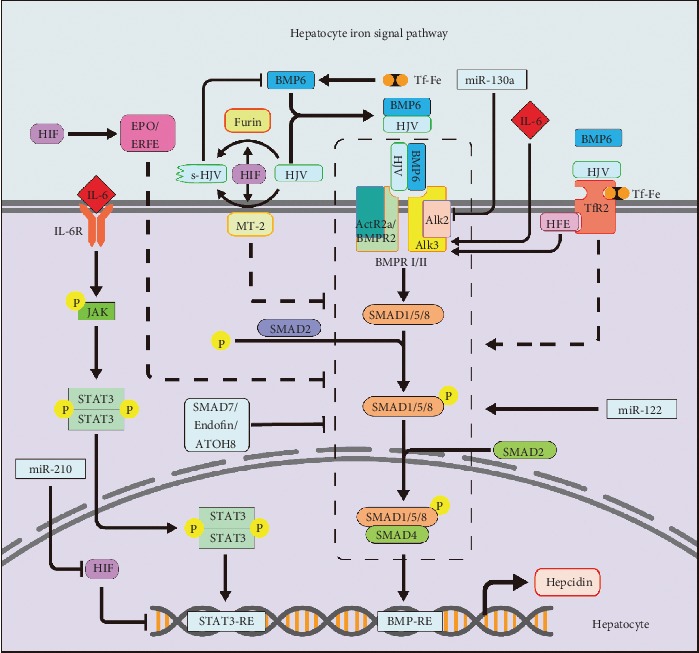
The liver is the organ for iron storage and regulation; it senses circulating iron concentrations in the body through the BMP-SMAD pathway and regulates the iron intake from food and erythrocyte recovery into the bloodstream by secreting hepcidin. Under iron deficiency, hypoxia, and hemorrhage, the liver reduces the expression of hepcidin to ensure the erythropoiesis but increases the excretion of hepcidin during infection and inflammation to reduce the usage of iron by pathogens. Excessive iron causes system iron overload; it accumulates in never system and damages neurocyte leading to neurodegenerative diseases such as Parkinson's syndrome. When some gene mutations affect the perception of iron and iron regulation ability in the liver, then they decrease the expression of hepcidin, causing hereditary diseases such as hereditary hemochromatosis. This review summarizes the source and utilization of iron in the body, the liver regulates systemic iron homeostasis by sensing the circulating iron concentration, and the expression of hepcidin regulated by various signaling pathways, thereby understanding the pathogenesis of iron-related diseases.
Copyright © 2020 Yikun Li et al.
Conflict of interest statement
The authors declare no conflict of interest, financial, or otherwise.
Figures
References
-
- Allen L., Benoist B. D. WHO Guidelines on Food Fortification with Micronutrients. WHO; 2006.
Publication types
MeSH terms
Substances
LinkOut - more resources
Full Text Sources
Medical
