


Cardio-Metabolic Effects of High-Fat Diets and Their Underlying Mechanisms-A Narrative Review
- PMID: 32455838
- PMCID: PMC7284903
- DOI: 10.3390/nu12051505
Cardio-Metabolic Effects of High-Fat Diets and Their Underlying Mechanisms-A Narrative Review
Abstract
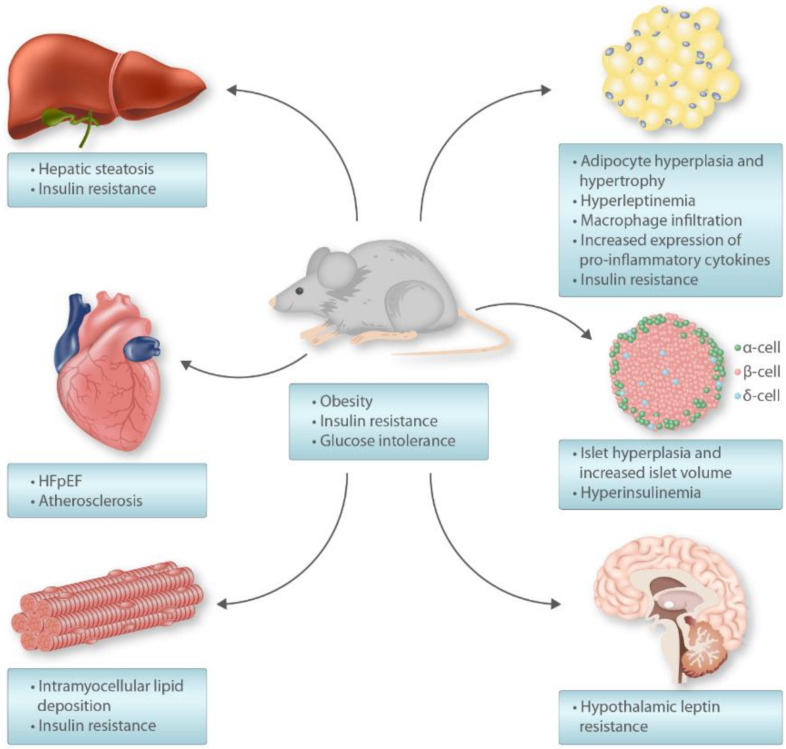
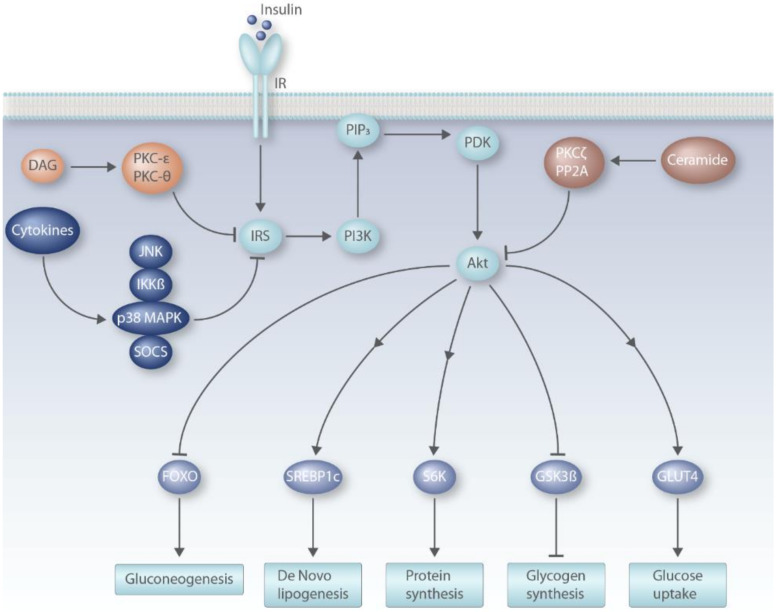
The majority of the epidemiological evidence over the past few decades has linked high intake of fats, especially saturated fats, to increased risk of diabetes and cardiovascular disease. However, findings of some recent studies (e.g., the PURE study) have contested this association. High saturated fat diets (HFD) have been widely used in rodent research to study the mechanism of insulin resistance and metabolic syndrome. Two separate but somewhat overlapping models-the diacylglycerol (DAG) model and the ceramide model-have emerged to explain the development of insulin resistance. Studies have shown that lipid deposition in tissues such as muscle and liver inhibit insulin signaling via the toxic molecules DAG and ceramide. DAGs activate protein kinase C that inhibit insulin-PI3K-Akt signaling by phosphorylating serine residues on insulin receptor substrate (IRS). Ceramides are sphingolipids with variable acyl group chain length and activate protein phosphatase 2A that dephosphorylates Akt to block insulin signaling. In adipose tissue, obesity leads to infiltration of macrophages that secrete pro-inflammatory cytokines that inhibit insulin signaling by phosphorylating serine residues of IRS proteins. For cardiovascular disease, studies in humans in the 1950s and 1960s linked high saturated fat intake with atherosclerosis and coronary artery disease. More recently, trials involving Mediterranean diet (e.g., PREDIMED study) have indicated that healthy monounsaturated fats are more effective in preventing cardiovascular mortality and coronary artery disease than are low-fat, low-cholesterol diets. Antioxidant and anti-inflammatory effects of Mediterranean diets are potential mediators of these benefits.
Keywords: cardiovascular disease; diabetes; high-fat diet; insulin resistance; metabolism; mice; obesity; saturated fatty acids.
Conflict of interest statement
The authors declare no conflict of interest.
Figures
References
-
- Alwan A. Global Status Report on Noncommunicable Diseases 2010. World Health Organization; Geneva, Switzerland: 2011.
Publication types
MeSH terms
Substances
Grants and funding
LinkOut - more resources
Full Text Sources
Miscellaneous
