


Mechanisms of Bioactivities of Fucoidan from the Brown Seaweed Fucus vesiculosus L. of the Barents Sea
- PMID: 32456047
- PMCID: PMC7281726
- DOI: 10.3390/md18050275
Mechanisms of Bioactivities of Fucoidan from the Brown Seaweed Fucus vesiculosus L. of the Barents Sea
Abstract
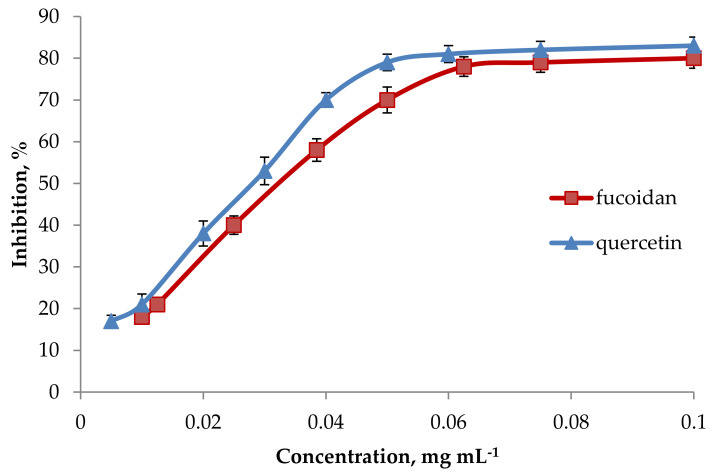
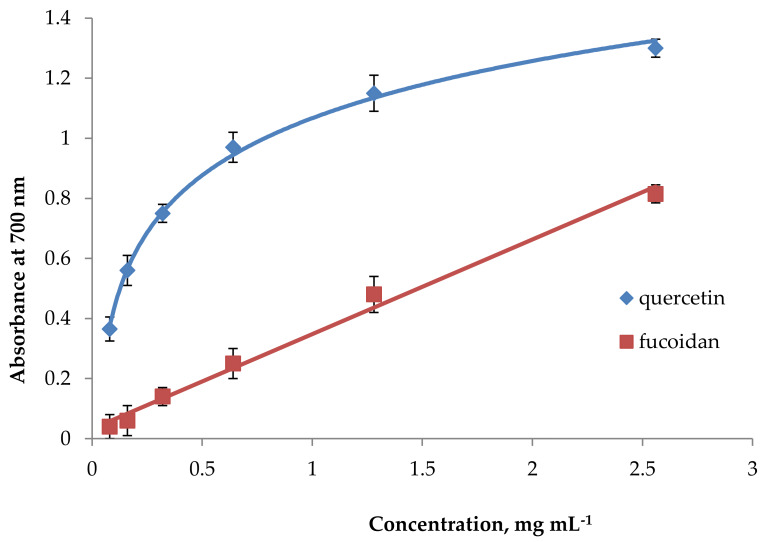
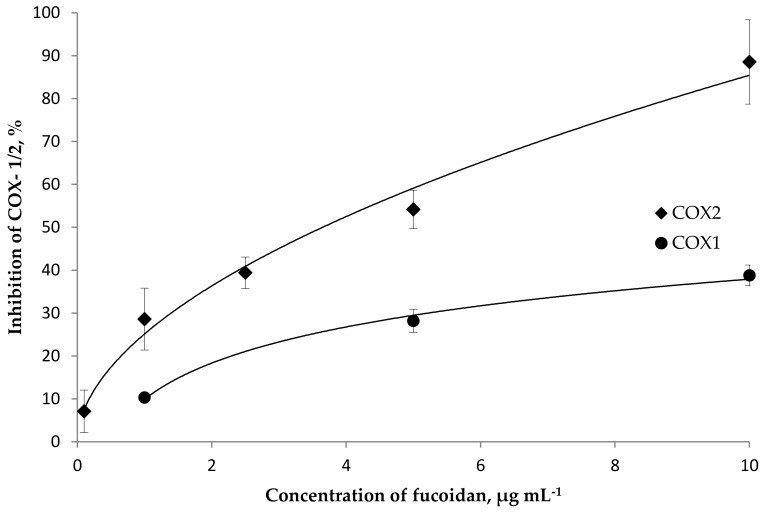
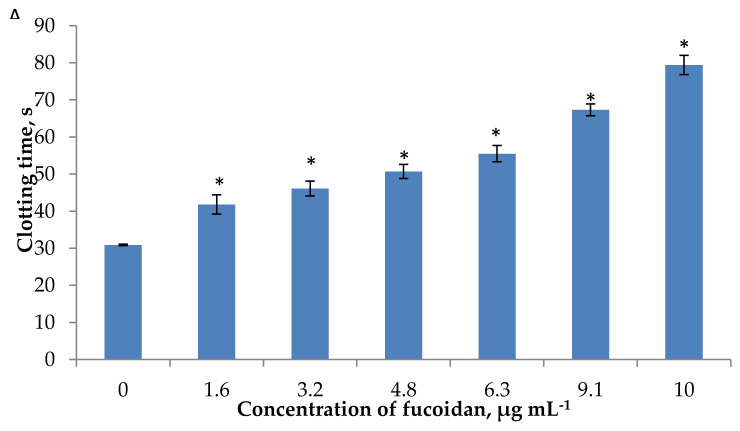
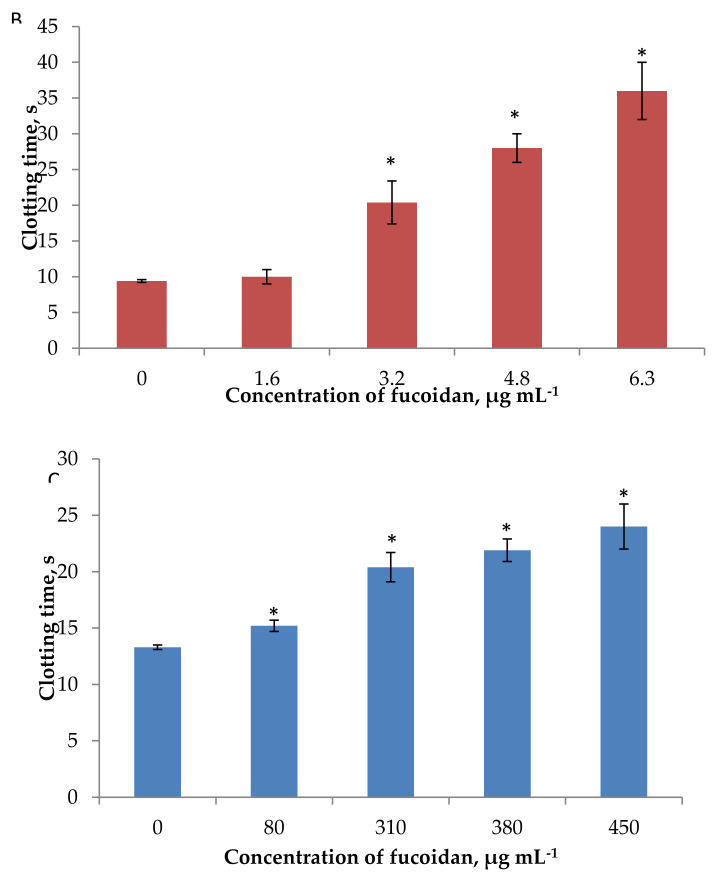
The aim of this study was to elucidate some mechanisms of radical scavenging and the anti-inflammatory, anti-hyperglycemic, and anti-coagulant bioactivities of high molecular weight fucoidan from Fucus vesiculosus in several in vitro models. Fucoidan has displayed potent 1, 1-diphenyl-2-picryl hydrazil radical scavenging and reduction power activities. It significantly inhibits the cyclooxygenase-2 (COX-2) enzyme (IC50 4.3 μg mL-1) with a greater selectivity index (lg(IC80 COX-2/IC80COX-1), -1.55) than the synthetic non-steroidal anti-inflammatory drug indomethacin (lg(IC80 COX-2/IC80COX-1), -0.09). A concentration-dependent inhibition of hyaluronidase enzyme with an IC50 of 2.9 μg mL-1 was observed. Fucoidan attenuated the lipopolysaccharide-induced expression of mitogen-activated protein kinase p38. Our findings suggest that the inhibition of dipeptidyl peptidase-IV (DPP-IV) (IC50 1.11 μg mL-1) is one of the possible mechanisms involved in the anti-hyperglycemic activity of fucoidan. At a concentration of 3.2 μg mL-1, fucoidan prolongs the activated partial thromboplastin time and thrombin time by 1.5-fold and 2.5-fold compared with a control, respectively. A significant increase of prothrombin time was observed after the concentration of fucoidan was increased above 80 μg mL-1. This evidenced that fucoidan may have an effect on intrinsic/common pathways and little effect on the extrinsic mechanism. This study sheds light on the multiple pathways of the bioactivities of fucoidan. As far as we know, the inhibition of hyaluronidase and DPP-IV by high molecular fucoidan was studied for the first time in this work. Our results and literature data suggest that molecular weight, sulfate content, fucose content, and polyphenols may contribute to these activities. It seems that high molecular weight fucoidan has promising therapeutic applications in different pharmacological settings. Anti-oxidant, anti-inflammatory and anti-coagulant drugs have been used for the management of complications of COVID19. Taken as a whole, fucoidan could be considered as a prospective candidate for the treatment of patients with COVID19; however, additional research in this field is required.
Keywords: COVID19; anti-coagulant; anti-hyperglycemic; anti-inflammatory; cyclooxygenase; dipeptidyl peptidase IV; fucoidan.
Conflict of interest statement
The authors declare no conflict of interest.
Figures
References
-
- Mayer A.M.S., Guerrero A.J., Rodríguez A.D., Taglialatela-Scafati O., Nakamura F., Fusetani N. Marine pharmacology in 2014–2015: Marine compounds with antibacterial, antidiabetic, antifungal, anti-inflammatory, antiprotozoal, antituberculosis, antiviral, and anthelmintic activities; affecting the immune and nervous systems, and other miscellaneous mechanisms of action. Mar. Drugs. 2020;18:5. doi: 10.3390/md18010005. - DOI - PMC - PubMed
-
- Usov A.I., Bilan M.I. Fucoidans—Sulfated polysaccharides of brown algae. Russ. Chem. Revs. 2009;78:785–799. doi: 10.1070/RC2009v078n08ABEH004063. - DOI
-
- Ale M.T., Mikkelsen J.D., Meyer A.S. Important determinants for fucoidan bioactivity: A critical review of structure-function relations and extraction methods for fucose-containing sulfated polysaccharides from brown seaweeds. Mar. Drugs. 2011;9:2106–2130. doi: 10.3390/md9102106. - DOI - PMC - PubMed
-
- Ale M.T., Meyer A.S. Fucoidans from brown seaweeds: An update on structures, extraction techniques and use of enzymes as tools for structural elucidation. RSC Adv. 2013;3:8131–8141. doi: 10.1039/C3RA23373A. - DOI
MeSH terms
Substances
Grants and funding
LinkOut - more resources
Full Text Sources
Medical
Research Materials
