


Reliability of a Repeated High-Intensity Effort Test for Elite Rugby Union Players
- PMID: 32456055
- PMCID: PMC7280974
- DOI: 10.3390/sports8050072
Reliability of a Repeated High-Intensity Effort Test for Elite Rugby Union Players
Abstract
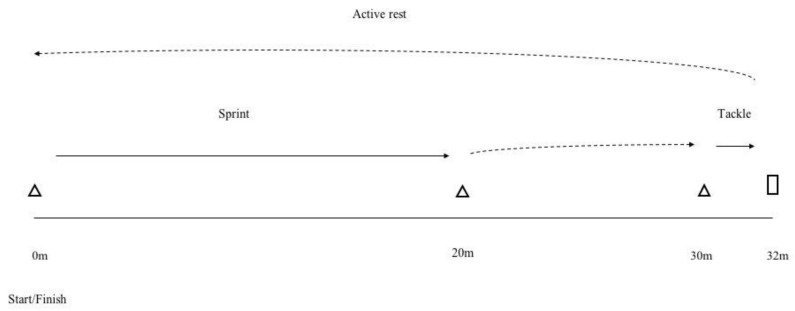
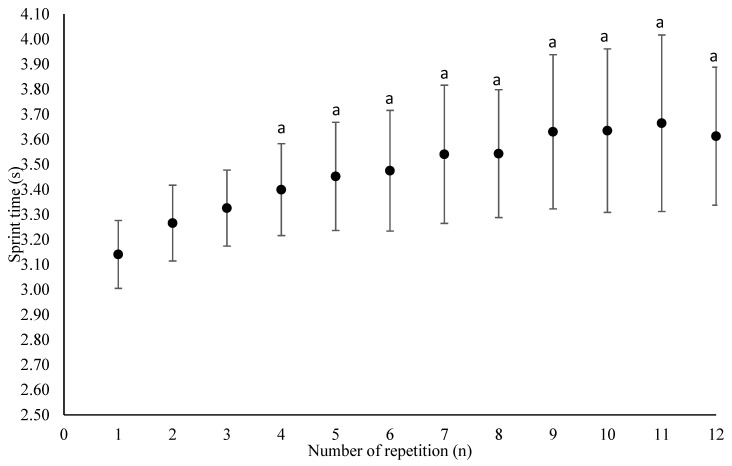
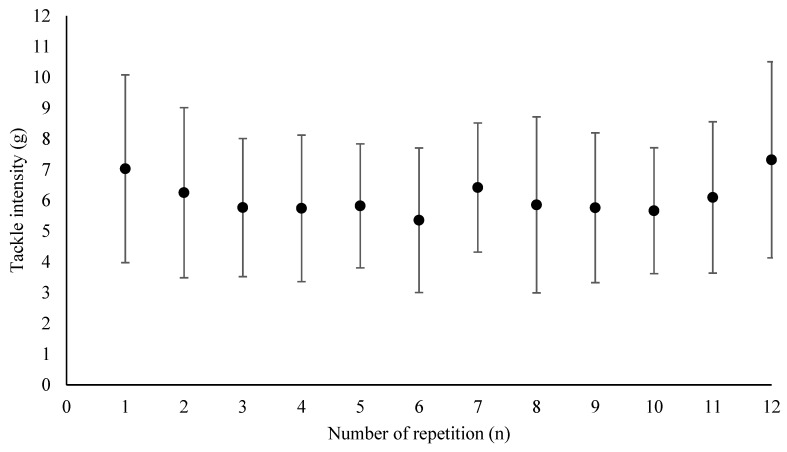
This study aimed to adapt a repeated high-intensity effort (RHIE) test to the rugby union physical demands and assess both sprint time and tackle indices reliability. Following a familiarization session, sixteen elite rugby union players completed two RHIE tests consisting of 12 × 20 m sprint + tackle. Total sprint time and total g-force during tackling, average sprint time and average g-force as well as percentage decrementsprint time and percentage decrementtackle were considered for the analysis. Sprint time indices showed high to very high absolute and relative reliability (intraclass coefficient correlation (ICC) = 0.95, Standard Error Measurement (SEM) = 1.30%; ICC = 0.95, SEM = 1.44%; ICC = 0.73, SEM = 23.0%, for total sprint time, average sprint time and percentage decrementsprint time, respectively). Tackle indices showed moderate to high reliability (ICC = 0.54, SEM = 16.5%; ICC = 0.61, SEM = 15.6%; ICC = 0.71, SEM = 12.3%, for total g-force, average g-force and percentage decrementtackle, respectively). The RHIE test provides reliable measures of sprint time and tackle indices. Tackle indices should be used as a validation criterion of the test, whereas total time should be considered as the test final result.
Keywords: repeated efforts; rugby union; sprints; tackles; team sports.
Conflict of interest statement
The authors declare no conflict of interest.
Figures
References
LinkOut - more resources
Full Text Sources
