


Potential Benefits and Harms of Novel Antidiabetic Drugs During COVID-19 Crisis
- PMID: 32456064
- PMCID: PMC7277613
- DOI: 10.3390/ijerph17103664
Potential Benefits and Harms of Novel Antidiabetic Drugs During COVID-19 Crisis
Abstract
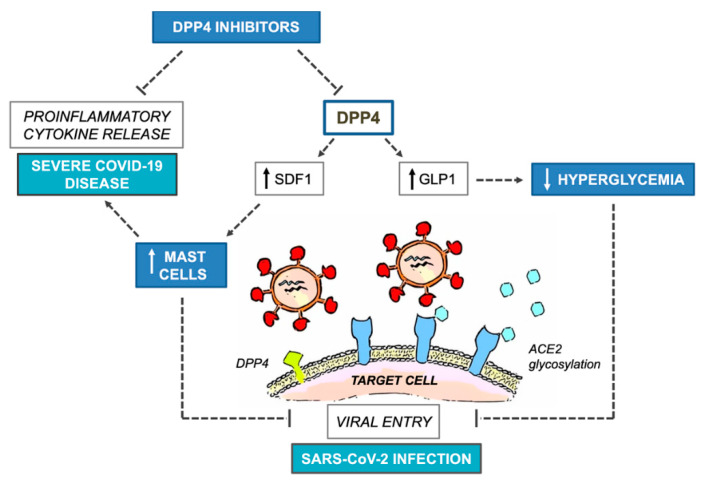
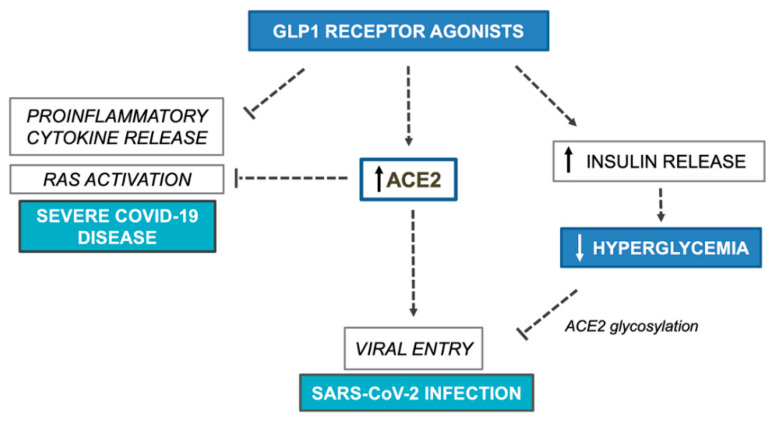
Patients with diabetes have been reported to have enhanced susceptibility to severe or fatal COVID-19 infections, including a high risk of being admitted to intensive care units with respiratory failure and septic complications. Given the global prevalence of diabetes, affecting over 450 million people worldwide and still on the rise, the emerging COVID-19 crisis poses a serious threat to an extremely large vulnerable population. However, the broad heterogeneity and complexity of this dysmetabolic condition, with reference to etiologic mechanisms, degree of glycemic derangement and comorbid associations, along with the extensive sexual dimorphism in immune responses, can hamper any patient generalization. Even more relevant, and irrespective of glucose-lowering activities, DPP4 inhibitors and GLP1 receptor agonists may have a favorable impact on the modulation of viral entry and overproduction of inflammatory cytokines during COVID-19 infection, although current evidence is limited and not univocal. Conversely, SGLT2 inhibitors may increase the likelihood of COVID-19-related ketoacidosis decompensation among patients with severe insulin deficiency. Mindful of their widespread popularity in the management of diabetes, addressing potential benefits and harms of novel antidiabetic drugs to clinical prognosis at the time of a COVID-19 pandemic deserves careful consideration.
Keywords: COVID-19; DPP4 inhibitors; GLP1 receptor agonists; SGLT2 inhibitors; diabetes.
Conflict of interest statement
The authors declare no conflict of interest.
Figures
References
-
- Zhou F., Yu T., Du R., Fan G., Liu Y., Liu Z., Xiang J., Wang Y., Song B., Gu X., et al. Clinical course and risk factors for mortality of adult inpatients with COVID-19 in Wuhan, China: A retrospective cohort study. Lancet. 2020;395:1054–1062. doi: 10.1016/S0140-6736(20)30566-3. - DOI - PMC - PubMed
-
- Cheung K.S., Hung I.F., Chan P.P., Lung K.C., Tso E., Liu R., Ng Y.Y., Chu M.Y., Chung T.W., Tam A.R., et al. Gastrointestinal Manifestations of SARS-CoV-2 Infection and Virus Load in Fecal Samples from the Hong Kong Cohort and Systematic Review and Meta-analysis. Gastroenterology. 2020:35. doi: 10.1053/j.gastro.2020.03.065. - DOI - PMC - PubMed
-
- Magro C., Mulvey J.J., Berlin D., Nuovo G., Salvatore S., Harp J., Baxter-Stoltzfus A., Laurence J. Complement associated microvascular injury and thrombosis in the pathogenesis of severe COVID-19 infection: A report of five cases. Transl Res. 2020:13. doi: 10.1016/j.trsl.2020.04.007. - DOI - PMC - PubMed
Publication types
MeSH terms
Substances
Grants and funding
LinkOut - more resources
Full Text Sources
Medical
Miscellaneous
